
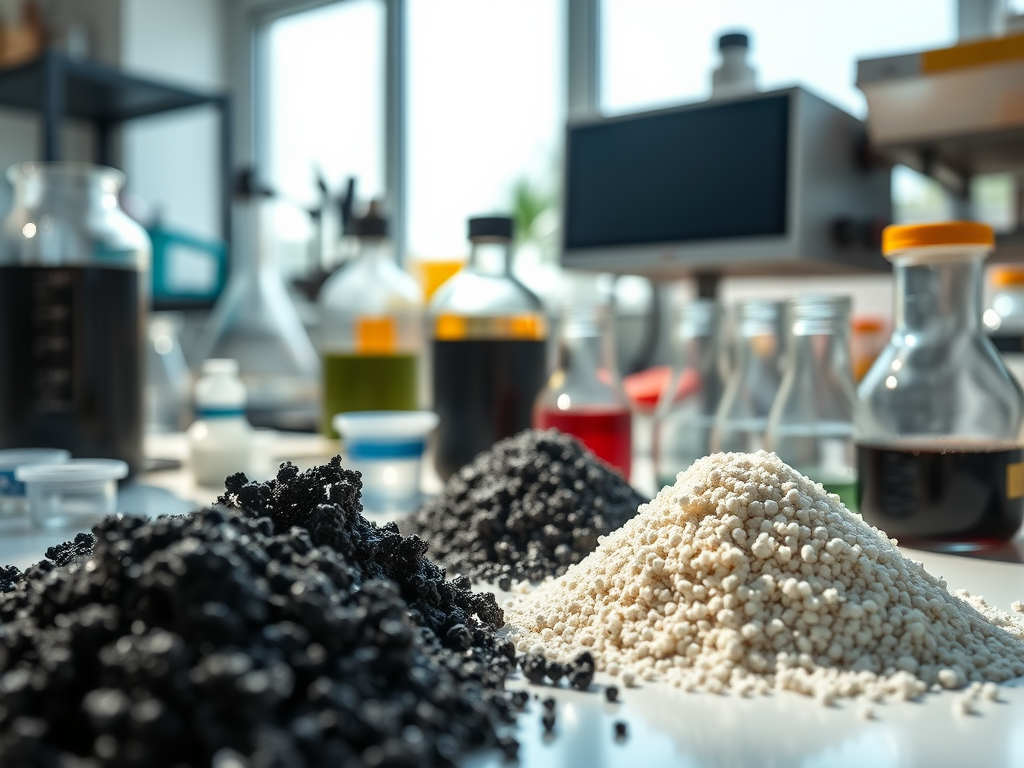
In a review published in the journal Water Air Soil Pollut, Kaushal Naresh Gupta, Rahul Kumar, and Amit Kumar Thakur provide a critical review of various adsorbents used for the abatement of volatile organic compounds (VOCs). The paper highlights adsorption as a popular and efficient method for treating gas streams containing VOCs due to its cost-effectiveness and low energy consumption. VOCs are a class of hazardous air pollutants that are discharged from various natural and anthropogenic sources, with industrial emissions accounting for 43% of the total. The review examines different adsorbent materials, including carbon-based, oxygen-based, organic polymers, and composites, to help researchers select the most appropriate material for specific applications.
The review categorizes adsorbents into several types, with carbon-based materials being the most widely used due to their large surface area, adjustable porosityPorosity of biochar is a key factor in its effectiveness as a soil amendment and its ability to retain water and nutrients. Biochar’s porosity is influenced by feedstock type and pyrolysis temperature, and it plays a crucial role in microbial activity and overall soil health. Biochar More, and moderate cost. Activated carbonActivated carbon is a form of carbon that has been processed to create a vast network of tiny pores, increasing its surface area significantly. This extensive surface area makes activated carbon exceptionally effective at trapping and holding impurities, like a molecular sponge. It is commonly More (AC) is a well-established adsorbent with a highly porous structure and excellent chemical stability. Another study found that AC treated with 1 wt% H3PO4 achieved an adsorption capacity of 499.9 mg·g⁻¹ for benzene. However, AC’s hygroscopic and flammable nature can limit its industrial application.
BiocharBiochar is a carbon-rich material created from biomass decomposition in low-oxygen conditions. It has important applications in environmental remediation, soil improvement, agriculture, carbon sequestration, energy storage, and sustainable materials, promoting efficiency and reducing waste in various contexts while addressing climate change challenges. More s a potential low-cost alternative to activated carbon. Biochar is seen as an effective and potential replacement for activated carbon because of its low manufacturing costs and the availability of abundant feedstocks. The cost incurred during the production of biochar is reported to be only one-sixth of the commercial activated carbon. The type of feedstockFeedstock refers to the raw organic material used to produce biochar. This can include a wide range of materials, such as wood chips, agricultural residues, and animal manure. More employed for the production of biochar influences its physicochemical properties, which in turn affects its performance as an adsorbent. PyrolysisPyrolysis is a thermochemical process that converts waste biomass into bio-char, bio-oil, and pyro-gas. It offers significant advantages in waste valorization, turning low-value materials into economically valuable resources. Its versatility allows for tailored products based on operational conditions, presenting itself as a cost-effective and efficient More temperature between 500-550°C yielded a high surface area for sludge-based biochar compared to biochar from other raw materials. Higher pyrolytic temperatures cause specific surface areas to increase and pore size to decrease. The highest specific areas were obtained when biochar from pistachio shells and bamboo were produced at higher pyrolysis temperatures of 900 and 1000°C, respectively. The high polarity of biochar makes it more suitable for the adsorption of hydrophilic VOCs. The adsorption capacity of biochar for various VOCs is summarized in Table 5, with capacities ranging from 2.9 to 166 mg·g⁻¹. The review notes that biochar production also releases VOCs, which is a deleterious effect on the environment. However, the application of biochar as an adsorbent for VOCs abatement still needs to be explored by the research community.
The review highlights the complex adsorption mechanism involved, which needs to be understood to enable the efficient use of biochar for VOCs removal. The superior properties and low cost of biochar are a testament to its suitability for VOCs adsorption, despite the complex mechanism that needs to be thoroughly understood. The review concludes that while conventional adsorbents like activated carbon remain popular, advanced materials such as MOF-based and magnetic composites are emerging as promising alternatives. The effectiveness of any adsorbent, however, is not solely determined by its surface area but also by its pore size distribution and the nature of the VOCs being treated, including their molecular size, polarity, and boiling point. The review calls for future research to focus on developing low-cost, stable adsorbents and improving their performance under humid conditions.
Source: Gupta, K. N., Kumar, R., & Thakur, A. K. (2025). A Critical Review on Abatement of VOCs By Adsorption: Adsorbent Types and Their Characteristics. Water, Air, & Soil Pollution, 236(795), 1-43.





Leave a Reply