
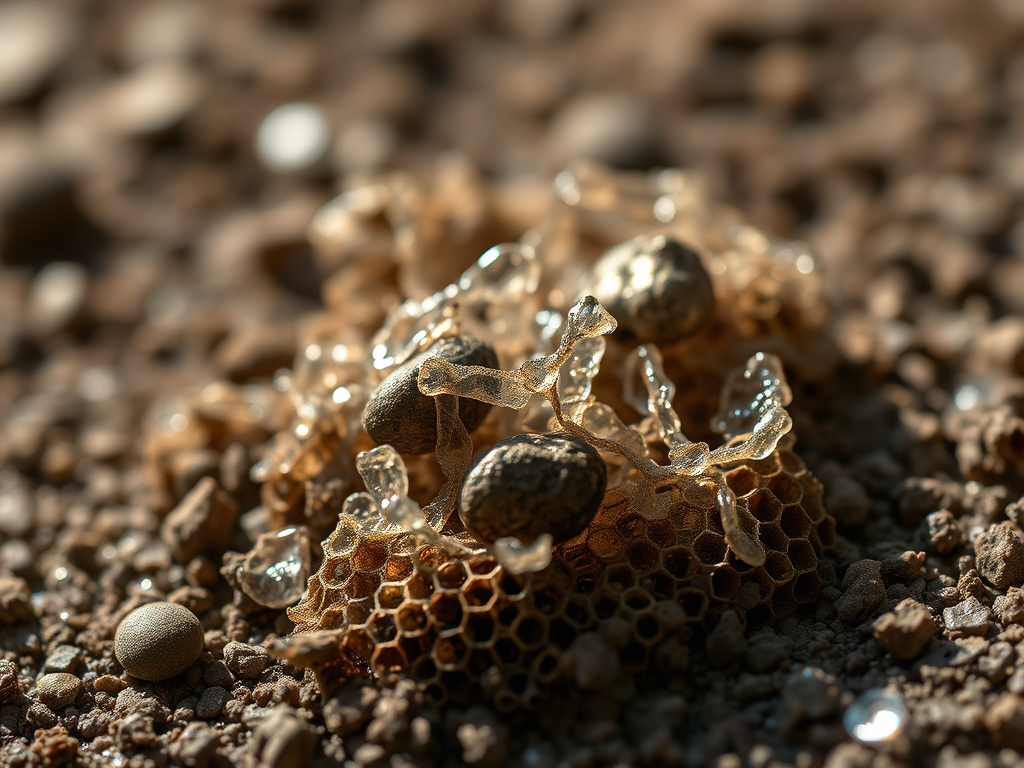
The rising presence of pharmaceutical compounds in water sources is a growing global concern, posing threats to both aquatic ecosystems and human health. A recent study published in Results in Engineering by D.M. Polanco-Gamboa, M. Abatal, and their colleagues, investigates a sustainable and cost-effective solution: activated biocharBiochar is a carbon-rich material created from biomass decomposition in low-oxygen conditions. It has important applications in environmental remediation, soil improvement, agriculture, carbon sequestration, energy storage, and sustainable materials, promoting efficiency and reducing waste in various contexts while addressing climate change challenges. More derived from Haematoxylum campechianum, a bloodwood tree native to Mexico. The research highlights the material’s strong potential to remove the common painkiller acetaminophen (APAP) from aqueous solutions, leveraging both experimental methods and machine learning to optimize the process and confirm its efficacy.
The study’s central finding is the impressive adsorption capacity of the biochar. Adsorption is a process where pollutants stick to the surface of a material. In this case, the activated biochar, or AB-HC, demonstrated a maximum adsorption capacity of 84.5 mg/g for acetaminophen. This is a highly competitive result when compared to other carbon-based materials, outperforming adsorbents made from cannabis, oak acorn, banana peels, and citrus waste. This high efficiency is primarily due to the biochar’s unique physical and chemical properties, including its semi-crystalline structure, high surface area, and porous composition. The biochar’s pores are large enough to allow acetaminophen molecules to diffuse and be captured on its surface.
The research delved into the specific mechanisms that enable this effective removal. The key interactions are non-electrostatic, which means they don’t depend on simple positive and negative charges. Instead, the study identified pore filling, hydrogen bonding, and π-π interactions as the main drivers of the adsorption process. These interactions occur when the functional groups on the biochar’s surface, such as hydroxyl (-OH) groups, form bonds with the -OH and -NH groups of the acetaminophen molecules. This finding is particularly important because it clarifies that the adsorption process is complex and governed by molecular-level interactions, not just physical surface area.
Beyond the core findings on adsorption capacity and mechanisms, the study also explored key variables that influence the process. Using Principal Component Analysis (PCA), a form of unsupervised machine learning, the researchers were able to identify the most critical factors for successful acetaminophen removal. The analysis showed that the initial concentration of acetaminophen, the dose of the biochar, and temperature were the primary factors affecting removal efficiency. For example, the study revealed a strong negative correlation between the initial concentration of the pollutant and the removal percentage, meaning that lower initial concentrations led to higher removal efficiencies. The parallel coordinates plot confirmed this, showing that high removal percentages were associated with lower initial concentrations and higher adsorbent doses.
Another promising result is the biochar’s reusability. The researchers found that the material maintained its high adsorption capacity over three consecutive cycles. The study used a 50% ethanol solution to desorb, or release, the acetaminophen molecules, which was found to be an effective and clean eluent. This reusability is a critical factor for scalability and sustainability, as it reduces waste and the need for new material, making the solution more practical and cost-effective for large-scale application.
In conclusion, the study demonstrates that activated biochar from Haematoxylum campechianum is a highly viable and sustainable adsorbent for removing acetaminophen from water. Its impressive maximum adsorption capacity of 84.5 mg/g, coupled with its reusability and operational simplicity under near-neutral pHpH is a measure of how acidic or alkaline a substance is. A pH of 7 is neutral, while lower pH values indicate acidity and higher values indicate alkalinity. Biochars are normally alkaline and can influence soil pH, often increasing it, which can be beneficial More conditions, makes it a compelling option for water treatment technologies. The use of unsupervised machine learning provided valuable insights into the most influential parameters, paving the way for further process optimization and the eventual application of this promising material in real-world wastewater treatment.
Source: Polanco-Gamboa, D.M., Abatal, M., Tariq, R., Anguebes-Franseschi, F., Lima, E.C., Santiago, A.A., Palí-Casanova, R. del J., & Tamayo-Ordoñez, F.A. (2025). Unsupervised machine learning for sensitivity interpretation in the application of biochar derived from Haematoxylum campechianum to remove acetaminophen from aqueous solutions. Results in Engineering, 107008.



Leave a Reply