
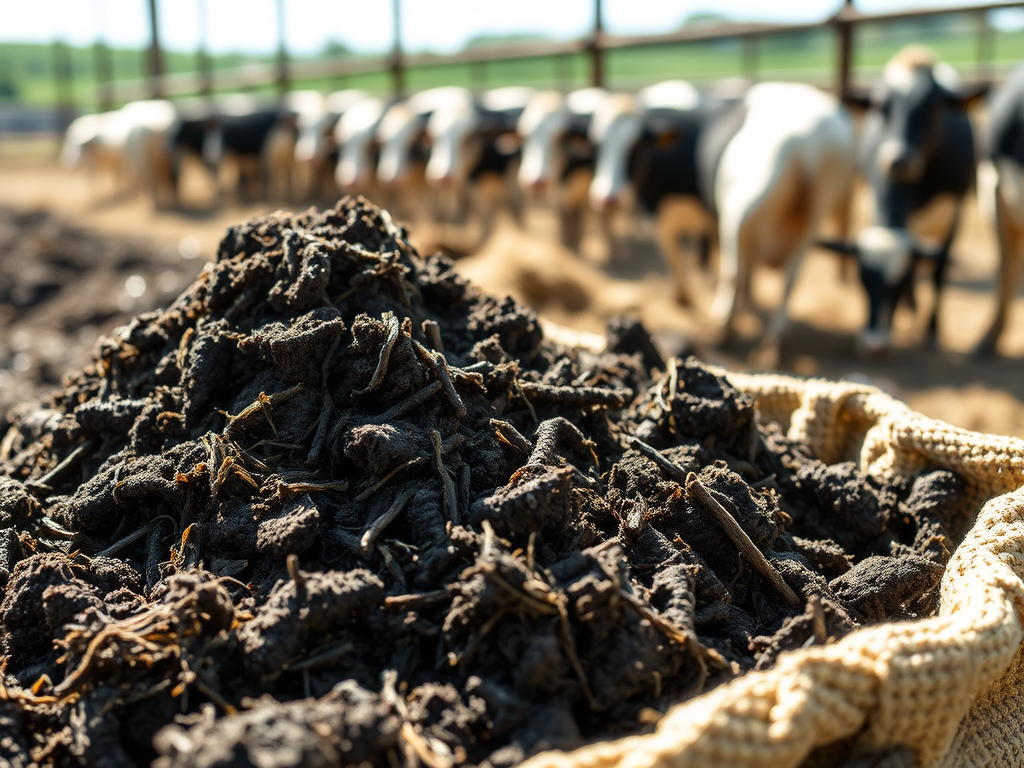
In a study published in Agronomy, Ana José Pires, Catarina Esteves, Ricardo Bexiga, Manuela Oliveira, and David Fangueiro investigated the impact of biocharBiochar is a carbon-rich material created from biomass decomposition in low-oxygen conditions. It has important applications in environmental remediation, soil improvement, agriculture, carbon sequestration, energy storage, and sustainable materials, promoting efficiency and reducing waste in various contexts while addressing climate change challenges. More supplementation on greenhouse gas (GHG) emissions from recycled manure solids (RMS). The research reveals that a 10% biochar concentration significantly reduces cumulative carbon dioxide (CO2) and nitrous oxide (N2O) emissions, leading to a 32% reduction in global warming potential (GWP) compared to untreated RMS.
The study highlights that while lower doses of biochar (2.5%) may increase CO2 emissions, possibly due to microbial stimulation, higher doses (10%) effectively mitigate GHG emissions. This reduction is comparable to that achieved by sulfuric acid (H2SO4) acidification, but biochar presents fewer environmental and operational risks.
The addition of biochar also influences the characteristics of RMS. It increases the concentration of heavy metals and electrical conductivity. However, at a 10% concentration, biochar prevents the increase in dry matter content typically observed during RMS storage.
Overall, the findings support the integration of biochar, particularly at higher doses, into sustainable manure management strategies. While further research is needed to optimize application rates and assess cost-effectiveness, biochar shows promise as a safer, multifunctional alternative for reducing GHG emissions and enhancing nutrient content in dairy farming.
SOURCE: Pires, A.J., Esteves, C., Bexiga, R., Oliveira, M., & Fangueiro, D. (2025). Biochar Supplementation of Recycled Manure Solids: Impact on Their Characteristics and Greenhouse Gas Emissions During Storage. Agronomy, 15(4), 973.





Leave a Reply