
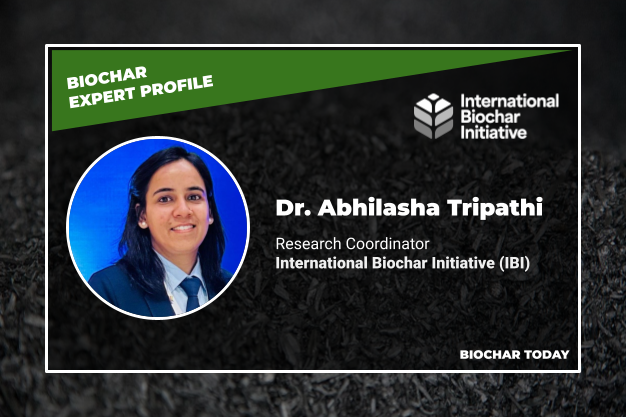
This is the eighth in the series of Biochar Expert Profiles, where we celebrate those who have dedicated their passion, expertise, and innovation to advancing the biocharBiochar is a carbon-rich material created from biomass decomposition in low-oxygen conditions. It has important applications in environmental remediation, soil improvement, agriculture, carbon sequestration, energy storage, and sustainable materials, promoting efficiency and reducing waste in various contexts while addressing climate change challenges. More field. These experts come from all walks of life: renowned scientists whose groundbreaking research has redefined possibilities, emerging researchers whose fresh perspectives are shaping the future, industry leaders who are growing the market through new technologies and business models, and unsung heroes who work tirelessly to enrich soils with biochar. Whether it’s their pioneering techniques, insightful discoveries, or unwavering dedication, these individuals are the heart and soul of the biochar revolution. By highlighting their contributions and sharing their knowledge, this series aims to inspire the biochar community at large.
Dr. Abhilasha Tripathi, a name synonymous with biochar innovation, brings nearly seven years of passionate research to the forefront. From developing patented biochar-based fertilizers during her PhpH is a measure of how acidic or alkaline a substance is. A pH of 7 is neutral, while lower pH values indicate acidity and higher values indicate alkalinity. Biochars are normally alkaline and can influence soil pH, often increasing it, which can be beneficial More.D. at IIT Kanpur to her current role as Research Coordinator at the International Biochar Initiative, she has her finger on the pulse of global biochar trends. Her expertise spans the fascinating versatility of biochar, from soil health and environmental remediation to its exciting potential in carbon accounting.
Abhilasha’s hands-on experience at Circonomy, exploring artisanal biochar production and carbon credit registration, coupled with her research contributions at Carboculture, underscore her commitment to advancing sustainable agriculture through biochar. A gold medalist with a Ph.D. in Environmental Engineering, Abhilasha is not just a researcher; she’s an enthusiastic advocate for unlocking biochar’s potential in a climate-conscious world.
I’m delighted to have shared Abhilasha ’s expertise with you, readers of Biochar Today, a voice I trust will resonate deeply with your interest in Biochar arena.
Shanthi Prabha : Abhilasha, your journey through biochar research, from developing patented slow-release fertilizers to your influential role at IBI, is remarkable. What initially sparked your deep interest in this versatile material?
Abhilasha Tripathi: Looking back with a bird’s eye view, I can now see how seamlessly my path converged towards and aligned with the world of biochar.
It all began with my undergraduate degree in Agricultural Engineering, and gradually developed interest in environmental aspect of agriculture which led me to do masters in environmental engineering. Later, during the doctoral program at Indian Institute of Technology Kanpur my research inclination was to find solution to water treatment issues using agricultural residues. That’s where my thesis supervisor Dr. Purnendu Bose encouraged me to explore nutrient removal using biochar from agricultural residues (esp. using biochar).
Around the same time, the recurring and worsening problem of parali (rice straw) burning in India drew my attention. This issue demanded an innovative approach—one that would divert rice straw from being burned in fields and instead utilize it as a valuable feedstockFeedstock refers to the raw organic material used to produce biochar. This can include a wide range of materials, such as wood chips, agricultural residues, and animal manure. More. That’s when the idea took root: transforming rice straw into biochar capable of sequestering phosphate from nutrient-rich solutions, effectively turning agricultural residue into a resource.
This line of research led to the development of a rice straw biochar-based material that not only captures phosphate but can also be repurposed as a slow-release fertilizer, promoting nutrient cycling, enhancing nutrient use efficiencyNutrient use efficiency refers to how effectively plants can take up and utilize nutrients from the soil. Biochar can improve nutrient use efficiency by enhancing nutrient availability and retention in the soil. More and a circular economy. This research culminated in the development and patenting of two novel biochar-based slow-release fertilizers.
My association with biochar took a different trajectory when I got the opportunity to attend the IBI Biochar World Congress in 2019, where I first met two inspiring figures—Kathleen Draper and Dr. Johannes Lehmann. What stood out to me was the perfect synergy between them: Dr. Lehmann leading with his exceptional contributions to the scientific advancement of biochar, and Kathleen passionately working to make biochar more accessible and understandable to the general public.
The scaling up of biochar—from scientific research to policy advocacy and commercial application—reflects the dedication of the entire global biochar community. Being part of IBI has given me the privilege of closely interacting with members like former Chief Editor Mr. Robert Gillett, former Communications Director Wendy Lu, and Tom Miles—all of whom have greatly enriched my understanding and deepened my appreciation for biochar. Moreover, engaging with the biochar community at the first ever 2023 Biochar Academy was a unique and once in a lifetime experience, I’ll always cherish.
SP: You’ve achieved so much early in your career, including significant contributions to carbon accounting and sustainable agriculture. What aspects of your work do you find most rewarding, and what keeps you motivated?
AT: What I find most rewarding about working across multidisciplinary fields is the way each domain offers a unique lens to view and address environmental challenges. Each area has its own perks—carbon accounting, for instance, plays a pivotal role in quantifying carbon budget in carbon projects.
Over time, engaging with these interconnected fields has helped me understand biochar’s multifaceted potential. Whether it’s enhancing soil health, treating water pollutants, or sequestering carbon, biochar offers a systems-level impact. What truly excites me is how biochar naturally weaves through all of them as a central, unifying solution.
SP: When people think of biochar, they often think of soil amendmentA soil amendment is any material added to the soil to enhance its physical or chemical properties, improving its suitability for plant growth. Biochar is considered a soil amendment as it can improve soil structure, water retention, nutrient availability, and microbial activity. More. But you’ve worked on its applications in water treatment and soil application .What’s one surprising or lesser-known application of biochar that you find particularly promising?
AT: Generally, when thinking of biochar, soil amendment is often the first thing that comes to mind—and rightly so, given its effectiveness. But having worked on both water treatment and soil carbon sequestration, what I find particularly promising is the integration of both fields. Biochar has the unique potential to act as a bridge between wastewater treatment and agriculture, enabling a circular pathway for nutrient recovery and reuse.
By capturing nutrients from treated wastewater, biochar can significantly reduce the external nutrient demand in agriculture—studies suggest by as much as 13.4%. When applied to soil, the nutrient loaded biochar release the nutrients gradually near the plant root zone, thereby improving nutrient use efficiency. That said, the implementation does come with its own set of challenges. Treated wastewater often contains undesirable pollutants such as heavy metals and microplastics, which raises serious concerns about the quality and safety of reuse. Ensuring consistent and reliable quality control remains a major hurdle, especially when scaling these systems.
SP: You’ve worked with both artisanal biochar production and digital MRV tools for carbon credits. How do you see the balance between traditional knowledge and cutting-edge technology shaping biochar’s future?
AT: Working with Circonomy offered a deeply enriching perspective into both the worlds of artisanal biochar production and digital MRV (Measurement, Reporting, and Verification) tools. It became evident to me that the future of biochar lies in the thoughtful integration of traditional wisdom with modern technology.
Artisanal methods of biochar production, grounded in traditional practices, enable decentralized, sustainable solutions that are often low-cost and locally adaptable. The enduring fertility of Terra PretaTerra preta, meaning “black earth” in Portuguese, is a type of highly fertile soil found in the Amazon Basin. It is characterized by its high biochar content, which contributes to its long-term fertility and ability to support productive agriculture More soils in the Amazon—compared to the poor neighbouring oxisols—offers compelling evidence of how traditional biochar application can regenerate soils and sustain productivity over centuries. On the other hand, the integration of cutting-edge technologies such as digital MRV systems brings traceability, transparency, and real-time verification into the equation. These tools make it possible to remotely monitor decentralized biochar systems and convert those insights into verified carbon credits. It promotes participation from smallholder farmers, reduces project costs, prevents biomassBiomass is a complex biological organic or non-organic solid product derived from living or recently living organism and available naturally. Various types of wastes such as animal manure, waste paper, sludge and many industrial wastes are also treated as biomass because like natural biomass these More burning, and supports long-term carbon sequestration.
The involvement of global carbon standards like Carbon Standards International (CSI), Puro.earth, Isometric, Verra, and others has further elevated the quality and impact of biochar projects. By enforcing robust guidelines, these standards ensure that projects meet high-quality benchmarks and deliver genuine additionality—turning biochar from a niche solution into a climate asset. Altogether, this hybrid framework also supports several Sustainable Development Goals.
SP: You mentioned your passion for sustainable agriculture and mitigating climate change. If you had a magic wand to implement one sustainability-related policy worldwide, what would it be and why?
AT: If I had the power to introduce one global policy for sustainability, I would make decentralized nutrient cycling a mandatory practice across agricultural and waste management systems. Individual participation is a cornerstone of this vision. While the idea may seem utopian and challenging, its potential to drive meaningful change is truly transformative.
As I’ve mentioned earlier, nutrient cycling—especially at the local level—has the potential to significantly reduce our dependence on synthetic fertilizers and thereby contribute meaningfully to climate change mitigation. It’s a low-hanging fruit that is both feasible and scalable. One crucial step in achieving this would be enforcing the segregation of wet and dry waste at the source and building decentralized infrastructure for composting biodegradable waste.
This is where biochar becomes a game-changer. Incorporating biochar into the composting process not only enhances compost quality but also significantly reduces nutrient losses through volatilization and leachingLeaching is the process where nutrients are dissolved and carried away from the soil by water. This can lead to nutrient depletion and environmental pollution. Biochar can help reduce leaching by improving nutrient retention in the soil. More. The end product becomes a potent, stable soil amendment that improves soil fertility, retains moisture, and sequesters carbon. Such an integrated system would not only close the nutrient loop but also create a substantial and consistent demand for biochar—transforming it from a niche product into an essential tool for sustainable agriculture.
Embedding this practice into policy frameworks would not only enhance soil health and food security but also help tackle urban waste, reduce greenhouse gas emissions, and support rural economies—truly a win-win for the ecosystem.
SP: Beyond the lab, you enjoy painting, crocheting, and yoga. How do these creative and mindful hobbies influence your scientific thinking and problem-solving?
AT: These creative activities allow me to step outside of my usual thought patterns and embrace a more flexible, open-minded approach to problem-solving. They teach me the value of unlearning and then relearning, which is often crucial when trying to overcome a long-standing challenge. Additionally, the meditative nature of these activities provides a mental reset, helping me to refresh my perspective and return to my work with renewed clarity and focus.
SP: The IPCC has recognized biochar as a cost-effective carbon removal technology. What’s one common misconception about biochar you’d like to debunk?
AT: One common misconception about biochar is the belief that any type of biochar, when applied to any soil at any application rate, will automatically improve soil quality and increase productivity. In reality, the response of crops to biochar depends on several site-specific and application-related factors. This is where the 4Rs—Right Source, Right Place, Right Rate, and Right Method—become critical for successful soil application.
- Right Source: Biochar’s chemical composition is closely tied to the feedstock used. For example, biochar made from manure or nutrient-rich residues tend to have higher nutrient content, which directly benefits soil fertility. However, the pyrolysis conditionsThe conditions under which pyrolysis takes place, such as temperature, heating rate, and residence time, can significantly affect the properties of the biochar produced. More also influence the biochar’s composition—high-temperature biochars (>500°C) are more carbon-rich but may have lower nutrient content.
- Right Place: Biochar is especially beneficial for low-fertility soils, acidic soils, or highly weathered tropical soils. In contrast, highly fertile or well-managed soils may not see much immediate benefit from its addition.
- Right Rate: Both under-application and over-application can lead to suboptimal outcomes. Typical biochar application rates range from 2 to 10 tonnes per hectare, depending on the soil and crop needs. Field trials are essential for determining the optimal rate based on the soil characterstics. Economic considerations also play a significant role in defining the ideal application rate.
- Right Method: Uncharged biochar can temporarily lock up nutrients due to its high C:N ratio, potentially causing nutrient immobilization that inhibits plant growth. To avoid this, biochar should be “charged” by liquid fertilizer, compost or any other nutrient before applying it to the soil. This allows biochar to release nutrients gradually, acting as a slow-release fertilizer.
It’s also important to note that immediate yield improvements may not always be visible after biochar application. With the 4Rs followed, the process of microbial buildup, soil health enhancement, and nutrient storage is gradual, so a bit of patience is required to witness the long-term benefits of biochar.
SP: You’ve been involved in compiling monthly research lists and annual updates at IBI. What’s the most surprising or exciting biochar research trend you’ve observed recently?
AT: With IBI, compiling the monthly research list has kept me closely connected to the biochar world, and I continue to be amazed by its vast range of applications being explored globally. The versatility of biochar is fascinating, with research expanding into areas like catalyis for biodiesel production, oil removal, microbial fuel cells, electromagnetic shiled, food packaging, and much more.
One of the most exciting trends I’ve observed recently is the use of biochar for air purification. With air quality being a significant environmental challenge worldwide, biochar is emerging as a solution to treat gaseous emissions from incinerators, smelters, coal-fired boilers, and other industrial processes. It’s proven effective in removing metal vapors like mercury, acidic gases such as hydrogen sulfide and sulphur dioxide, and even organic compounds and odorous substances. Moreover, biochar has shown promising results in removing indoor pollutants like formaldehyde and methanol.
Another area that excites me is the potential integration of biochar with Direct Air Capture (DAC) technology, as well as its use in regenerative farming practices. However, this may complicate the carbon accounting and need evolved standards to accommodate such hybrid projects, it holds strong potential to contribute to gigaton-scale carbon removal.
Additionally, Biochar’s application in treating oil-based pollutants, microplastics, and biological waste is another rapidly emerging area. This could be particularly impactful in water and wastewater treatment, although scaling these applications remains a challenge. With the ongoing efforts of the global biochar research community, the potential to solve real-world environmental problems through biochar continues to grow, and it’s exciting to be part of this journey.
SP:Your work has been recognized with prestigious honors like the 2024 FAI Award and the Science Innovation Award. How have these acknowledgments shaped your perspective, and how do they influence your next big project or dream research goal related to biochar?
AT: Receiving recognitions like the 2024 FAI Award and the Science Innovation Award has been both humbling and motivating. They affirm that work on sustainable, biochar-based fertilizer solutions—holds real-world relevance beyond academia.
More than personal milestones, these awards remind me of the responsibility to keep advancing science-backed, scalable innovations that address urgent climate and sustainability challenges. They’ve encouraged me to deepen interdisciplinary collaborations and focus on translating research into field-level impact.
Looking ahead, my goal is to use biochar as a key tool to tackle environmental issues and drive optimized strategies for gigaton-scale carbon removal. These recognitions mark the beginning of a more focused and determined journey toward climate mitigation and work on scaling climate action through sustainable agriculture. I’m deeply grateful to my mentors, family, friends, and the IBI community, whose constant support has made this path possible.
SP: To allow our readers to explore your fascinating work further, could you share a link to your professional profile, research page, or any website where they can learn more about your biochar research and initiatives?
AT: I update the things on LinkedIn, regarding any latest work and research. Here is the link to my LinkedIn profile: https://www.linkedin.com/in/abhilashatripathi/


Leave a Reply