

By Dr. Shanthi Prabha V (Science Editor, BiocharBiochar is a carbon-rich material created from biomass decomposition in low-oxygen conditions. It has important applications in environmental remediation, soil improvement, agriculture, carbon sequestration, energy storage, and sustainable materials, promoting efficiency and reducing waste in various contexts while addressing climate change challenges. More Today)
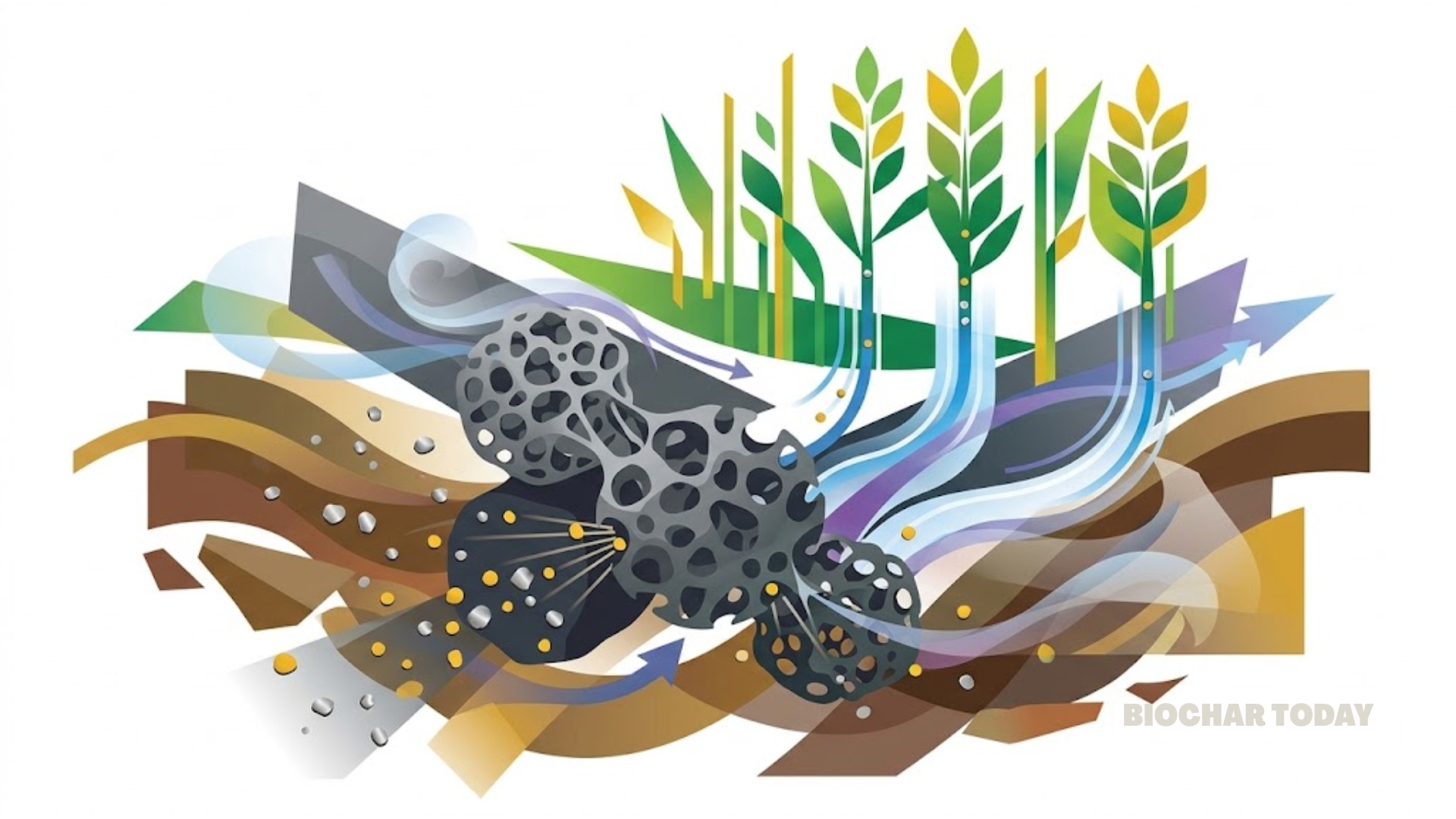
Biochar, the carbon-rich wonder born from biomassBiomass is a complex biological organic or non-organic solid product derived from living or recently living organism and available naturally. Various types of wastes such as animal manure, waste paper, sludge and many industrial wastes are also treated as biomass because like natural biomass these More pyrolysisPyrolysis is a thermochemical process that converts waste biomass into bio-char, bio-oil, and pyro-gas. It offers significant advantages in waste valorization, turning low-value materials into economically valuable resources. Its versatility allows for tailored products based on operational conditions, presenting itself as a cost-effective and efficient More, is stealing the spotlight in climate-smart agriculture (CSA). As we face the trilemma of climate change, soil degradation, and food scarcity, biochar emerges as a game-changing solution—like a saviour for the soil! It enriches soil health, supercharges crop productivity, and packs a punch in the fight against climate change. Recent studies paint an exciting picture of biochar’s potential to revolutionize sustainable farming, proving it’s not just another trend but a transformative tool for a greener, more resilient future.
Key Findings and Trends from Recent Biochar Studies
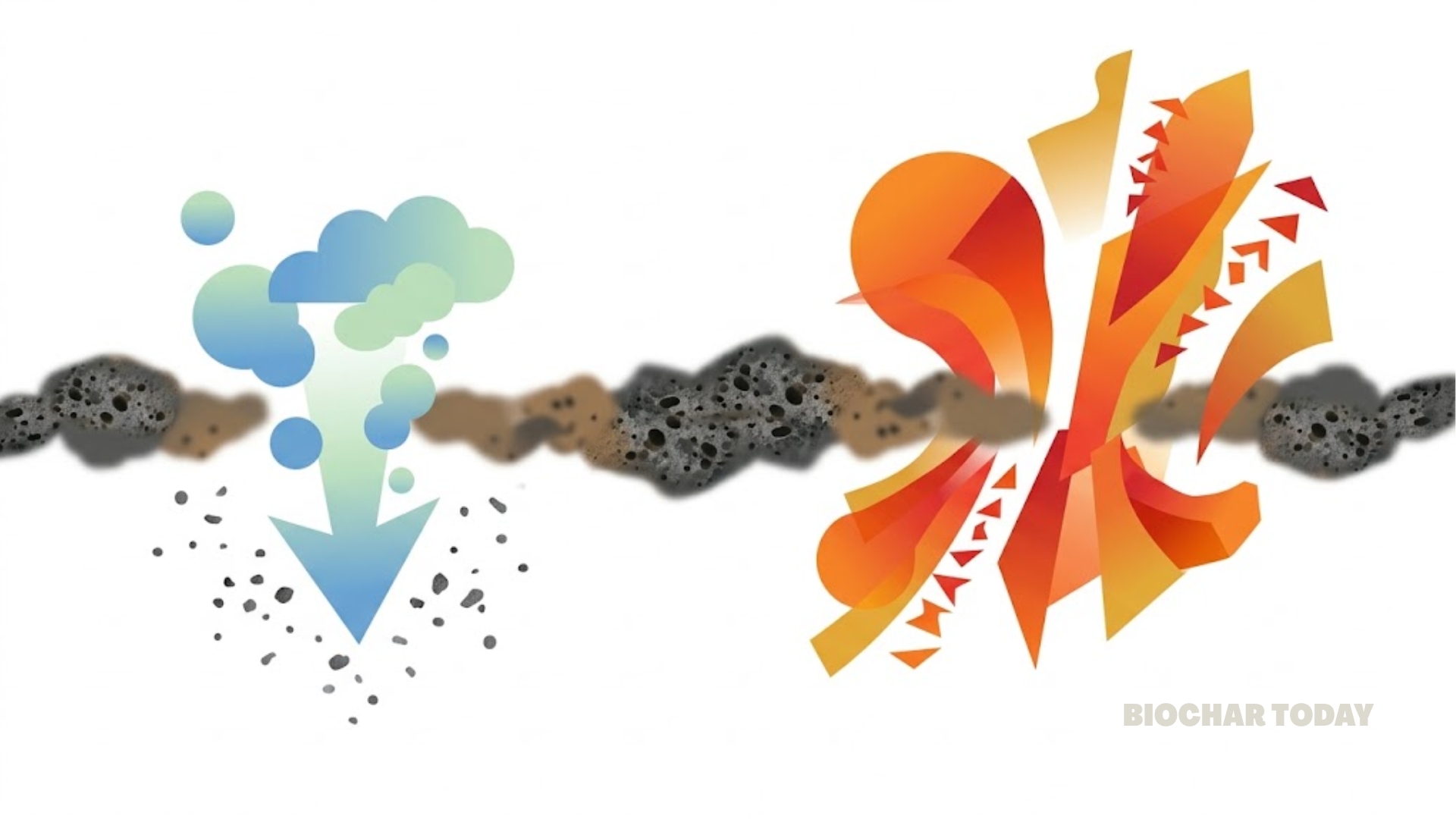
A synthesis of recent global studies (Huang et al., 2023; Bo et al., 2023; Bhattacharyya et al., 2024) reveals that biochar plays a significant role in enhancing soil organic carbon (SOC) stocks, improving crop yields, and reducing greenhouse gas (GHG) emissions. Field and laboratory experiments highlight biochar’s benefits in mitigating climate change through its role in carbon sequestration. Laboratory studies, often conducted with high application rates, tend to overestimate biochar’s impact, while field studies suggest that biochar can indeed reduce GHG emissions, improve soil fertility, and contribute to food security under real-world conditions. However, to maximize its effectiveness, future research must focus on long-term studies, realistic application rates, and integrated models that consider both environmental and economic factors (Huang et al., 2023) . Recent research underscores biochar’s transformative potential in sustainable agriculture. Based on these recent studies we can assess that biochar holds significant promise as a sustainable solution for enhancing soil health, boosting crop yields, and mitigating climate change. With the right approach, biochar could become a key tool in achieving climate-smart agriculture and ensuring a more resilient and productive future for farming.
In simpler terms, the more we customize biochar to match different soils and climates, the more it works like a magic fertilizer for the earth! It’s like giving the soil a power-up, helping plants grow stronger and healthier, while making farming more productive and eco-friendly. So, with the right mix, biochar could be the ultimate plant power booster, turning your garden (or farm) into a thriving, sustainable piece of land.
Importance of FeedstockFeedstock refers to the raw organic material used to produce biochar. This can include a wide range of materials, such as wood chips, agricultural residues, and animal manure. More and Pyrolysis ConditionsThe conditions under which pyrolysis takes place, such as temperature, heating rate, and residence time, can significantly affect the properties of the biochar produced. More
The effectiveness of biochar is heavily influenced by the type of feedstock used and the pyrolysis temperature during its production. Recent studies reveal that high-temperature wood-based biochar is particularly effective in mitigating GHG emissions, while low-temperature manure-based biochar can significantly improve crop yields in nutrient-deficient soils (Bo et al., 2023). The tailoring of biochar for specific soil conditions and environmental factors is crucial. Additionally, biochar’s ability to enhance soil structure, increase nutrient retention, and promote beneficial microbial activity supports its role in improving soil health, particularly in regions experiencing soil degradation (Muema et al., 2024). For instance, biochar’s promotion of microbial activity contributes to improved soil nutrient cycling, which is essential for sustaining soil fertility and increasing agricultural productivity (Murtaza et al., 2023).
In simpler terms, the better we tailor biochar to suit specific soils and climates, the more beneficial it becomes. Think of it as a natural booster shot for the soil that helps plants thrive and grow better, making farming more productive and sustainable. This approach ensures that biochar plays a key role in revitalizing soils and supporting long-term agricultural success.
Overcoming Challenges in Widespread Adoption
Despite its promise, the widespread adoption of biochar faces several economic and technical challenges. High production costs and the variability of biochar’s effectiveness across different soil types are significant barriers (Liu et al., 2023; Bhattacharyya et al., 2024). The lack of standardized production methods and the complexity of large-scale biochar commercialization add to these challenges. Furthermore, while biochar has shown potential in enhancing soil health and agricultural productivity in specific contexts, its results have been inconsistent, indicating that more localized, site-specific approaches are necessary (Murtaza et al., 2023).
In short, while biochar has a lot of promise, we just need to make it cheaper and better suited for different soils. With a bit more research and some clever solutions, biochar could be the superhero farmers never knew they needed—saving crops and the planet, one charred chunk at a time!
Economic Feasibility and Scalability
The economic viability of large-scale biochar production remains a concern. Some studies (e.g., Muema et al., 2024) suggest that co-pyrolysis, which involves combining biomass with other feedstocks, could enhance the profitability of biochar production. However, scaling production is challenging due to high upfront costs and limited access to low-cost feedstocks. Efforts to industrialize biochar, such as converting it into liquid fertilizers or biochar-based organic amendments, show promise but are still facing significant technological barriers (Liu et al., 2023). Further research into cost-effective production techniques, including decentralized pyrolysis units or co-composting with biochar, is essential for improving its economic viability.
In the end, if we can crack the code on making biochar affordable, it could be the soil’s version of a power smoothie—boosting health and productivity with just a little sprinkle of innovation!
Advanced Research Approaches
Recent reviews advocate for a comprehensive research approach that integrates advanced technologies such as machine learning, process-based modeling, and life cycle assessments (LCA) (Huang et al., 2023; Bano et al., 2024). These tools could help optimize biochar applications by predicting large-scale impacts, accounting for regional differences in soil properties, and assessing the overall sustainability of biochar systems. Additionally, incorporating biochar into precision agriculture, which is combined with other soil amendments and management practices, may enhance its benefits while reducing costs.
In other words, combining high-tech tools like machine learning with biochar is like giving your soil a brain boost—predicting what it needs before it even asks! With these smart strategies, biochar could become the superhero of sustainable farming, saving the day while cutting costs and improving soil health. Let’s just hope it doesn’t start demanding a cape and its own theme song!
Future Directions for Biochar Research
The full potential of biochar in CSA will be realized through long-term, region-specific trials and a deeper understanding of its role in soil-plant-climate interactions. Future research should focus on refining biochar formulations, developing cost-effective production technologies, and overcoming the economic and technical barriers to widespread adoption (Kochanek et al., 2022; Murtaza et al., 2023). Creating carbon trading markets could provide an economic incentive for biochar use, making it more attractive to farmers and stakeholders.
Eventually, biochar’s future in climate-smart agriculture looks as bright as a solar-powered farm on a sunny day! By fine-tuning its production, making it more affordable, and even giving it a little boost through carbon trading, we might just see biochar become the farm tool of the future—after all, who wouldn’t want a little carbon credit in their pocket along with healthier soil and better crops? Time to give biochar the spotlight it deserves!
Biochar holds significant promise in climate-smart agriculture, with the potential to enhance soil health, boost agricultural productivity, and mitigate climate change. These studies collectively highlight the promising potential of biochar in climate-smart agriculture but also underscore several critical challenges. While biochar has demonstrated benefits in improving soil health, boosting crop yields, and mitigating greenhouse gas emissions, its effectiveness is highly context-dependent, varying with feedstock type, pyrolysis conditions, and soil properties. Laboratory experiments often overestimate its impact, with field studies offering more realistic, yet sometimes inconsistent, results. The studies emphasize the need for site-specific applications, long-term trials, and economic feasibility studies to enhance biochar’s adoption.
Economic and technical barriers remain significant, particularly the high production costs and limited scalability of biochar. Co-pyrolysis and product diversification are promising strategies to improve profitability, yet they are still constrained by technological challenges and soil-specific variations. Standardizing production methods and developing cost-effective solutions are crucial for broadening its application. Additionally, there is a call for integrating biochar with precision agriculture and sustainable farming practices to maximize its benefits.
Despite these challenges, the studies advocate for continued research to optimize biochar’s formulation and production processes, as well as the establishment of economic incentives like carbon trading markets to encourage adoption. Future directions should focus on overcoming the barriers to large-scale commercialization while ensuring biochar’s long-term sustainability and contribution to climate change mitigation. However, to unlock its full potential, challenges related to cost, scalability, and site-specific application must be addressed. As the research landscape evolves, biochar’s integration into sustainable agriculture systems can make a substantial contribution to soil degradation, global food security and climate change mitigation goals. The need for long-term studies, economic incentives, and optimized production processes is crucial for its successful implementation.
Hot Takes on Biochar from Science Labs world around
- Dual Benefits of Biochar: Biochar improves soil health and contributes to climate change mitigation, with consistent positive effects on crop productivity. However, its effectiveness is site-specific, emphasizing the need for localized approaches.
- Influence of Feedstock and Pyrolysis Conditions: Biochar’s properties depend on the feedstock used and the pyrolysis conditions. Medium pyrolysis temperatures (400-600°C) are optimal for balancing soil health, crop productivity, and carbon sequestration.
- Interdisciplinary Approaches: Long-term studies integrating soil, plant, climate, and biochar properties are essential for understanding biochar’s performance across diverse agricultural systems.
- Economic and Scalability Challenges: The commercialization of biochar faces challenges such as high production costs, feedstock variability, and scalability. Future research should explore cost-effective production technologies and market-based solutions like carbon trading incentives.
- Site-Specific Biochar Formulations: Future research should prioritize the development of biochar formulations tailored to local agricultural needs, incorporating factors like soil type, crop species, and climatic conditions.
- Enhancement Technologies: Innovations such as biochar-based bio-nanocomposites or co-pyrolysis could further enhance the effectiveness of biochar, improving its environmental and agricultural impact.
By addressing these challenges and focusing on targeted research efforts, biochar can be integrated into climate-smart agriculture systems, offering a sustainable and scalable solution for improving agricultural resilience and mitigating climate change.
2025 could be the year biochar takes the spotlight in climate-smart agriculture. Picture this: site-specific applications hitting the bullseye, long-term trials proving their worth, and cost-effective production turning heads. With precision agriculture, carbon trading, and supportive policies in its corner, biochar is all set to become the Most Valuable Player of sustainable farming. Imagine healthier soils, happier plants, and a solid punch against climate change and food insecurity.
The future’s looking hot (but in a good way), and with the right nudge, biochar is primed for widespread adoption and impact. Get ready to watch this soil-saving superstar in action—2025, here we come!
References
- Huang, Y., Tao, B., Lal, R., Lorenz, K., Jacinthe, P. A., Shrestha, R. K., … & Ren, W. (2023). A global synthesis of biochar’s sustainability in climate-smart agriculture-Evidence from field and laboratory experiments. Renewable and Sustainable Energy Reviews, 172, 113042.
- Bo, X., Zhang, Z., Wang, J., Guo, S., Li, Z., Lin, H., … & Zou, J. (2023). Benefits and limitations of biochar for climate-smart agriculture: a review and case study from China. Biochar, 5(1), 77.
- Liu, X., Liu, C., Pan, G., & Clarke, N. (2023). Biochar-Based Technology in Food Production, Climate Change Mitigation, and Sustainable Agricultural Soil Management: Post Terra PretaTerra preta, meaning “black earth” in Portuguese, is a type of highly fertile soil found in the Amazon Basin. It is characterized by its high biochar content, which contributes to its long-term fertility and ability to support productive agriculture More Era. In Innovation for Environmentally-friendly Food Production and Food Safety in China (pp. 93-112). Singapore: Springer Nature Singapore.
- Bhattacharyya, P. N., Sandilya, S. P., Sarma, B., Pandey, A. K., Dutta, J., Mahanta, K., … & Borgohain, D. J. (2024). Biochar as Soil AmendmentA soil amendment is any material added to the soil to enhance its physical or chemical properties, improving its suitability for plant growth. Biochar is considered a soil amendment as it can improve soil structure, water retention, nutrient availability, and microbial activity. More in Climate-Smart Agriculture: opportunities, future prospects, and challenges. Journal of Soil Science and Plant Nutrition, 24(1), 135-158.
- Kochanek, J., Soo, R. M., Martinez, C., Dakuidreketi, A., & Mudge, A. M. (2022). Biochar for intensification of plant-related industries to meet productivity, sustainability and economic goals: A review. Resources, Conservation and Recycling, 179, 106109.
- Muema, F. M., Richardson, Y., Keita, A., & Sawadogo, M. (2024). An interdisciplinary overview on biochar production engineering and its agronomic applications. Biomass and Bioenergy, 190, 107416.
- Murtaza, G., Ahmed, Z., Eldin, S. M., Ali, B., Bawazeer, S., Usman, M., … & Tariq, A. (2023). Biochar-Soil-Plant interactions: a cross talk for sustainable agriculture under changing climate. Front. Environ. 11, 1059449
- Bano, A., Hassan, T. U., Waqar, A., Mushtaq, T., & Urooj, N. (2024). Impact of Biochar on Climate Change, Agricultural Soil and Plants. Communications in Soil Science and Plant Analysis, 1-17.
- Murtaza, G., Ahmed, Z., Eldin, S. M., Ali, B., Bawazeer, S., Usman, M., … & Tariq, A. (2023). Biochar-Soil-Plant interactions: a cross talk for sustainable agriculture under changing climate. Front. Environ. 11, 1059449.
- Schmidt, H. P., Kammann, C., Hagemann, N., Leifeld, J., Bucheli, T. D., Sánchez Monedero, M. A., & Cayuela, M. L. (2021). Biochar in agriculture–A systematic review of 26 global meta‐analyses. GCB Bioenergy, 13(11), 1708-1730.



Leave a Reply