
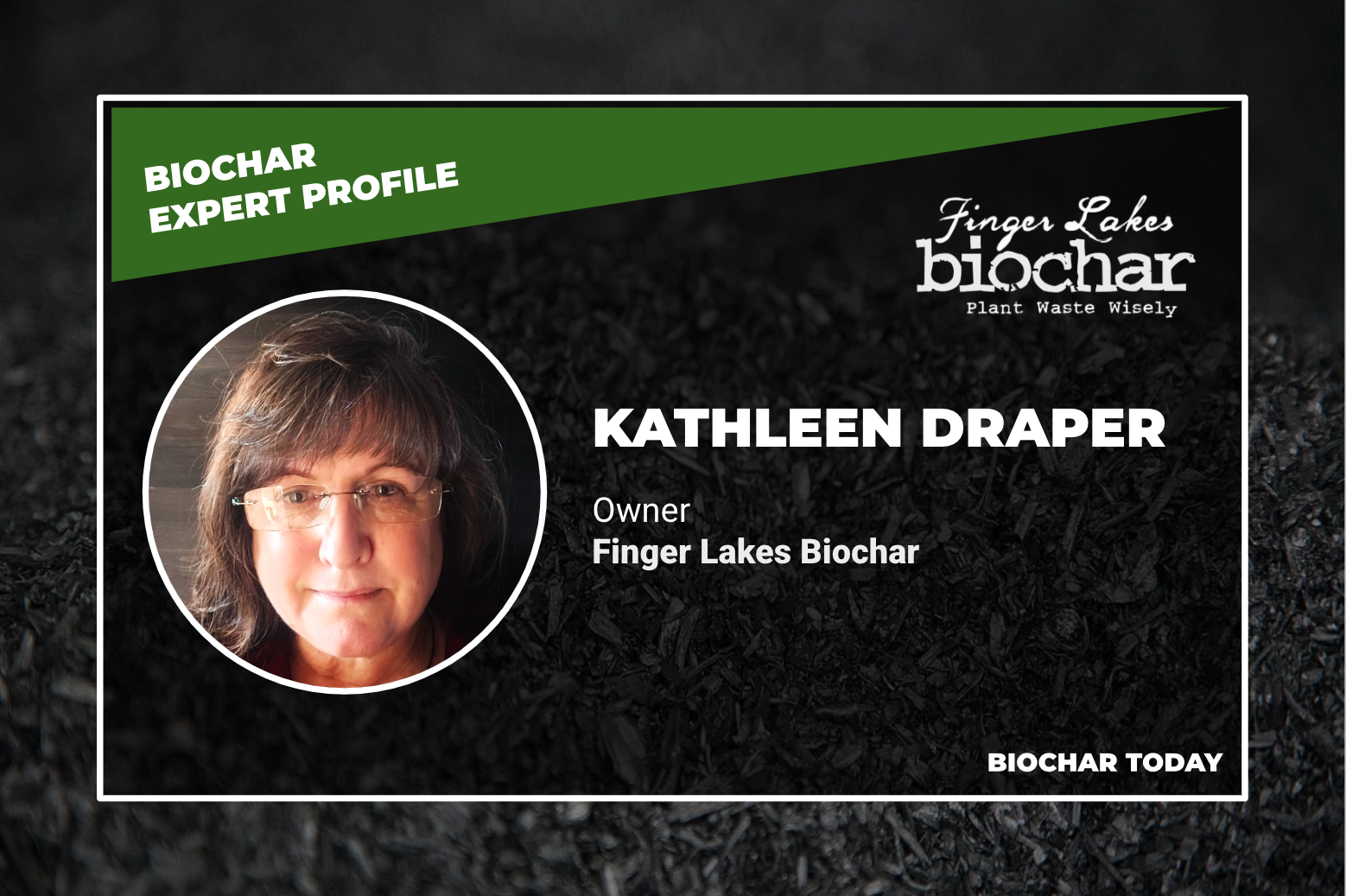
This is the second in a new series of Biochar Expert Profiles, where we celebrate those who have dedicated their passion, expertise, and innovation to advancing the field of biocharBiochar is a carbon-rich material created from biomass decomposition in low-oxygen conditions. It has important applications in environmental remediation, soil improvement, agriculture, carbon sequestration, energy storage, and sustainable materials, promoting efficiency and reducing waste in various contexts while addressing climate change challenges. More. These experts come from all walks of life: renowned scientists whose groundbreaking research has redefined possibilities, emerging researchers whose fresh perspectives are shaping the future, industry leaders who are growing the market through new technologies and business models, and unsung heroes who work tirelessly to enrich soils with biochar. Whether it’s their pioneering techniques, insightful discoveries, or unwavering dedication, these individuals are the heart and soul of the biochar revolution. By highlighting their contributions and sharing their knowledge, this series aims to inspire the biochar community at large.
Few people in the world have dedicated as much time, passion, and expertise to biochar as Kathleen Draper. A seasoned author, speaker, and industry maven, Kathleen has spent over a decade elucidating the science of biochar, advocating for its potential to combat climate change, and exploring its vast industrial applications. Her journey in the biochar space spans leadership roles with the U.S. Biochar Initiative (USBI) and the International Biochar Initiative (IBI), as well as her work as the U.S. Director of the Ithaka Institute for Carbon Intelligence. She is also the co-founder of C-Interest, a company committed to advancing biochar-based materials. Beyond her professional expertise, Kathleen is a true biochar evangelist, devoted to taking this transformative technology to the grassroots level.
Kathleen has co-authored two influential books — BURN: Using Fire to Cool the Earth and Terra Preta: How the World’s Most Fertile Soil Can Help Reverse Climate Change and Reduce World Hunger — both of which have helped bring biochar into mainstream climate discussions.
I recently had the privilege of speaking with Kathleen to discuss her invaluable insights on biochar’s potential, its real-world applications, and why it’s more relevant than ever in today’s fight against climate change.I am honored to feature Kathleen Draper — an all-time biochar aficionado — in our expert interview series. Enjoy the conversation!!!
Shanthi Prabha: Biochar seems more than just a profession for you—it’s a passion. Could you share the story of how you first fell in love with biochar and the key milestones in your journey so far?
Kathleen Draper: I first stumbled upon this old yet reborn climate mitigation strategy while doing a Masters in Managing for Sustainability in 2010 – 2011 while reading a book called “Ten Technologies to Save the Planet” by Chris Goodall. It was, what I call my ‘char-piphany’. One minute I’d never heard of it and the next it becomes the topic for my Master’s thesis and my life’s North Star. Trust me, I know how crazy that sounds, but that is basically what happened.
Not having a scientific background (an understatement to say the least), I wasn’t sure how to best align my consulting background to support what turned out to be a very embryonic industry. I reached out to the former Marketing Director of IBI who happened to be located near where I was doing my Masters to learn more and volunteered to write a brief paper about the potential uses for poultry litter biochar. Producing something that benefits the biochar community at large, even as a volunteer, is a great way to become more educated on a topic while also getting your name out there. I strive to do this to this day and am thrilled to see a growing number of others doing similar things to uplift the industry.
I will say that I was extremely fortunate to be able to work with Dr. Johannes Lehmann at Cornell and Dr. Tom Trabold at the Rochester Institute of Technology from my earliest days in the biochar world on different agricultural and non-agricultural research projects. These early experiences with knowledgeable and thankfully very tolerant researchers helped me figure out how a non-academic could add value to shaping what kinds of research is most relevant to commercializing biochar for different end uses as well as how to communicate and make scientific research findings accessible to non-scientists.
SP: After over a decade in the biochar industry, what still excites you the most about its potential and impact?
Originally, I think I was attracted to the hope and potential I found in biochar as one of the solutions to rebalancing atmospheric carbon. But what I think is really exciting these days is that the biochar industry has moved beyond passive hoping to actually doing the work of rebalancing carbon. Unlike some other CDRs which are still largely aspirational, biochar is getting busy stabilizing carbon at different scales all around the world. At the same time biochar production is helping to minimize waste and the emissions related to waste, its remediating toxic soils, revitalizing exhausted agricultural soils, decarbonizing multiple industries and launching a myriad of ancillary industries. All of these co-benefits position the biochar industry well beyond just climate stabilization which is super exciting to me.
I am also excited to see more and more women working in both the industry and in biochar research!
SP: Commercializing biochar at scale can be challenging. From your experience, what are the biggest hurdles, and how do you envision overcoming them?
KD: Indeed it is! By far the biggest hurdle I see is finding end markets for the biochar. With so much new biochar production coming on-line in the past year or two, we are also beginning to see challenges with finding buyers for the biochar credits as well. If we cannot find economical markets for biochar and vastly more carbon credit buyers, scaling will come to a halt. That is just the economic reality we face.
Developing demand for the physical product not only takes time but it also takes a realistic, pragmatic approach. With so much increased supply, the days of selling biochar for $2K per ton are largely over with perhaps some minor exceptions for niche markets. The notion of setting up biochar production in the Global South and shipping biochar to the US or Europe is also not realistic, not least because the carbon markets don’t like to see transportation across long distances given the impact on embodied carbon, but because increased production in the Global North combined with low prices for biochar (due to carbon credit revenues) and the fact that consumers increasing prefer to buy from local suppliers, makes imported biochar significantly less desirable. In addition, the cost of transporting biochar is high in most places, making local and regional markets much more desirable but developing them requires a dedicated assessment of what types of markets may be applicable. It also necessitates investment to educate potential end users and develop demand.
I think we are starting to see a few things that will help. One is the rise of insetting where a company is taking a more holistic approach to decarbonization. One example would be a company in the food and beverage industry that is looking to reduce scope 3 emissions. By funding the technology and labour to convert crop residues into biochar and providing farmers with free biochar along with the necessary education on how to produce and use it, the challenge of developing local market demand is lessoned and the dMRV simplified. As farmers using biochar will also likely be able to reduce costly inputs such as fertilizer, further reducing their emissions, these scenarios can be a win-win for the farmer and the buyers of their crops.
On a more industrial scale I think we will start to see industries that are very focused on reducing scope 2 emissions, evaluating the benefit of in-house pyrolysis to displace fossil fuel derived heat and/or electricity. In some cases, these entities may even be able to use biochar within their product offering. We saw a glimmer of this last year when a major cement company announced they will be using heat from biochar production to reduce their carbon emissions and will be experimenting with adding biochar to some of their cement product offerings. This model could be used in a growing number of industries in manufacturing, lumber aquaculture, greenhouses and many more.
SP: Finger Lakes Biochar is known for its unique approach. What sets it apart, and how does it contribute to the broader biochar landscape?
KD: I’m not sure how unique FLB is, but I would say that I have been fortunate to collaborate with some amazing organizations and individuals such as the Ithaka Institute, the International Biochar Initiative and the US Biochar Initiative. These organizations and many others have contributed to building the connective tissue amongst biochar practitioners and commercial entities over the past decade. One area where I would perhaps say FLB is different is that many of the projects . FLB focused on non-traditional biochar markets and projects that can help the overall industry versus a single producer.
SP: Biochar is often heralded as a sustainability and climate mitigation tool. How well do you think this narrative resonates with the public, and what more can be done to enhance its perception?
KD: For those that focus on sustainability and climate, I think biochar is finally beginning to be taken seriously though investors are still pouring more money into alternative CDR solutions. However, in our increasingly divided political environment, and in a world with multiple crises happening simultaneously, climate solutions are not always prioritized. Fortunately, climate is not the only frame or narrative that can be used to promote biochar. As one example, carbonizing sewage sludge presents an enormous opportunity for biochar not only as a means of stabilizing carbon and reducing methane emissions but also as a PFAS mitigation strategy. Forever chemicals such as PFAS are alarming even the most adamant of climate deniers. PyrolysisPyrolysis is a thermochemical process that converts waste biomass into bio-char, bio-oil, and pyro-gas. It offers significant advantages in waste valorization, turning low-value materials into economically valuable resources. Its versatility allows for tailored products based on operational conditions, presenting itself as a cost-effective and efficient More is a very, very promising method to safely destroy the vast majority of these chemicals while also reducing sewage sludge volumes by more than 90%. It can help wastewater treatment facilities save money and reduce transportation needs. The resulting biochar can also be used within the wastewater treatment process creating a nice circular use of materials.
I think we need to understand what frames will resonate with different potential audiences whether they are biomassBiomass is a complex biological organic or non-organic solid product derived from living or recently living organism and available naturally. Various types of wastes such as animal manure, waste paper, sludge and many industrial wastes are also treated as biomass because like natural biomass these More producers or handlers end-users of biochar or merely potential neighbors of biochar production facilities. Then we need to utilize those that have the highest chances of success. I live in a very conservative, rural area and I long ago learned that leading with the climate impact of biochar can put a premature end to the biochar conversation. But when you talk about reducing harm to local water bodies or lowering annual input costs, and the conversations can be quite interesting.
SP: Looking ahead to 2025 and beyond, what are the most promising areas for biochar research, and how do they align with global sustainability goals?
KD: For me some of the most promising areas of research for biochar are in the non-agricultural realm…something which is still a bit controversial with biochar old-timers that are of the opinion that if it does not go in the soil it is not ‘bio’char. To really scale the industry and make a material difference to the climate, we need to identify enormous reservoirs for biochar that make economic sense. Agricultural uses are often hugely beneficial but may not be economical. We are seeing huge interest in putting biochar in the built environment, but economics can still be challenging. I think what is needed is to show how using biochar to displace other high carbon materials, not only improves the carbon footprint but can also improve the performance of a material. This is not always the case, but where it is, we need to be selling enhanced performance as much, if not more, than carbon sequestration to make it cost effective.
Depending on how biochar is produced and used, it can positively impact a majority of the UN SDGs.
SP: Biochar is still unfamiliar to many. How optimistic are you about making biochar a household name and integrating it into people’s everyday lives worldwide?
KD: Much as I would love to see biochar become a household name, I am not really sure that needs to be the goal. I would much rather see the concept of disrupting the short-term carbon cycle and ‘unmining’ carbon from the sky back into our soils be discussed in middle school science classrooms and in industry board rooms. I think valuing and prioritizing photosynthetic carbon over fossil carbon should be the goal versus promoting a word that describes a broad category of carbonaceous material. We can’t even get academics, let alone industry to agree on what biochar is or is not! 😉
SP: For those who want to step into the world of biochar, what advice or insights would you offer to help them navigate and make a meaningful impact in this field?
KD: Join us! It is an exciting time to join the industry, and we need all types of talents. That said, a few words of advice:
Do your homework before asking questions of biochar veterans that have been answered elsewhere many times over. There are so many sources of information these days, many of them free, to get anyone to at least the Biochar 101 stage.
Collaborate: we are at a time in human history when competition in the biochar industry will only take the climate impact so far, and we need to go much, much further than what any single company or individual can do to bend the Keeling curve, no matter how deep their pockets are. So find your niche, but work with others to help scale the industry overall and you will find a welcoming, supportive community unlike any other I have found.
Years ago I wrote a blog post called the Five Stages of Falling in Love with biochar after seeing so many new entrants come into the industry and go through similar phases. My advice in that, which I think is still valid, is to focus on a few specific things within the biochar industry to work on and try to avoid all the different going down too many rabbit holes!
SP: As a dedicated biochar myth slayer, what is the most persistent or challenging myth about biochar you’ve encountered? And if you could slay just one, which would it be and why?
KD: I think one of the most common and persistent myths is that all biochars are the same and that high carbon biochars are superior in quality. While most biochars often look the same, especially after they are ground up, they are very different. The word biochar covers a broad range of carbonized biomass all with different physical, chemical and other properties which can have a significant impact on how biochar performs in different scenarios.
Quality will be determined by what the end use is for a particular biochar. It might be carbon, or nutrients or high surface area or the presence of a mineral such as silica.
Recently many in the CDR credit buying world have taken to defining ‘high quality’ biochar as biochar with high carbon content and low H:C ratios (a proxy for durability). While this may be true from a carbon removal buyer’s perspective, it does not necessarily mean that this type of biochar is best for all the different agricultural, remediation or filtration markets. This amorphous definition of quality can lead to unrealistic performance expectations which will not help scale demand for biochar if those expectations are not met.
SP: How would it go if you were to pen a heartfelt verse for biochar as a maven, capturing your love and vision for its potential?
KD: I don’t think I have written an ode or verse to anything since I was in school so I am sure there are others that could provide something more inspirational, but I will give it a go. Perhaps your questions will inspire others to try their hand at this and then Biochar Today could feature a ‘best of’ from the submitted verses!
An Ode to Carbon Immortal
By Kathleen Draper
Plundering fossils for fuel is foolish,

T’will lead to a future quite ghoulish.

Such looting is fateful and immoral

Better to render carbon immortal.

Tis better to harvest the recent sun’s gift,

And by baking it carbon will shift

From short cycling carbon to longer,

Builds a future brighter and stronger

Carbon, the element most elemental,

Your future and ours, fundamental.


Leave a Reply