
In the complex and often scrutinized world of corporate sustainability, actions speak louder than targets. As companies navigate increasing pressure from regulators, investors, and the public to demonstrate genuine environmental responsibility, the strategies they employ to address their carbon footprint are under a microscope. A recent briefing with Katja Wachter, EcoVadis’s sustainability program manager, shed light on one such strategy, offering valuable insights into how a leader in sustainability ratings approaches its own environmental impact.
For EcoVadis, a leading provider of business sustainability ratings, this scrutiny is particularly sharp. Their core business is built on assessing the sustainability performance of others, making their own internal practices a critical matter of credibility. This imperative to “walk the talk” is fundamental to their identity as a purpose-driven company aiming to guide all companies toward a sustainable world. As Wachter explained, “From that [imperative] comes of course a need to be credible and adopt best practices in our own sustainability performance… this purpose that we have put on ourselves is to guide companies to a more sustainable world. So the notion of us wanting to guide companies brings with it a responsibility to lead by example.”
The Evolution of EcoVadis’s Carbon Strategy
This commitment to lead by example has led EcoVadis on an evolving journey in carbon management. For years, like many companies, they engaged in carbon offsetting, primarily through projects focused on emissions avoidance, such as renewable energy or forest preservation. This was seen as a responsible step, aligning with their values and addressing their environmental impact. They began conducting full carbon footprint assessments in 2019 and had consistently offset 100% of their emissions using these types of credits.
However, as their organization grew significantly, their absolute emissions increased despite decreasing in intensity. This growth, coupled with a deeper scientific understanding of climate change and the critical role of carbon removal, prompted a re-evaluation of their offsetting strategy. Wachter highlights this turning point. While earlier offsetting efforts felt like “the right thing to do,” the increased budget allocated to offsets necessitated a more strategic and science-backed approach. The realization dawned that simply avoiding future emissions wasn’t enough; contributing to the permanent removal of legacy carbon dioxide from the atmosphere was essential to align with global net-zero ambitions. This pivot was also informed by EcoVadis’s own evolving methodology for rating other companies, which began to incorporate updated scientific insights on offsetting standards. The logical conclusion was that their internal strategy should mirror the best practices they were advocating for their clients.
Finding the Right Partner: The Role of Supercritical
The search for high-quality, permanent carbon removal credits led EcoVadis to explore the burgeoning carbon marketplace. Their engagement with Supercritical proved to be a crucial step. EcoVadis had previously worked with consultancies for their credit purchases, but they found a lack of transparency regarding project selection and methodology. What stood out about Supercritical was their rigorous, science-backed methodology for vetting carbon removal projects and their commitment to transparency. This allowed EcoVadis to truly understand why certain projects were being recommended. This resonated deeply with EcoVadis’s own values of credible assessment and data-driven decision-making. Furthermore, Supercritical offered a wide range of projects across different technologies, price points, and geographies, making it easier to find a suitable fit.
Discovering Biochar and the Euthenia Project
Supercritical’s marketplace provided access to a range of carbon removal technologies, moving beyond the more traditional avoidance projects. While exploring options, EcoVadis, with Supercritical’s guidance and educational support, learned about the different technologies and their respective permanence and costs. BiocharBiochar is a carbon-rich material created from biomass decomposition in low-oxygen conditions. It has important applications in environmental remediation, soil improvement, agriculture, carbon sequestration, energy storage, and sustainable materials, promoting efficiency and reducing waste in various contexts while addressing climate change challenges. More emerged as a particularly compelling solution that aligned with their criteria.
Several factors converged to make biochar, and specifically the Euthenia project in Spain, the right fit. Firstly, the cost of biochar credits was within their anticipated budget, a significant consideration as the price of high-quality removal credits can be considerably higher than traditional avoidance credits. This initial purchase, representing a significant portion of their budget but less than 10% of their emissions due to the higher cost of permanent removal, served as a “wake-up call” for EcoVadis, underscoring the need to allocate more significant resources to credible offsetting and strengthening the internal argument for investing in emissions reduction initiatives.
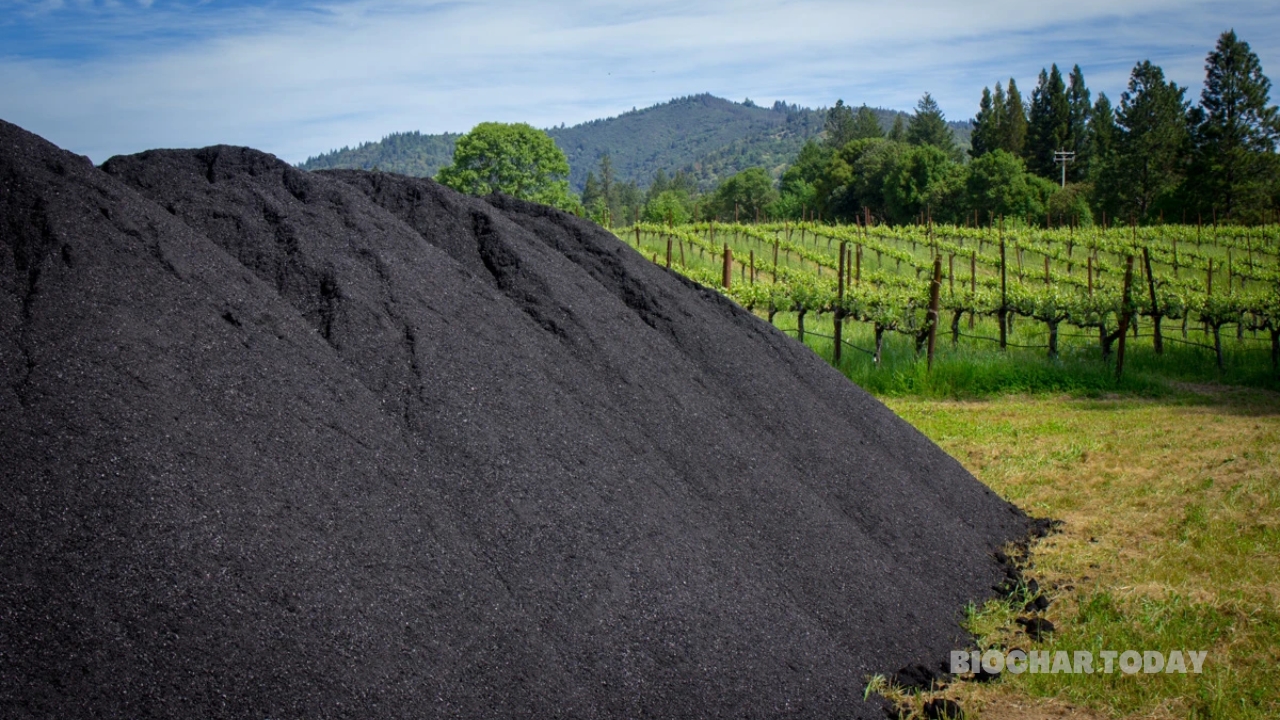
Secondly, biochar as a technology is well-supported by scientific research and is increasingly recognized for its co-benefits beyond carbon sequestration. The Euthenia project, which utilizes waste from olive groves in Andalusia, Spain, offered a compelling story of positive impact. Beyond locking carbon into a stable form through pyrolysisPyrolysis is a thermochemical process that converts waste biomass into bio-char, bio-oil, and pyro-gas. It offers significant advantages in waste valorization, turning low-value materials into economically valuable resources. Its versatility allows for tailored products based on operational conditions, presenting itself as a cost-effective and efficient More, the biochar produced improves soil quality, enhances water retention, and supports regenerative agriculture practices in a region facing climate pressures. The project’s work in educating local farmers on the use of biochar further strengthened its appeal.
Beyond Transactional: The Value of Project Transparency and Co-Benefits
The geographical location of the Euthenia project was another key factor. With a significant office in Spain, EcoVadis felt a stronger connection to supporting a project in a region where they have a local presence and can contribute to the well-being of nearby communities. This highlights a growing trend among companies to seek out offsetting projects that offer tangible, local co-benefits aligned with their values and operations.
EcoVadis’s approach to their relationship with Euthenia also deviates from a purely transactional model. While Supercritical facilitates the credit purchase, EcoVadis is keen to develop a more direct relationship with the project developer, understanding their day-to-day operations and the broader impact of their work. This desire for transparency and connection reflects a maturing perspective on carbon offsetting, viewing it less as a simple commodity transaction and more as a form of partnership aimed at driving real-world positive change. This deeper engagement is not only about ensuring the credibility of their investment but also about leveraging the story for internal and external communication to their employees and potentially customers.
Navigating the Carbon Market and Future Plans
The voluntary carbon market is currently in a state of flux, with increasing demand for high-quality removal credits potentially leading to scarcity and price increases in the coming years. Reports indicate that a significant portion of available biochar credits for the near future have already been pre-sold. EcoVadis’s proactive step to secure biochar credits is a strategic move in this tightening market. They intend to continue investing annually, ideally with the same project if credits are available, to build a long-term partnership and ensure a consistent contribution to permanent carbon removal. “We definitely intend to keep investing in the same biochar project ideally if there are credits available,” confirms Wachter. This long-term view also helps streamline their internal processes compared to searching for new projects each year.
EcoVadis sees their investment not just as an offset but as a way to support innovative solutions and educate their stakeholders. While traditional tree-planting projects are easily understood, communicating the value of biochar credits requires education. “Pitching something like this to our marketing team. They say, ‘Well, but for our clients, it’s easy to understand that you planted one tree, it’s difficult to understand what you mean when you say you bought one carbon credit for biochar. That just doesn’t resonate, especially with the lower maturity customers.’” Wachter shared. EcoVadis sees this as an opportunity to demystify carbon removal technologies and highlight the multifaceted benefits of projects like Euthenia’s, which contribute to sustainable agriculture, waste utilization, and community empowerment alongside carbon sequestration. They are exploring ways to better communicate this complex value proposition to their audience, recognizing that “the more we educate the better we can do these kinds of projects.”
Key Takeaways for Industry
EcoVadis’s journey underscores several key trends for industry observers in the voluntary carbon market. Firstly, there is a clear and growing shift towards prioritizing high-integrity carbon removal credits, recognizing their essential role in achieving global net-zero targets. Companies are moving beyond solely relying on avoidance credits to incorporate durable removal solutions. Secondly, the importance of transparency and robust, science-backed methodologies in the carbon marketplace is paramount for building trust and ensuring the credibility of investments and avoiding concerns around greenwashing. Companies are increasingly performing thorough due diligence on the projects they support. Finally, businesses are increasingly looking for offsetting projects that offer significant co-benefits – environmental, social, and economic – and align with their broader sustainability strategies and values, moving beyond a purely transactional mindset towards impact-driven partnerships. EcoVadis’s commitment to leading by example, coupled with a willingness to navigate the complexities of the carbon market and prioritize genuine impact, sets a valuable precedent for businesses striving to make a meaningful contribution to a sustainable future.



Leave a Reply