
We are in a bit of a pickle, folks. Our planet is facing a collection of challenges that are becoming increasingly difficult to treat as separate problems. Agricultural soils are losing fertility, productive land is being degraded, temperatures are rising, mountains of organic waste continue to accumulate, water resources are under increasing pressure, and the demand for food, energy, and natural resources continues to grow. At the same time, communities around the world are being asked to become more resilient to climate change while producing more with fewer resources. It is a complicated equation, and there is no single technology capable of solving all of it. Yet, every now and then, a technology emerges that seems to sit at the intersection of several of these challenges. BiocharBiochar is a carbon-rich material created from biomass decomposition in low-oxygen conditions. It has important applications in environmental remediation, soil improvement, agriculture, carbon sequestration, energy storage, and sustainable materials, promoting efficiency and reducing waste in various contexts while addressing climate change challenges. More is one such technology.
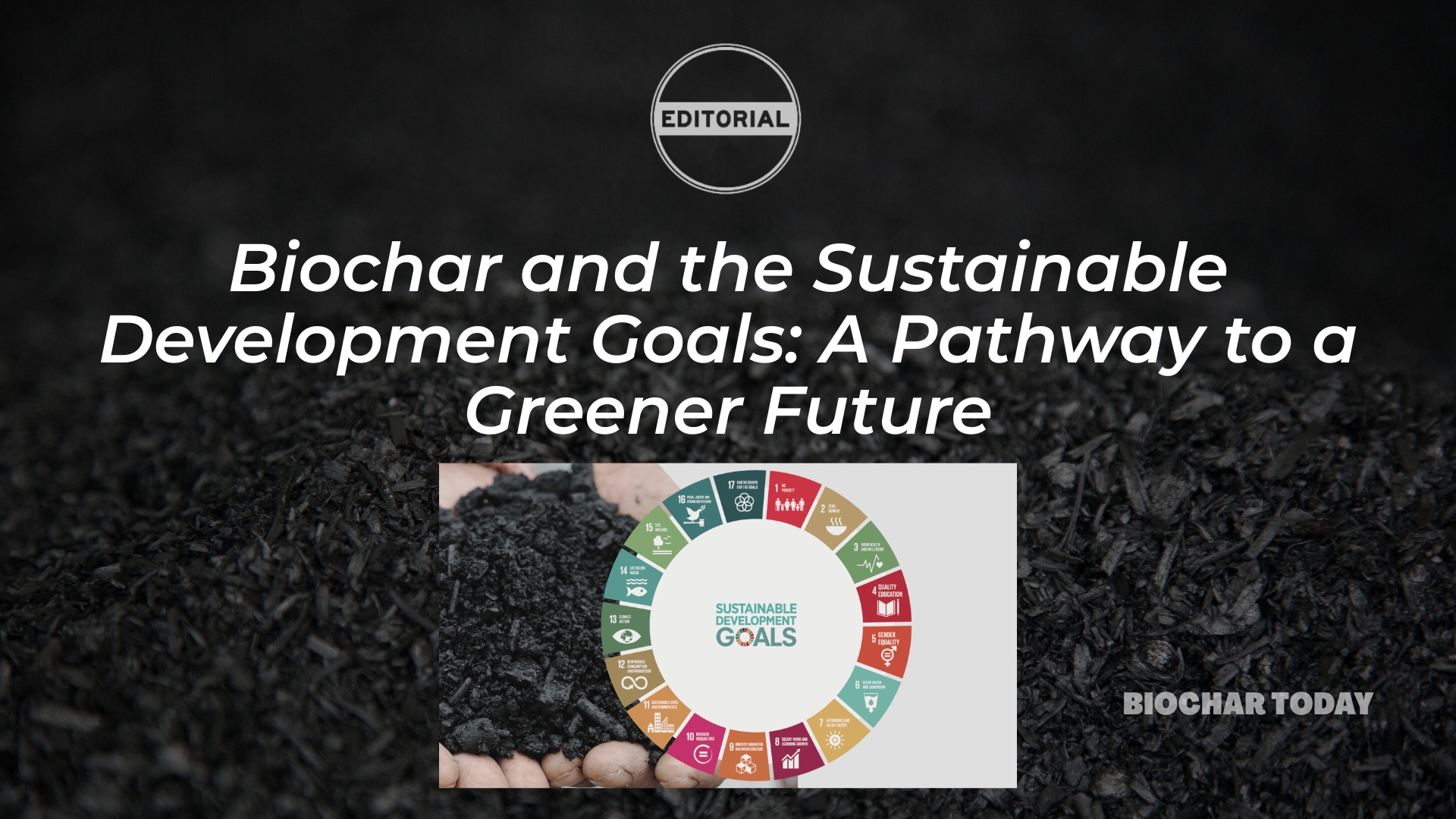
In 2015, the United Nations introduced the 17 Sustainable Development Goals (SDGs), establishing a global framework for ending poverty, protecting the planet, and improving prosperity by 2030. What makes the SDGs particularly important is that they are not really 17 independent goals. They are interconnected. Food security depends on healthy soils and reliable water. Clean water depends partly on responsible land and waste management. Climate action is connected to agriculture, energy, industry, and consumption. Decent livelihoods depend on productive landscapes and functioning local economies. In other words, progress in one area can influence progress in several others. This interconnected nature of the SDGs is precisely where biochar becomes interesting.

Biochar is often introduced as a soil amendmentA soil amendment is any material added to the soil to enhance its physical or chemical properties, improving its suitability for plant growth. Biochar is considered a soil amendment as it can improve soil structure, water retention, nutrient availability, and microbial activity. More or, more recently, as a carbon-removal material. Both descriptions are correct, but neither tells the whole story. Biochar is essentially a carbon-rich material produced through the thermal conversion of biomassBiomass is a complex biological organic or non-organic solid product derived from living or recently living organism and available naturally. Various types of wastes such as animal manure, waste paper, sludge and many industrial wastes are also treated as biomass because like natural biomass these More under limited oxygen conditions. Depending on the feedstockFeedstock refers to the raw organic material used to produce biochar. This can include a wide range of materials, such as wood chips, agricultural residues, and animal manure. More and production conditions, it can have a porous structure, substantial surface area, and diverse chemical characteristics. These properties give it potential applications in agriculture, environmental remediation, water treatment, construction, energy systems, and carbon management. More importantly, biochar provides a way to take biomass that might otherwise be burned, decomposed, or discarded and convert it into a material that can remain useful in another part of the economy.
This creates an intriguing connection between waste management, agriculture, climate action, and resource efficiency. Instead of viewing crop residues, forestry waste, food-processing residues, or other biomass as the end of a production cycle, we can potentially view them as the beginning of another one. Biomass can become biochar, and biochar can subsequently become part of a soil system, a water-treatment process, a construction material, or a carbon-removal pathway. The real opportunity, therefore, may not be simply in asking what biochar can do, but in asking what systems biochar can connect.
One of the most immediate connections is with poverty reduction and food security. For farmers, declining soil quality is not just an environmental concern; it can directly affect household income. Degraded soils can require greater fertilizer and irrigation inputs while producing less reliable yields. Biochar, when appropriately selected and applied, can improve several soil properties, including water retention, nutrient retention, aggregation, and microbial habitat. These effects can contribute to improved crop performance in some soil and climatic conditions, although the results are highly dependent on the feedstock, production process, application rate, soil characteristics, crop, and overall management system. This variability is important because there is no such thing as a universally effective biochar. A biochar produced from rice husk may behave very differently from one produced from coconut shells, wood residues, manure, or invasive plants.
The potential economic dimension makes this even more interesting. If biochar contributes to agricultural productivity while also storing carbon, farmers and agricultural projects may potentially benefit from both agronomic and carbon-related value. Carbon markets are increasingly creating opportunities for biochar-based carbon removal, although the economics, monitoring requirements, permanence, and distribution of benefits need careful consideration. If designed properly, such systems could help turn agricultural residues into an additional source of value rather than simply another waste-management burden. That creates a possible connection between SDG 2, Zero Hunger, and SDG 1, No Poverty. However, the real test will be whether these benefits can reach farmers and rural communities rather than being captured entirely by downstream project developers.
Biochar’s relevance to health and well-being is less obvious but equally interesting. Agricultural residue burning remains a source of air pollution in many parts of the world. Converting suitable residues into biochar can provide an alternative to open burning while creating a useful carbon-rich material. Biochar has also been investigated for the management of contaminants in soil and water, including certain heavy metals, pesticides, and other pollutants. In contaminated soils, appropriately engineered biochars can reduce the mobility or bioavailability of some contaminants, while in water-treatment systems, their porous structure and surface chemistry can enable adsorption of a range of pollutants. These applications could contribute indirectly to healthier communities by reducing environmental exposure. At the same time, biochar should not be viewed as a universal replacement for established treatment technologies. Its effectiveness depends on the contaminant and treatment conditions, and the fate of the contaminants after adsorption must always be considered.
This brings us naturally to clean water and sanitation. Water treatment is one of the areas where the physical and chemical characteristics of biochar become particularly valuable. Depending on how it is produced and modified, biochar can act as an adsorbent or filtration medium for certain organic compounds, nutrients, metals, and other contaminants. Researchers are also developing engineered biochar and biochar-based nanocomposites to improve treatment performance for specific pollutants. The possibility of producing treatment materials from locally available biomass is particularly attractive for regions where conventional materials are expensive or difficult to obtain. The broader idea is compelling: an agricultural residue generated within a community could potentially be converted into a material that helps address another local environmental problem.
The energy connection is equally important. Biochar is sometimes discussed exclusively in terms of carbon storage, but the pyrolysisPyrolysis is a thermochemical process that converts waste biomass into bio-char, bio-oil, and pyro-gas. It offers significant advantages in waste valorization, turning low-value materials into economically valuable resources. Its versatility allows for tailored products based on operational conditions, presenting itself as a cost-effective and efficient More process itself can produce gases and liquids with energy value alongside the solid biochar fraction. Depending on the technology and operating conditions, these products can contribute to energy recovery and improve the overall resource efficiency of biomass conversion. Biochar itself is also being investigated for advanced energy applications, including electrodes, supercapacitors, fuel cells, hydrogen-related technologies, and other functional materials. This means that the biomass-carbon pathway does not necessarily have to be a choice between energy and carbon storage. With appropriate system design, it may be possible to recover multiple forms of value from the same feedstock.
The implications extend beyond technology and into employment and economic development. A growing biochar sector can create opportunities across the value chain, from biomass collection and transportation to pyrolysis, equipment manufacturing, laboratory characterization, agronomic services, carbon accounting, monitoring, and project development. This could be particularly valuable in rural regions where agricultural residues are abundant but underutilized. Decentralized and regional biochar systems could potentially create local enterprises while reducing the environmental burden associated with unmanaged biomass. The biochar economy, therefore, may eventually involve far more people than those operating pyrolysis equipment. It could require farmers, soil scientists, engineers, technicians, environmental specialists, data professionals, carbon-accounting experts, and entrepreneurs.
The industrial story is also evolving rapidly. What once appeared to be a relatively simple black material produced from biomass is increasingly being investigated as an engineered carbon material. Differences in pore structure, surface chemistry, mineral content, electrical properties, and carbon stability open opportunities well beyond agriculture. Biochar-based materials are being explored for construction, environmental remediation, energy storage, filtration, and other advanced applications. The growing research and patent activity in these areas suggests that the future biochar industry may not revolve around a single product. Instead, we may see a much broader family of biochar-based materials designed for very different purposes.
Cities provide another fascinating example. Urban areas need healthy trees and vegetation for cooling, biodiversity, stormwater management, and quality of life, yet urban soils are often compacted, disturbed, and poor in structure. Biochar-amended soils and structural soils have been explored for supporting urban tree growth and improving stormwater management. Several cities have experimented with biochar in urban landscaping and green infrastructure. The concept is attractive because one intervention can potentially address several urban challenges at once: improving soil conditions, supporting vegetation, retaining water, and storing carbon. As cities increasingly look for practical ways to adapt to heat, flooding, and climate change, these multifunctional applications deserve greater attention.
Perhaps one of biochar’s strongest connections to the SDGs lies in responsible consumption and production. Modern economies have largely been designed around a linear model: extract resources, produce goods, consume them, and dispose of the resulting waste. Biomass residues are often treated as the final stage of that system. Biochar offers a different possibility by creating a circular pathway in which biomass carbon is recovered and transformed into a useful material. Crop residues can become soil amendments, organic residues can become carbon-storage materials, and biomass that might otherwise be openly burned can become part of a new value chain. The objective should not simply be to produce more biochar, but to use available biomass more intelligently and extract greater environmental and economic value from it.
The climate connection, of course, is central to the current interest in biochar. Plants capture atmospheric carbon dioxide as they grow, and when biomass decomposes or is burned, much of that carbon can eventually return to the atmosphere. Pyrolysis can convert a portion of the biomass carbon into a more persistent form. When biochar is appropriately produced, applied, and monitored, this carbon can remain stored for extended periods, creating an opportunity for durable carbon removal. Biochar can also influence greenhouse gas emissions from soils and agricultural systems under certain conditions. However, climate benefits should never be assumed simply because a material is labelled biochar. Feedstock sourcing, transportation, pyrolysis energy requirements, production efficiency, application, carbon stability, and the fate of co-products all influence the overall climate impact.
This is why measurement, reporting, verification, and credible carbon accounting are becoming increasingly important. The future credibility of biochar-based carbon removal will depend not merely on how many tonnes of biochar are produced, but on how confidently we can demonstrate the amount and durability of carbon stored and the overall climate benefit of the system. In many ways, this shift is healthy for the industry. It encourages biochar producers and project developers to move from broad claims toward measurable outcomes.
The connection with life below water is perhaps less direct, but it is nevertheless important. Nutrients and contaminants moving from agricultural land into rivers, lakes, and coastal ecosystems can contribute to eutrophication and ecological degradation. Biochar has been investigated as a tool for improving nutrient retention in soils and reducing nutrient losses, as well as for use in stormwater and filtration systems. When biochar contributes to better nutrient management on land, some of the environmental benefits may ultimately be experienced downstream. A healthier soil system can therefore contribute to a healthier watershed, reminding us once again that environmental systems rarely respect the boundaries we create between SDGs.
The same principle applies to life on land. Soil degradation can mean the loss of organic matter, structure, microbial activity, water-holding capacity, and biological function. Biochar can contribute to soil restoration by modifying physical and chemical conditions and providing habitat for microorganisms. It has been investigated in agricultural soils, degraded lands, reforestation systems, and restoration projects. But here too, biochar should be viewed as one component of a larger ecological strategy rather than a substitute for good land management. Healthy soils depend on organic matter inputs, vegetation, biodiversity, appropriate nutrient management, water management, and many other factors. Biochar can support these processes, but it cannot replace them.
And perhaps this is the most important point when we talk about biochar and the Sustainable Development Goals. We should stop thinking of the SDGs as 17 separate boxes. Nature does not work that way, and neither does agriculture. A farmer managing crop residues is simultaneously dealing with soil fertility, food production, waste, water, climate, and income. A city using biochar in urban soils may simultaneously be addressing vegetation, stormwater, heat, infrastructure, and carbon. A biomass-processing facility can potentially create jobs, avoid open burning, produce energy, manufacture a carbon-storage material, and supply agricultural inputs. This interconnectedness is where biochar becomes particularly compelling.
But it is also where we need to be careful.
The growing enthusiasm around biochar should not lead us to assume that every biochar product will deliver every possible benefit. The industry now has an opportunity—and perhaps an obligation—to become more sophisticated. Instead of asking whether biochar is good or bad, we should be asking a much more useful set of questions: What feedstock was used? How was the biochar produced? What are its chemical and physical characteristics? Where will it be applied? What problem is it intended to solve? What happens to contaminants? How much carbon is actually stored? What are the lifecycle emissions? Who benefits economically? And can the claimed environmental outcomes be measured?
These questions may be less exciting than simply declaring biochar a climate solution, but they are precisely the questions that can take the industry forward. The future of biochar may therefore be defined not by how much material we produce, but by how intelligently we use it. The most successful applications are likely to be those in which the properties of a particular biochar are matched to a specific environmental, agricultural, or industrial need. In other words, the next generation of biochar may be less about producing a generic black material and more about developing fit-for-purpose carbon solutions.
Biochar begins with biomass, but its story does not have to end with pyrolysis. It can move into a farm, a watershed, a wastewater system, a city, a construction material, an energy technology, or a carbon-removal project. That versatility is what makes it relevant to so many of the Sustainable Development Goals. So perhaps the question we should be asking is not whether biochar can solve the SDGs. No single technology can. The more interesting question is whether biochar can help us connect the dots between them. If we can turn waste into a resource, carbon into an asset, degraded soil into productive land, and local biomass into new economic opportunities, then biochar becomes more than a soil amendment or a carbon-removal technology. It becomes part of a larger transition toward a circular, regenerative, and climate-resilient economy.
And that may be the most important lesson of all: the future of sustainability may not depend on finding one solution to every problem, but on finding solutions that can solve several problems at once.
Biochar could be one of them.





Leave a Reply