

Dr. Debarati Chakraborty is a biocharBiochar is a carbon-rich material created from biomass decomposition in low-oxygen conditions. It has important applications in environmental remediation, soil improvement, agriculture, carbon sequestration, energy storage, and sustainable materials, promoting efficiency and reducing waste in various contexts while addressing climate change challenges. More researcher and practitioner with a strong interdisciplinary background spanning molecular biology, biotechnology, and sustainable agriculture. She is the Founder and CEO of ASDC Naturophilia Agrotech Pvt. Ltd., where her work focuses on application-specific biochar development, particularly for soil health rejuvenation, degraded land restoration, and circular agrowaste-based systems. Her biochar expertise is grounded in extensive field-based engagement with farming communities, where she works on artisanal and decentralised biochar production, biological activation protocols, and fit-for-purpose Standard Operating Procedures tailored to Indian agro-ecological conditions. Dr. Chakraborty actively integrates biochar with soil biology, crop systems, and water management rather than treating it as a standalone carbon material.
She has been involved in biochar application R&D for agriculture and remediation, including ongoing work on bamboo biochar for wastewater and industrial remediation, and has authored India’s first low-cost booklet on biochar to improve practitioner and farmer awareness. In parallel, she contributes to scientific evaluation and policy-relevant discussions to several national and international bodies. Let’s delve into the insights and visions of Dr. Debarati.
Shanthi Prabha: Your journey into biochar is deeply rooted in community-based farming and systems thinking. Can you tell our readers how biochar first entered your life and why it felt like a missing piece in the soil health rejuvenation puzzle?
Dr. Debarati Chakraborty: My journey into biochar began quite organically, rooted in my early exposure to community-based farming systems and a growing curiosity about how soils function as living, interconnected ecosystems. Around 2020, while exploring a range of sustainable agriculture practices, I first came across biochar. It immediately stood out because it addressed soil health not just as a nutrient problem, but as a systems problem involving biology, structure, water, and carbon. The real turning point came in 2022 with the founding of ASDC Naturophilia Agrotech Pvt. Ltd. That is when biochar truly entered my life in a practical sense. We began applying activated biochar as a soil amendmentA soil amendment is any material added to the soil to enhance its physical or chemical properties, improving its suitability for plant growth. Biochar is considered a soil amendment as it can improve soil structure, water retention, nutrient availability, and microbial activity. More across different crops and observed how it influenced moisture retention, root development, and overall soil resilience. We also developed various biochar-based soil mixes and in the process, realised how it solves several problems with appropriate tweaking. By 2023, my perspective on biochar had widened even further. I started exploring its role beyond agriculture, particularly in wastewater remediation and toxic soil recovery. Biochar connected ecological restoration, climate resilience, and circular resource use in a way few materials can. For someone grounded in systems thinking, biochar offered a rare opportunity to work across multiple disciplines while staying firmly rooted in the needs of farming communities and degraded landscapes.
SP: You come from a strong molecular biology and biotechnology background. How has this training shaped the way you approach biochar research, particularly in understanding soil–microbe–plant interactions?
DC: Coming from a molecular biology and biotechnology background has fundamentally shaped how I look at biochar—not just as a soil amendment, but as a driver of biological processes across agroecosystems. My PhD training taught me to think in terms of mechanisms. When I apply that lens to biochar research, I try to figure out what exactly it is doing at the microbial and plant interface, and how. Biochar creates highly heterogeneous microhabitats in soil—its pores, surface chemistry, and redox properties all influence microbial colonisation and activity. My background helps me interpret how these micro-environments selectively favour certain microbial guilds, enzyme expression, and nutrient cycling pathways, and ultimately shift community-level functions. My postdoctoral work in crop phenotyping using novel sensors trained me to link belowground molecular and microbial processes with aboveground plant responses in a quantitative, non-destructive way. When biochar is applied, I look for subtle changes in root architecture, nutrient-use efficiency, and overall crop vigour and yield. This allows me to connect microbial shifts in the rhizosphere to real, measurable plant outcomes.
Overall, my approach to biochar research is integrative: molecular biology helps me understand mechanisms, phenotyping helps me capture emergent plant responses, and soil science helps me contextualise both within real agroecosystems. This combination helps me to unravel soil–microbe–plant interactions, where biochar acts not as a single-factor input, but as a systems-level intervention that reshapes biological communication and resource flow in the soil.
SP: Artisanal biochar making is one of your focus area and in an era dominated by large-scale carbon removal projects, why do you believe decentralised, artisanal biochar production still matters—especially in the Indian context?
DC: Large-scale, industrial biochar systems offer tighter emission control, energy co-products, high precision, reproducibility, and a level of technical credibility that is important for regulated carbon markets. However, they also come with heavy capital expenditure, complex logistics, continuous maintenance requirements, and dependence on highly skilled operators. In the Indian context, where biomassBiomass is a complex biological organic or non-organic solid product derived from living or recently living organism and available naturally. Various types of wastes such as animal manure, waste paper, sludge and many industrial wastes are also treated as biomass because like natural biomass these More is abundant but fragmented, seasonal, and geographically dispersed across thousands of villages often creates huge limitations. No centralised industrial plant can economically chase this kind of feedstockFeedstock refers to the raw organic material used to produce biochar. This can include a wide range of materials, such as wood chips, agricultural residues, and animal manure. More without creating massive transportation emissions and logistical inefficiencies. Whereas artisanal biochar production succeeds in reaching inaccessible regions, which industrial systems often fail to. For artisanal projects, carbon sequestration happens close to the source of biogenic carbon, and in many cases, the biochar is applied back to the same land—or nearby fields—from which the biomass originated. This dramatically reduces supply-chain emissions and closes local nutrient and carbon loops. Feedstocks, soil types, crops, and climate conditions vary enormously across India. Decentralised production also allows biochar properties and application strategies to be tuned locally rather than standardised centrally. It unlocks participation of rural women, small farmers, FPOs and nurtures village-scale entrepreneurs as they can produce high-quality biochar with minimal capital and training. Thus, decentralised artisanal biochar production with appropriate dMRV approaches empowers communities that have historically been marginalised. Lastly, with the integration of IoT-linked biomass logs, pyrolysisPyrolysis is a thermochemical process that converts waste biomass into bio-char, bio-oil, and pyro-gas. It offers significant advantages in waste valorization, turning low-value materials into economically valuable resources. Its versatility allows for tailored products based on operational conditions, presenting itself as a cost-effective and efficient More data with exact GPS tagging, and appropriate emissions tracking, this manual system of artisanal biochar production can be upgraded to a system that can be reliable for the buyers and carbon credit registries.
SP: As quality variation is a recurring concern in biochar adoption, why is application-specific Standard Operating Protocol (SOP) development essential, and which quality parameters do you think Indian producers often overlook?
DC: Quality variation is one of the biggest bottlenecks in biochar adoption. This is because biochar is not produced from a single, uniform material under strictly maintained parameters for feedstock variety, quality, moisture content, pyrolysis temperature, residence timeResidence time refers to the duration that the biomass is heated during the pyrolysis process. The residence time can influence the properties of the biochar produced. More, and post-processing. This is precisely why application-specific Standard Operating Protocols (SOPs) are essential to generate fit-for-purpose biochar. It helps to answer questions like which problem are we trying to solve, in which soil–crop–environmental remediation context, and which properties biochar matters for that function. Some of the most overlooked parameters in biochar making are feedstock varietal influence, residence timeThis refers to the amount of time that the biomass is heated during the pyrolysis process. The residence time can influence the characteristics of the biochar, such as its porosity and surface area. More and post-production features like thermal degradation resistance, recalcitrance indices, point of zero charge, surface area and porosityPorosity of biochar is a key factor in its effectiveness as a soil amendment and its ability to retain water and nutrients. Biochar’s porosity is influenced by feedstock type and pyrolysis temperature, and it plays a crucial role in microbial activity and overall soil health. Biochar More relevant to the application
It is imperative to recognise that an extremely high surface area is not needed for all applications. For soil aggregation or carbon sequestration, stability and structure matter more than BET values—but these distinctions are rarely made. Applying fresh, unconditioned biochar directly to soil remains a common problematic practice. SOPs regarding post-production processing should clearly define whether composting, microbial inoculation, or nutrient charging is required for the intended use.
SP: You actively work on the biological activation of biochar, and what does biochar activation mean, and how does it impact biochar’s performance in real field conditions?
DC: Freshly produced biochar is highly reactive, carbon-rich, and largely biologically inert. If applied directly, it can rapidly adsorb nutrients and microbial metabolites. It can therefore reduce essential nutrients for plant growth, leading to inconsistent or delayed crop responses. Biochar activation is a biological and biochemical conditioningthat prepares biochar from a passive carbon scaffoldto function effectively for end use – soil application in our case. To achieve this, we load cotton stalk biochar with materials like vermicompost, compost tea, jeevamrut, and selected biostimulants as per the product requirement. These inputs introduce diverse microbial communities, dissolved organic carbon, enzymes, humic substances, and plant-growth-promoting metabolites that colonise biochar’s pore network and reactive surfaces. Activated biochar shows better crop vigour and yield, supports better water-use efficiency, reduces the risk of nitrogen immobilisation, and has more stable nutrient dynamics compared to raw biochar. From a systems perspective, biological activation aligns biochar carbon sequestration with soil biology, reduces dependence on external chemical inputs, and makes biochar accessible and effective for farmers under real-field conditions.
SP: Your work emphasizes soil rejuvenation rather than yield maximization alone. Based on your field experience, how does biochar behave differently in saline soils, drought-prone regions, and degraded agricultural lands?
DC: My work with biochar is grounded in the idea that soil health rejuvenation is a prerequisite for sustainable yield. For different stressed landscapes like saline soils, drought-prone regions, and degraded agricultural lands, biochar is not a one-size-fits-all solution. Its function, impact timeline, and mechanisms differ markedly depending on the dominant soil limitation. In drought-prone regions, activated biochar’s role is more physical and biological than chemical. Its porous structure enhances soil water-holding capacity and improves infiltration, reducing both runoff and evaporative losses. It supports a more active rhizosphere, stabilising microbial processes and root function. For saline soil, biochar effectively acts as a buffer and regulator. It remediates soil salinity due to its inherent characteristics, such as a high cation exchange capacity and anion exchange capacity, which deprive both cations and anions from forming salt in the soil, reduce sodium dominance, and improve the availability of calcium, potassium, and magnesium. Activated biochar in saline soil also optimises the water-salt balance of the soil, enhancing the lifespan of crops, and favouring overall crop performance. In degraded agricultural lands, where soils are compacted, carbon-depleted, and biologically inactive, biochar functions as a rebuilding scaffold. It provides a stable carbon backbone, aiding soil aggregate reformation and re-establishing biological activity. Biologically activated biochar accelerates the recovery of microbial diversity, improves nutrient retention, and reduces losses from leachingLeaching is the process where nutrients are dissolved and carried away from the soil by water. This can lead to nutrient depletion and environmental pollution. Biochar can help reduce leaching by improving nutrient retention in the soil. More and volatilisation. The first observable benefits are often improved soil tilth, root penetration, and uniform crop establishment.
SP: You work extensively with agrowaste-based circular models through Naturophilia Agrotech. How do you decide which biomass feedstocks are suitable for biochar production for agricultural use versus remediation or industrial applications?
DC: Working with agrowaste-based circular models means that feedstock selection is a strategic decision shaped by end use, local availability, environmental risk, and scalability. For agricultural applications, our priority is scale, safety, and soil compatibility. In Telangana, cotton cultivation covers about 20.23 lakh hectares—nearly 15.9% of the state’s total area. Cotton stalks are generated in enormous quantities every year and are often either wasted or openly burnt after harvest, contributing to air pollution and loss of valuable biomass carbon. This abundance makes cotton stalks an ideal feedstock for agricultural biochar; it is locally available, renewable on an annual basis, and logistically feasible for decentralised production. Also, it has properties well-suited for soil application, namely moderate fixed carbon and ashAsh is the non-combustible inorganic residue that remains after organic matter, like wood or biomass, is completely burned. It consists mainly of minerals and is different from biochar, which is produced through incomplete combustion. Ash Ash is the residue that remains after the complete More content, favourable pHpH is a measure of how acidic or alkaline a substance is. A pH of 7 is neutral, while lower pH values indicate acidity and higher values indicate alkalinity. Biochars are normally alkaline and can influence soil pH, often increasing it, which can be beneficial More for many regional soils, and low risk of introducing contaminants. Using this feedstock allowed us to close local nutrient and carbon loops by returning value to the same agroecosystems from which the biomass originated. For remediation and industrial applications, our feedstock selection criteria were based on literature reviews, precision, performance and ease of biomass availability, which outweighed scale. By aligning feedstock choice with end-use requirements and regional biomass realities, we at Naturophilia ensure that biochar remains both scientifically sound and practically scalable circular solutions.
SP: You are currently exploring bamboo biochar for wastewater and remediation applications. What makes bamboo biochar promising, and what early insights have emerged from your ongoing investigations?
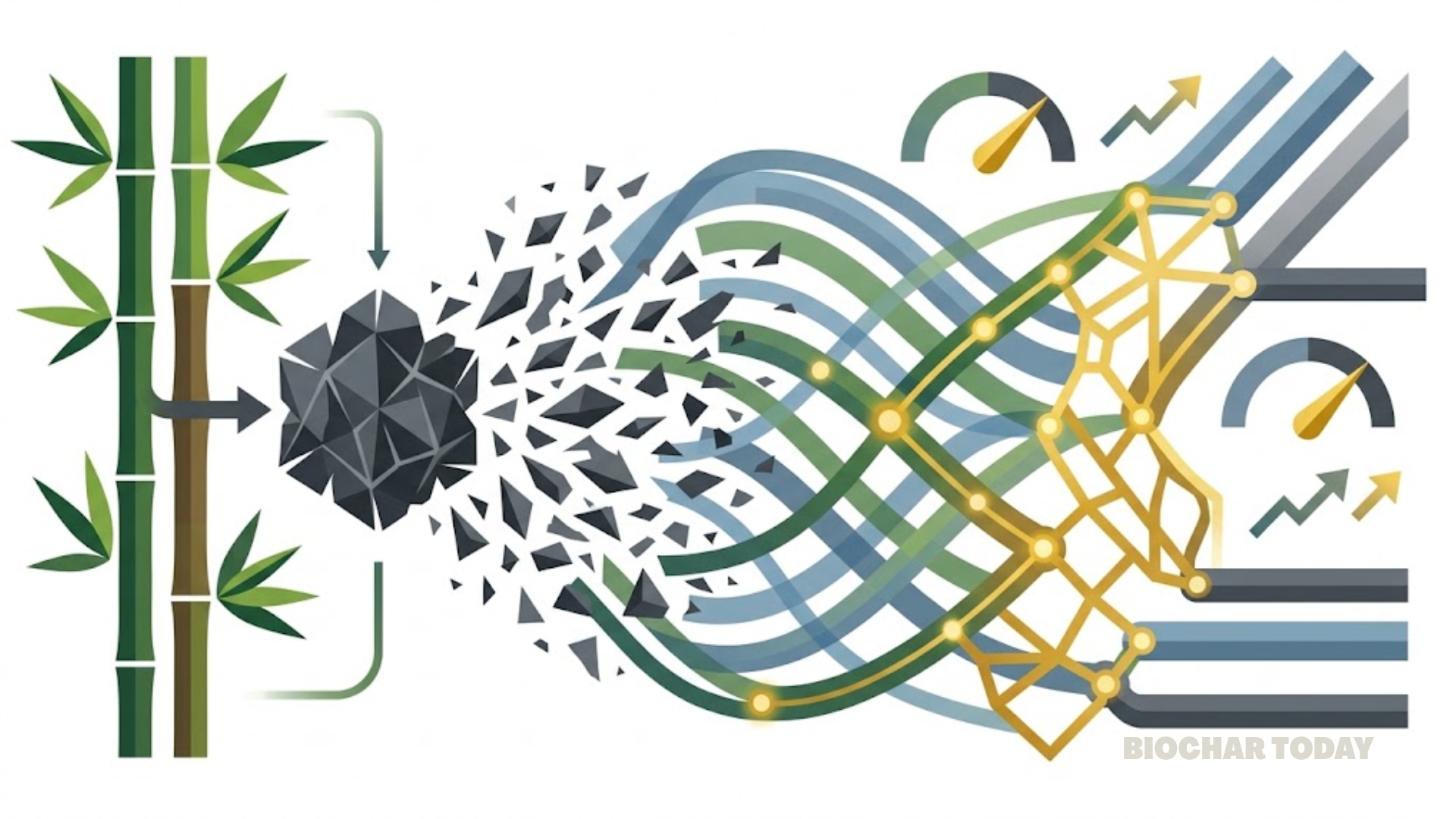
DC: We focused on bamboo because of specific physicochemical properties—such as high surface area, well-developed micro- and mesoporosity, and strong adsorption potential. Extensive literature supports bamboo as a superior feedstock for remediation purposes, particularly for the adsorption of toxic trace metals and organic pollutants. Its lignocellulosic structure helps to generate high-quality biochar with consistent pore architecture, and bamboo is relatively easy to source in a clean, uncontaminated form. Also, the fact that India is a haven for diverse bamboo species, bamboo shows faster growth compared to trees, can be harvested annually, and regenerated without replanting, influenced our decision. As this work is still ongoing in collaboration with Dharmavana Nature Ark, we cannot reveal many details, but the preliminary results look very promising.
SP: India has immense biochar potential but slow mainstream adoption and in your view, what are the three biggest bottlenecks currently holding back the biochar industry in India—technically, economically, and institutionally?
DC: India’s biochar potential is undeniable, with abundant biomass, urgent soil degradation challenges, and growing climate pressures, yet its mainstream adoption remains slow because of multidimensional constraints. The foremost technical challenge is not the absence of technology, but the extreme lack of public awareness about biochar and how differently it behaves across soils and end applications. Biochar is often perceived either as a miracle input or dismissed as ineffective, both outcomes stemming from poor understanding and incorrect use. This is compounded by the lack of fit-for-purpose standards and application-specific SOPs. Economically, biochar suffers from a mismatch between investors and farmer beneficiaries. Carbon markets remain largely inaccessible to small and decentralised producers, and there is little economic recognition for avoided residue burning or long-term soil regeneration. Lastly, overlapping applications of biochar between agriculture, waste management, climate mitigation, and rural livelihoods lead to fragmented and inconsistent policy support. There is no strong national or regional consortium that brings together producers, farmers, researchers, extension agencies, carbon market actors, and experienced experts onto a common platform. This absence limits knowledge sharing, slows standard setting, and weakens advocacy.
SP: Regarding Standardisation, certification, and trust are critical for scale-up, what gaps do you see in India’s current regulatory and quality assurance ecosystem for biochar, and what urgent steps should be taken?
DC: First, there is no nationally recognised, fit-for-purpose biochar standard. Existing references are often borrowed loosely from international frameworks, but they are not adapted to Indian feedstocks, soils, climates, or use cases. Without clear quality benchmarks and field-validated protocols, biochar struggles to build agronomic credibility, and early failures continue to undermine farmer confidence. Second, quality assurance is fragmented, highly expensive and often inaccessible. Lastly, the existing certification or verification pathway does not effectively link biochar production quality to field performance and climate outcomes. Carbon certification exists in isolation from the agronomic quality of crops, and agronomic use lacks performance-linked assurance, undermining both farmer confidence and market integrity. To tackle this, it is urgently needed to develop application-specific national standards. Standards must differentiate between agricultural, remediation, and industrial uses, and define minimum and maximum thresholds for key parameters relevant to each application. Next, India needs a tiered, affordable testing and certification system. Basic compliance testing should be accessible at the state or regional level. There is also an urgent need to form a nationwide consortium of various levels of stakeholders to address these issues from multiple angles, integrating biochar into existing institutional frameworks.
SP: You work closely with farming communities across diverse agro-ecological zones. What practical challenges faced by farmers are often underestimated or ignored in mainstream biochar research and policy discussions?
DC: Many of the real barriers to biochar adoption are practical, contextual, and region-specific, yet they are often underestimated or completely ignored in mainstream research and policy discussions. Farmers work under intense seasonal pressure and uncertain climate regimes, especially. If biochar does not fit into their existing work regime, it is perceived as a burden, regardless of its long-term benefits. Many biochar benefits are medium- to long-term. However, the cost and perceived risk are immediate. Mainstream discussions often underplay this imbalance and fail to design region-specific support mechanisms like awareness sessions, hands-on training that de-risk first-time adoption, such as phased application, demonstrations, or bundled inputs.
Farmers struggle with uniform application, lack of training, knowledge gaps around activation and integration and compatibility with existing tools. Research papers rarely address simple on-farm application methods, yet these factors strongly influence farmer acceptance.
SP: Looking ahead, what is your vision for the coming year in the biochar field—both for your own work and for the broader Indian biochar ecosystem?
Are there specific application areas or collaborations you believe will be especially important?
DC: For my own work, the focus will be on moving from pilots to well-documented, field-validated systems. I see strong potential in scaling of application-specific biologically activated biochar for better soil health and overall crop vigour. Besides, a lot of interest is popping up in the use of biochar for construction and architectural uses, applications in the steel industries to substitute, to some extent, the current carbon-intensive inputs. Industrial collaborations with research institutions, universities, FPOs, and NGOs will play a pivotal role in this regard.
SP: Biochar is increasingly linked with carbon markets and climate finance, so how can India ensure that biochar remains a soil- and farmer-centric solution, rather than becoming purely a carbon accounting tool?
DC: Climate finance can accelerate scale, but if carbon accounting becomes the primary driver, biochar risks being reduced to a money vending mechanism rather than a tool for soil regeneration. In India, ensuring that biochar remains soil- and farmer-centric requires a deliberate shift in how we frame, deploy, and reward its use. We need to significantly enhance farmer awareness that soil is a living system, not an inert growth medium. Biochar should be positioned as a biological infrastructure that supports microbes, roots, water dynamics, and nutrient cycling. Carbon markets should recognise and incentivise functional outcomes such as improved soil biological activity, reduced fertiliser dependency, and enhanced water resilience, rather than rewarding tonnage of carbon fixed alone. Decentralised biochar systems, community ownership models, and transparent benefit-sharing mechanisms are essential. Farmers must see biochar improving their soils and livelihoods before carbon credits are even discussed.
Dr. Debarati Chakraborty’s work can be accessed at Google Scholar and Research Gate.


Leave a Reply