
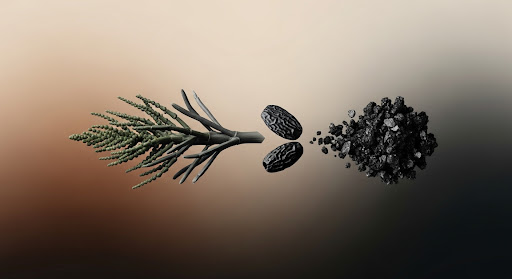
A few years ago, if someone had told me that plants growing in salty water and agricultural waste could play a major role in sustainable energy and soil recovery, I probably would have raised an eyebrow. But that’s exactly where my research journey has taken me, and it’s been both exciting and humbling.
I come from a background in mechanical and thermal energy engineering, and I’ve always been drawn to projects that connect science with real environmental impact. When I began working with biomassBiomass is a complex biological organic or non-organic solid product derived from living or recently living organism and available naturally. Various types of wastes such as animal manure, waste paper, sludge and many industrial wastes are also treated as biomass because like natural biomass these More conversion, especially through pyrolysisPyrolysis is a thermochemical process that converts waste biomass into bio-char, bio-oil, and pyro-gas. It offers significant advantages in waste valorization, turning low-value materials into economically valuable resources. Its versatility allows for tailored products based on operational conditions, presenting itself as a cost-effective and efficient More, I discovered how valuable overlooked resources like Salicornia (a salt-tolerant plant) and date palm waste can be.
These materials are abundant in arid regions. They don’t compete with food crops, and they grow in harsh conditions where little else survives. It made me wonder: why aren’t we doing more with them?
That question led me to the heart of my current work, exploring how we can turn these types of biomass into biocharBiochar is a carbon-rich material created from biomass decomposition in low-oxygen conditions. It has important applications in environmental remediation, soil improvement, agriculture, carbon sequestration, energy storage, and sustainable materials, promoting efficiency and reducing waste in various contexts while addressing climate change challenges. More and other useful products through pyrolysis.
In simple terms, pyrolysis is the process of heating organic material in the absence of oxygen. It’s not new, but its applications are evolving fast. What’s fascinating is that it produces not just one, but three valuable outputs: biochar, bio-oil, and gas.
Each has its own use. Bio-oil can be refined into fuel, gas can generate heat or electricity, and biochar, well, that’s where I’ve focused most of my efforts.
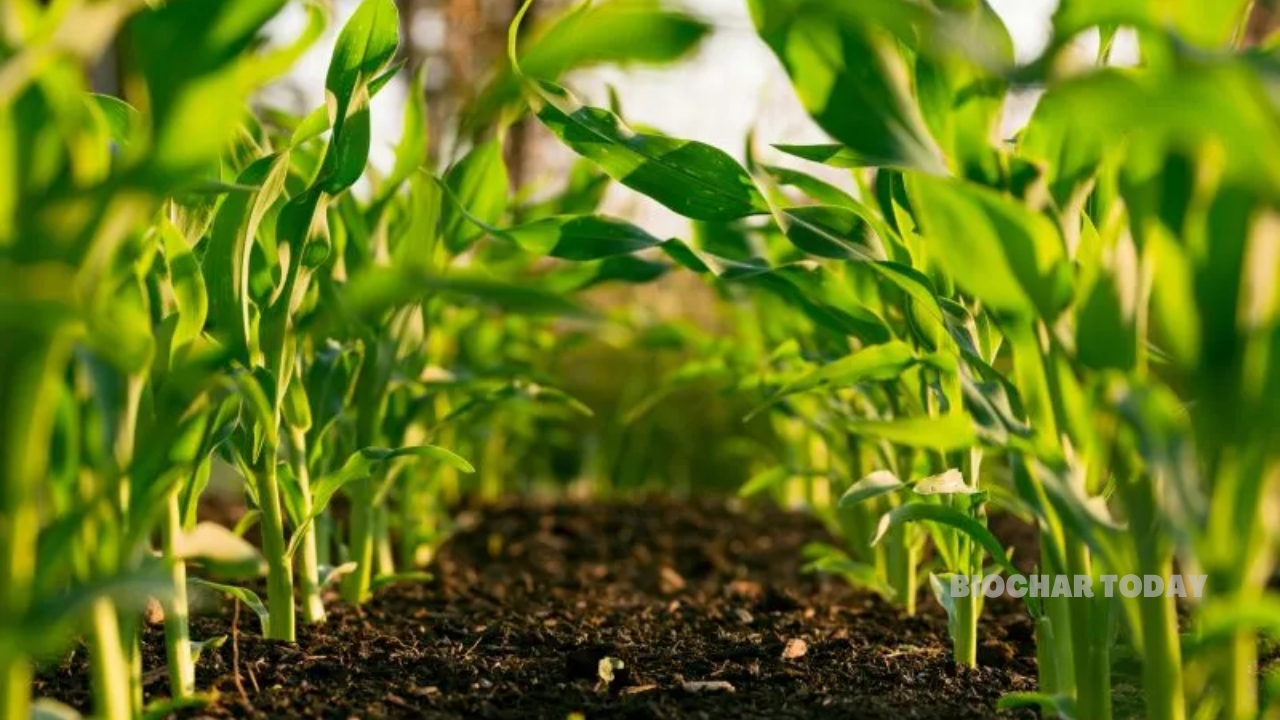
At first glance, biochar might just look like a black powder. But it holds incredible promise. It improves soil health, retains moisture, helps reduce fertilizer use, and can even bind with pollutants. On top of all that, it stores carbon in a stable form, keeping it out of the atmosphere.
That’s powerful, especially when you consider the environmental challenges we’re up against today.
Most biochar research tends to focus on wood chips or food crop residues. But in places where fresh water is scarce and soil is already salty, growing conventional crops just isn’t feasible. That’s why I turned my attention to Salicornia. It grows in saltwater, thrives in desert-like conditions, and doesn’t need the inputs that typical crops do.
When paired with date palm waste, a byproduct already piling up in agricultural areas, it creates a promising blend. Together, these two feedstocks open a new door: one that turns local waste into local solutions.
The biochar produced from this mix has some unique characteristics, especially in terms of mineral content and structure. That’s where careful study comes in. My research focuses on understanding not just how to produce the biochar, but how to make sure it’s safe and effective, particularly when used in soils that are already alkaline or sensitive.
Working in this field has taught me that it’s not enough to just create a product, we have to understand its full environmental impact. That means testing for things like heavy metals or chemical residues, and thinking about how the biochar behaves in different settings.
Every region, every soil, every application is different. The key is to tailor our approach and make sure we’re not causing unintended harm. In the end, the goal is to support healthier ecosystems, not just reduce emissions on paper.
What excites me the most about biochar isn’t just what it does today, but what it could do tomorrow. We’re just beginning to understand its potential.
I see a future where farmers use tailored biochar blends to restore damaged soil. Where waste streams are seen as resources, not problems. Where energy, agriculture, and environmental science work together.
But to get there, we need to bridge the gap between lab research and practical implementation. That’s why I value platforms like Biochar Today they create a space where scientists, farmers, entrepreneurs, and policymakers can connect, learn, and build solutions together.
Biochar is not a silver bullet, but it is a powerful tool, especially when it’s produced thoughtfully and applied wisely. For me, working with saline biomass has been a way to turn local challenges into opportunities. It’s a story of resilience, of plants, of ecosystems, and of people working to make things better.
Let’s turn waste into something that truly gives back.



Leave a Reply