
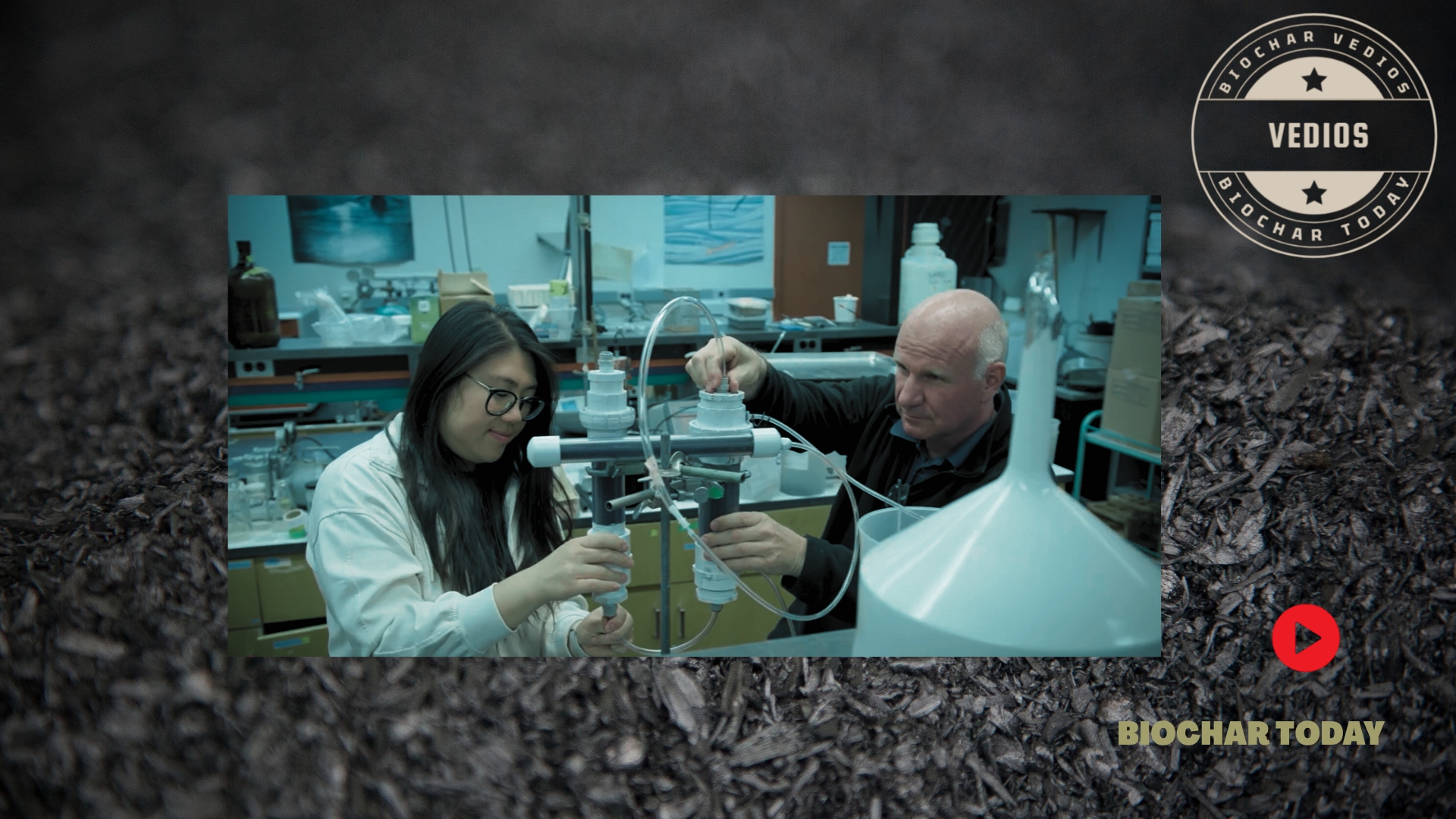
In this video presentation, Dr. Johannes Lehmann and Dr. Deborah Aller from the Cornell University College of Agriculture and Life Sciences examines an innovative biocharBiochar is a carbon-rich material created from biomass decomposition in low-oxygen conditions. It has important applications in environmental remediation, soil improvement, agriculture, carbon sequestration, energy storage, and sustainable materials, promoting efficiency and reducing waste in various contexts while addressing climate change challenges. More project designed to resolve persistent dairy manure management challenges and nutrient run-off across New York agricultural systems. The research evaluates the thermochemical conversion of cow manure into a highly stable soil amendmentA soil amendment is any material added to the soil to enhance its physical or chemical properties, improving its suitability for plant growth. Biochar is considered a soil amendment as it can improve soil structure, water retention, nutrient availability, and microbial activity. More to determine optimal nutrient retention and soil microbial ecosystem impacts. By focusing on the underlying mechanisms of carbon persistence and soil fertility enhancement, the project provides concrete metrics to overcome traditional environmental risks associated with raw manure handling on modern livestock farms.
For readers of Biochar Today, this presentation offers essential practical data for converting controlled laboratory findings into scalable, economically viable field operations. Demonstrating how livestock waste streams can be transformed into valuable soil amendments directly advances circular economy principles by closing regional nutrient loops. Furthermore, the documented carbon persistence measurements provide actionable guidance for agronomists, land managers, and carbon credit developers seeking to quantify long-term carbon sequestration and validate regional soil restoration protocols.





Leave a Reply