
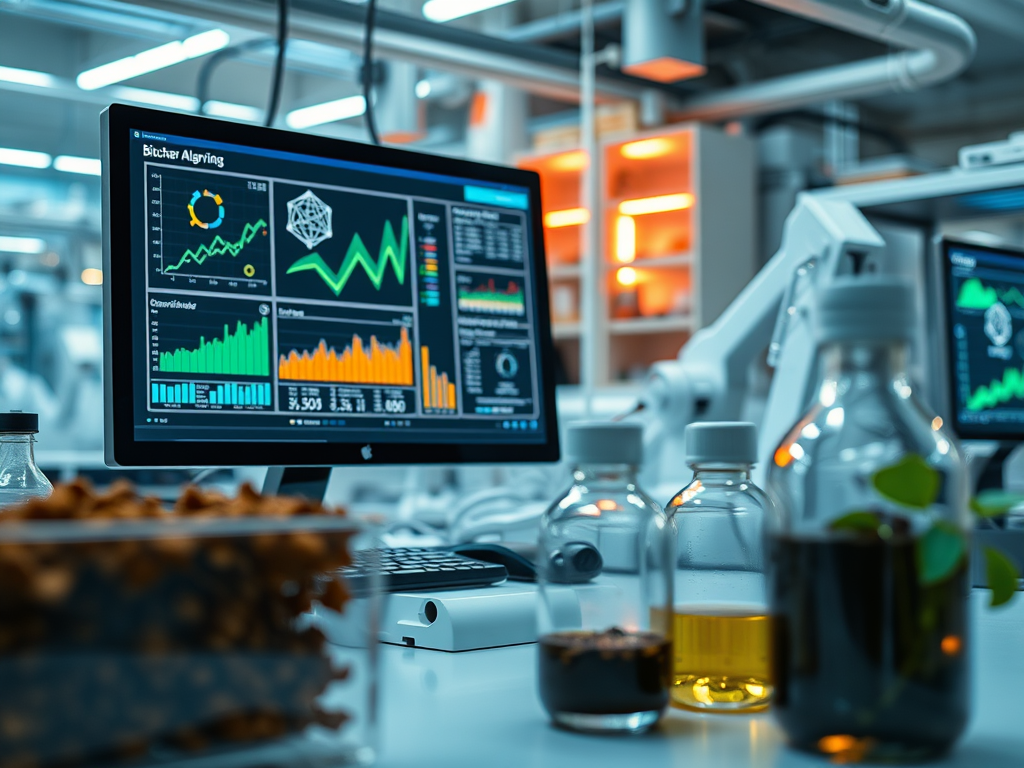
In a recent study published in Scientific Reports, Raouf Hassan and Mohammad Reza Kazemi explored the use of machine learning to predict the adsorption of organic materials on biocharBiochar is a carbon-rich material created from biomass decomposition in low-oxygen conditions. It has important applications in environmental remediation, soil improvement, agriculture, carbon sequestration, energy storage, and sustainable materials, promoting efficiency and reducing waste in various contexts while addressing climate change challenges. More and polymer resins. The study utilized a dataset of 1750 adsorption isotherms, including adsorption data for 73 organic materials on 50 biochar samples and 30 polymer resins. Machine learning models were developed using eight input parameters, such as Abraham solvation descriptors, total pore volume, specific surface area, and equilibrium concentration, to predict the adsorption degree.
The researchers evaluated various machine learning methods, including Linear Regression, Support Vector Regression, Decision Trees, Random Forests, and several ensemble algorithms. Among these, the XGBoost algorithm demonstrated superior accuracy, achieving an R² of 0.974 and a mean squared error (MSE) of 0.0343. This finding underscores the effectiveness of machine learning, particularly XGBoost, in accurately forecasting adsorption levels and providing insights into key variables that influence adsorption mechanisms.
The study highlights the increasing threat of organic pollutants, originating from personal care products, pesticides, and food additives, to water resources and environmental integrity. Physical adsorption is identified as an effective method for removing these pollutants due to its economical nature and straightforward application. While materials like biochar have shown promise as adsorbents, the inefficiency of current technologies in handling new chemical pollutants and modern adsorbents has led to a shortage of reliable data on compound adsorption mechanisms.
To address these shortcomings, the researchers employed machine learning models to more effectively utilize existing data and minimize the need for extensive adsorption experiments. Machine learning, with its ability to analyze complex datasets and uncover hidden trends, offers a powerful tool for predicting adsorption behavior.
Source: Hassan, R., & Kazemi, M. R. (2025). Machine learning frameworks to accurately estimate the adsorption of organic materials onto resin and biochar. Scientific Reports, 15(1), 15157.


Leave a Reply