

Recent trials conducted by the World Vegetable Center (WorldVeg) have provided robust evidence supporting the integration of biocharBiochar is a carbon-rich material created from biomass decomposition in low-oxygen conditions. It has important applications in environmental remediation, soil improvement, agriculture, carbon sequestration, energy storage, and sustainable materials, promoting efficiency and reducing waste in various contexts while addressing climate change challenges. More into intensive vegetable production systems. Focusing specifically on okra cultivation, the research demonstrated that biochar amendments can drive substantial improvements in both crop productivity and environmental sustainability. By repurposing crop residues and organic waste into a stable carbon soil amendmentA soil amendment is any material added to the soil to enhance its physical or chemical properties, improving its suitability for plant growth. Biochar is considered a soil amendment as it can improve soil structure, water retention, nutrient availability, and microbial activity. More, the study highlights a scalable pathway for enhancing food security while simultaneously addressing climate mitigation goals in tropical and sub-tropical agriculture.
The central challenge addressed by this research is the critical need to sustainably intensify vegetable production to meet growing urban demand without exacerbating environmental degradation. Conventional high-input farming often relies heavily on synthetic fertilizers, which can lead to significant nitrous oxide emissions, soil acidification, and nutrient runoff. Furthermore, many agricultural soils in the target regions suffer from low organic matter content, limiting their capacity to retain water and nutrients, thereby constraining yields and resilience against climate variability.
To combat these issues, WorldVeg researchers implemented a solution involving the application of biochar at a rate of 30 tonnes per hectare, combined with standard rates of either mineral or organic fertilizers. This approach leverages the porous structure of biochar to act as a nutrient and moisture reservoir in the soil. The strategy aims to create a synergistic effect where the biochar amendment enhances the efficiency of the applied fertilizers, ensuring that nutrients remain available for plant uptake rather than leachingLeaching is the process where nutrients are dissolved and carried away from the soil by water. This can lead to nutrient depletion and environmental pollution. Biochar can help reduce leaching by improving nutrient retention in the soil. More into the environment or volatilizing as greenhouse gases.
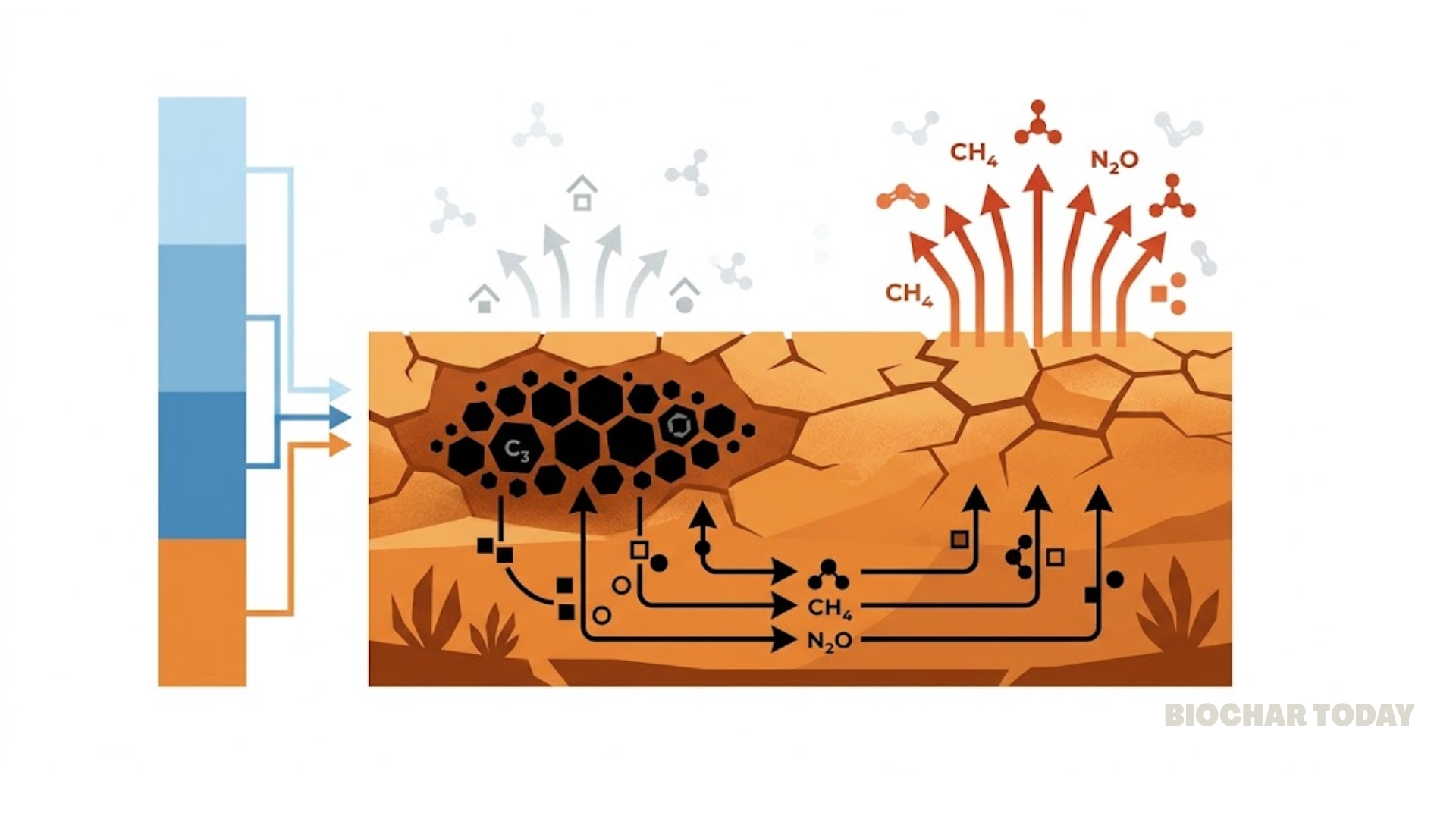
The outcomes of these trials were highly encouraging for the biochar industry. The data revealed that biochar-amended plots achieved a yield increase of 35% compared to mineral fertilizer alone, and an impressive 41% increase compared to organic fertilizer alone. Beyond raw productivity, the trials confirmed improved Nitrogen Use Efficiency (NUE) and reduced greenhouse gas emissions, specifically nitrous oxide. Crucially, these gains were achieved with no negative impacts on the soil microbiome diversity, validating biochar’s role in maintaining biological soil health. For industry stakeholders, these results underscore the value of high-dosage biochar applications in high-value vegetable crops as a proven method for “climate-smart” agronomy.




Leave a Reply