
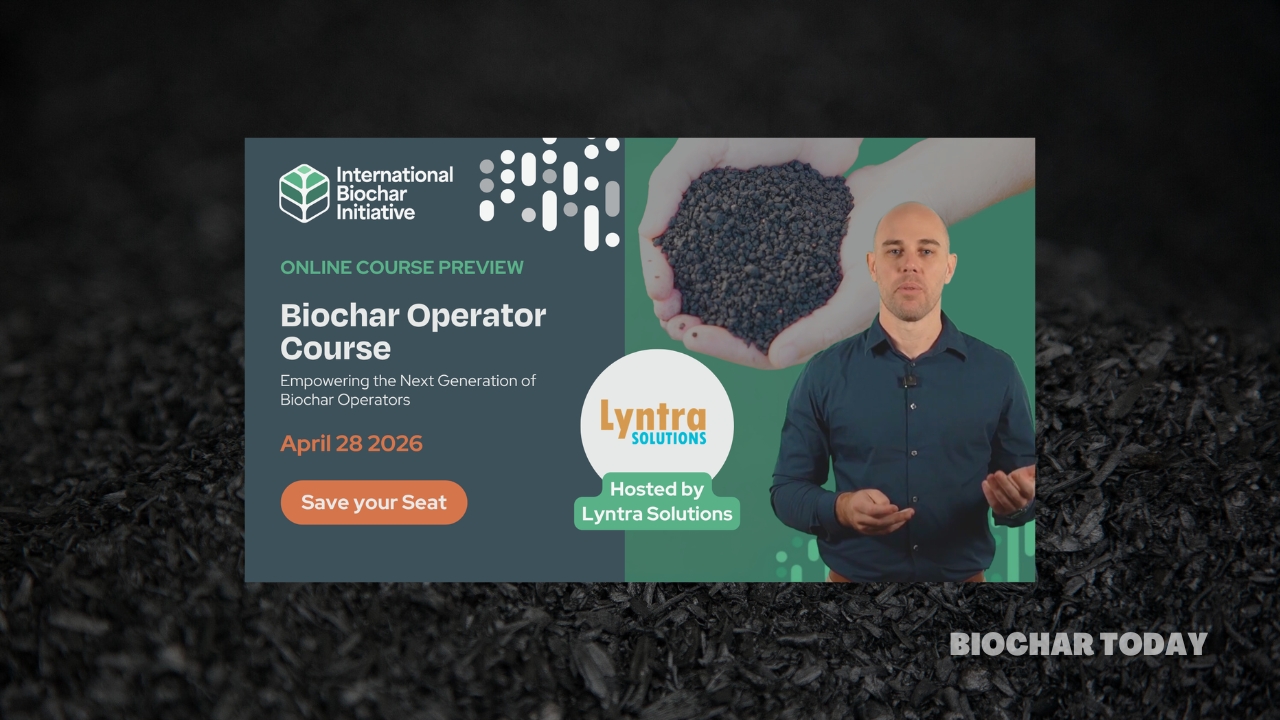
The International BiocharBiochar is a carbon-rich material created from biomass decomposition in low-oxygen conditions. It has important applications in environmental remediation, soil improvement, agriculture, carbon sequestration, energy storage, and sustainable materials, promoting efficiency and reducing waste in various contexts while addressing climate change challenges. More Initiative (IBI), in collaboration with the technical consultancy Lyntra, has introduced a comprehensive professional training program titled the Biochar Operator Course. This 100% virtual, self-paced certification is designed to provide plant operators, technical staff, and project stakeholders with a standardized foundation for managing biochar production facilities. The curriculum, which debuted its initial modules in May 2026, covers essential industrial domains including pyrolysisPyrolysis is a thermochemical process that converts waste biomass into bio-char, bio-oil, and pyro-gas. It offers significant advantages in waste valorization, turning low-value materials into economically valuable resources. Its versatility allows for tailored products based on operational conditions, presenting itself as a cost-effective and efficient More science, safety protocols, maintenance strategies, and carbon credit calculations. By providing a verified training path, IBI aims to professionalize the workforce and enhance the operational credibility of projects worldwide, specifically targeting a global audience within the emerging carbon removal industry.
The primary challenge addressed by this initiative is a significant gap in operational capacity and reliability within the biochar sector. Market data from 2025 indicated that the industry delivered only 46% of its forecasted output, with 73% of active projects forced to downgrade their production capacity. This underperformance is largely attributed to the “human element”—a shortage of skilled personnel capable of navigating the daily complexities of high-heat industrial environments and plant-floor realities. Furthermore, the lack of standardized operational procedures has resulted in low approval rates from major carbon credit buyers, with only 12% of assessed projects meeting the rigorous standards required for institutional investment and “bankable” status.
To mitigate these risks, IBI and Lyntra have developed a seven-module curriculum reviewed by an expert international advisory committee. The solution focuses on translating high-level engineering concepts into practical, day-to-day routines through 30 on-demand videos and 35 technical resources, such as Standard Operating Procedures (SOPs) and root cause analysis worksheets. The course emphasizes safety and compliance, drawing on real-world incidents to prevent operational failures. It also integrates quality control methods, such as representative sampling, and provides frameworks for calculating carbon removal volumes using established methodologies. This structured approach ensures that facility management is driven by data and consistent maintenance rather than reactive troubleshooting.
The anticipated outcomes of this certification program include a more resilient and scalable biochar industry characterized by improved Overall Equipment Effectiveness (OEE). By establishing a baseline of competency for operators, planners, and fire inspectors alike, the course is expected to de-risk facilities for insurers and financiers. Standardizing quality control and safety protocols will likely lead to higher project approval rates by carbon credit buyers and a more predictable delivery of carbon removal certificates. Ultimately, the partnership between IBI and Lyntra provides the professional infrastructure necessary to move biochar production from experimental stages to stable, industrial-scale operations capable of meeting global climate targets.



Leave a Reply