
Key Takeaways
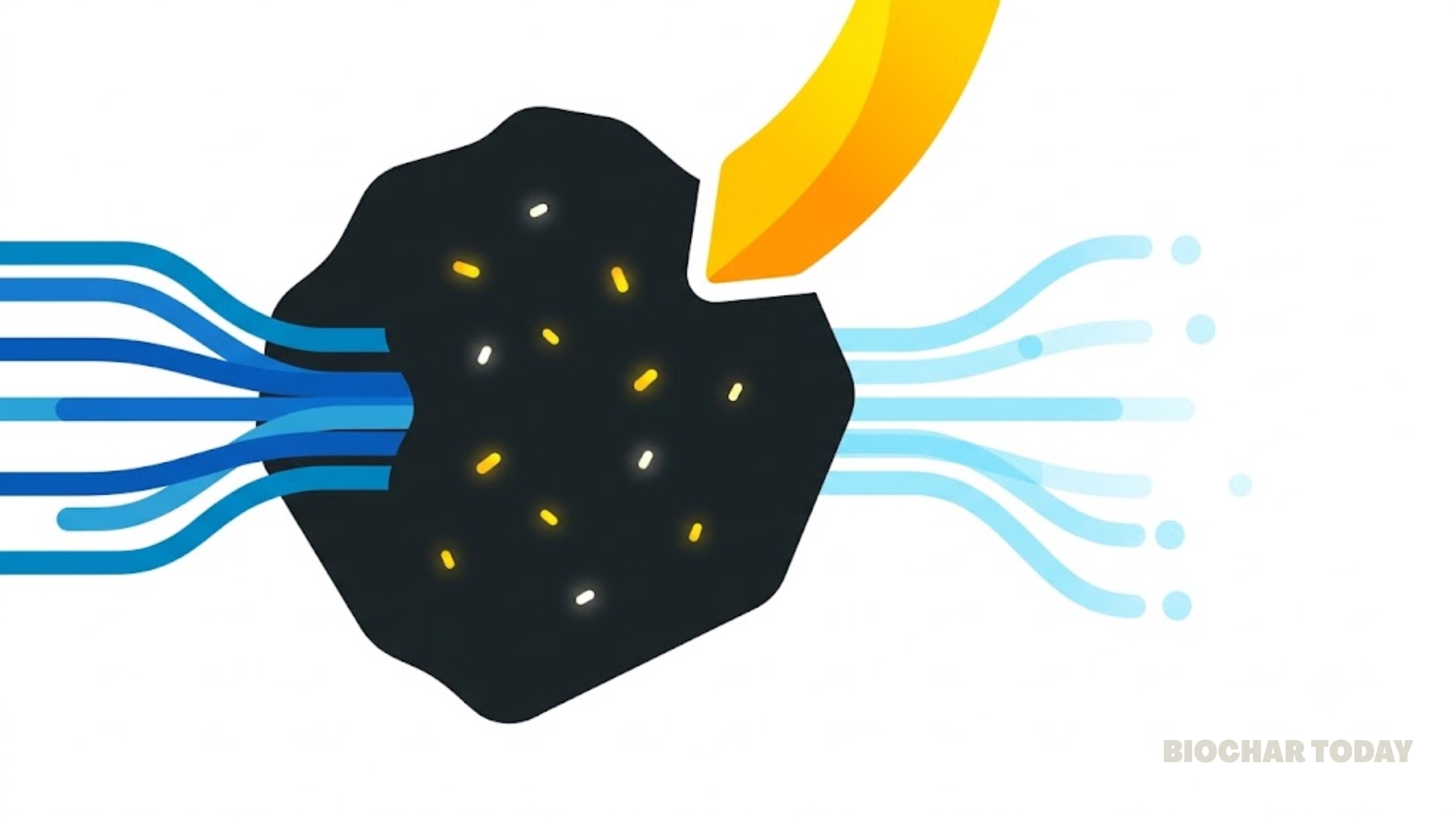
- A new magnetic composite material made from sawmill wood waste and nickel ferrite effectively cleans toxic dye pollution from wastewater using visible light.
- Combining porous wood biocharBiochar is a carbon-rich material created from biomass decomposition in low-oxygen conditions. It has important applications in environmental remediation, soil improvement, agriculture, carbon sequestration, energy storage, and sustainable materials, promoting efficiency and reducing waste in various contexts while addressing climate change challenges. More with nickel ferrite prevents particles from clumping together, increasing surface area and boosting pollutant breakdown.
- Under optimal conditions, the nanocomposite breaks down 95 percent of Methylene Blue and over 91 percent of Acid Red 27 within 90 minutes.
- Hydroxyl radicals and photogenerated electrons are the primary active chemicals driving the water purification process.
- The composite features built-in magnetic properties that allow it to be easily collected with a magnet and reused five times while maintaining over 80 percent efficiency.
The rapid growth of global textile industries releases massive volumes of untreated wastewater containing synthetic dyes into freshwater environments. These persistent organic pollutants reduce sunlight penetration in aquatic ecosystems, disrupting natural photosynthesis and generating toxic degradation products. Advanced oxidation processes like photo-Fenton degradation offer a clean solution by breaking down complex dye molecules into harmless water and carbon dioxide. However, pure magnetic catalysts such as nickel ferrite suffer from particle aggregation and low surface area, which limits their overall chemical activity.
To overcome these structural limitations, researchers converted sawdust waste collected from a local sawmill into high-value porous biochar. This biochar was loaded with nickel ferrite at different weight percentages to create stable magnetic nanocomposites. Testing revealed that the composite containing seventy-five weight percent biochar, designated as NiFe2O4/WRB3, produced an average crystallite size of seven point thirty-five nanometers and a mesoporous surface. The addition of biochar increased the specific surface area from nine point forty-six square meters per gram in pure nickel ferrite to one hundred eighty-seven point sixty-three square meters per gram in the composite material.
Under optimized conditions using zero point one grams per liter of catalyst, one millimolar hydrogen peroxide, and a neutral pHpH is a measure of how acidic or alkaline a substance is. A pH of 7 is neutral, while lower pH values indicate acidity and higher values indicate alkalinity. Biochars are normally alkaline and can influence soil pH, often increasing it, which can be beneficial More of seven, the composite degraded ninety-five percent of five parts per million Methylene Blue and ninety-one point forty-three percent of ten parts per million Acid Red 27 within ninety minutes of visible light exposure. The system also degraded sixty-four point fifty-two percent of untreated industrial textile wastewater and eighty-seven point six percent of a mixed dye solution. All degradation reactions followed first-order chemical kinetics, indicating rapid and consistent pollutant removal.
Chemical quenching experiments confirmed that hydroxyl radicals and photogenerated electrons serve as the primary reactive species driving the photo-Fenton breakdown process. The porous biochar matrix acts as an electron reservoir, accepting photogenerated electrons to prevent charge recombination and continuously regenerate active iron sites. Furthermore, the composite exhibited soft magnetic behavior with a coercivity of four hundred seventeen Oersteds, allowing for easy magnetic recovery after treatment. Reusability trials showed that the catalyst retained over eighty percent of its initial degradation efficiency after five consecutive cycles, confirming its long-term stability for industrial wastewater remediation.
Source: Dhila, H., Bhapkar, A., & Bhame, S. (2026). Visible-light assisted photo-Fenton degradation of textile dye effluents using NiFe2O4/biochar nanocomposite. Results in Chemistry, 29, 103770.




Leave a Reply