
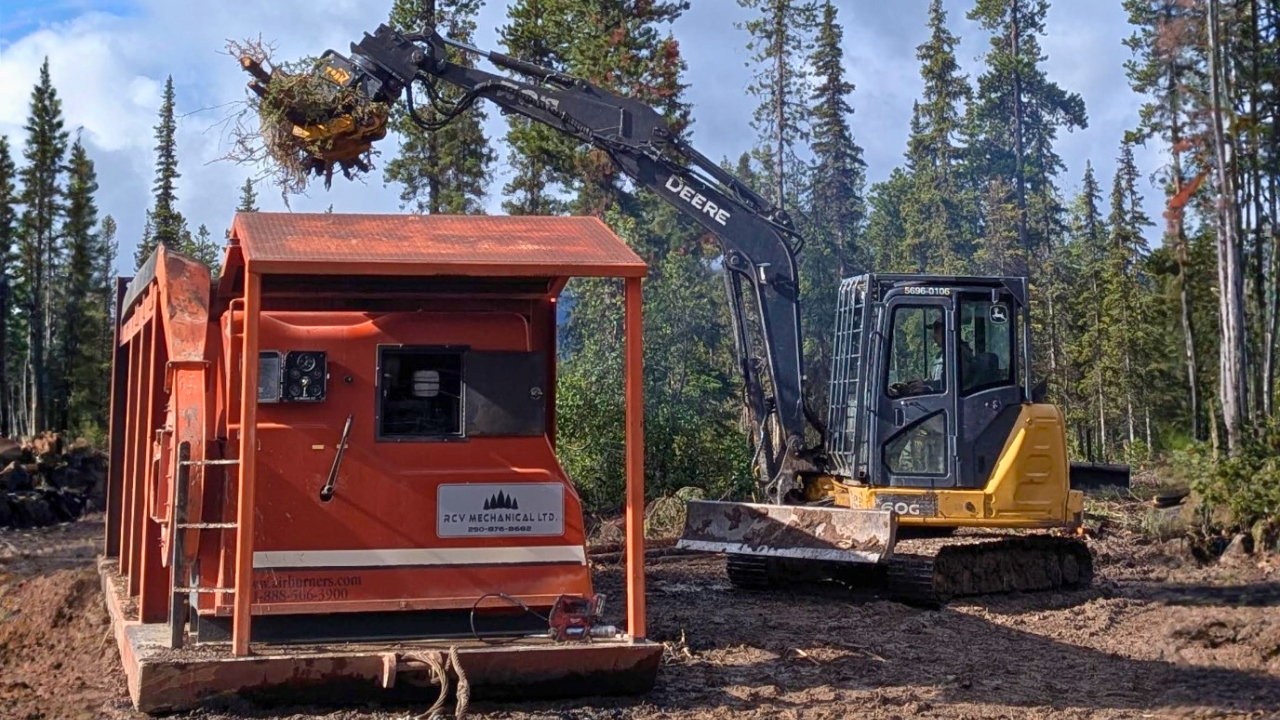
In the Wet’suwet’en territory near Smithers, British Columbia, the Wetzin’kwa Community Forest Corporation (WCFC) has integrated new waste management infrastructure to support sustainable stewardship across its 30,000-hectare tenure. Supported by a grant from the Forest Enhancement Society of BC, the organization has moved away from traditional disposal methods in favor of technology that balances ecological integrity with operational efficiency. This initiative highlights a strategic shift in how community forests handle biomassBiomass is a complex biological organic or non-organic solid product derived from living or recently living organism and available naturally. Various types of wastes such as animal manure, waste paper, sludge and many industrial wastes are also treated as biomass because like natural biomass these More, prioritizing environmental health alongside economic constraints.
The primary logistical challenge addressed by this initiative is the disposal of forestry waste, specifically thinnings. Historically, WCFC relied on open pile burning, a standard industry practice. However, this method presents significant drawbacks, including the release of smoke that compromises local air quality and the tendency for piles to smolder for extended periods. These issues not only caused frustration among local residents but also limited the operational window for waste disposal due to safety concerns and wildfire risks during warmer months.
To resolve these issues, WCFC adopted an Air Curtain Burner, also known as an Air Curtain Incinerator. This technology functions by directing a high-velocity stream of air over a burn chamber containing wood waste. The air curtain traps smoke and particulates, forcing them back into the combustion zone to be re-burned at high temperatures. Working in collaboration with local contractor RCV Mechanical Ltd., the WCFC successfully integrated this system into their thinning operations, ensuring compliance with BC Wildfire Service safety standards.
The implementation of this system has yielded measurable operational and environmental improvements. The combustion process is significantly faster, reducing disposal times from weeks to merely hours, which allows for year-round operation and immediate management of fuel buildup. Crucially, the process yields biocharBiochar is a carbon-rich material created from biomass decomposition in low-oxygen conditions. It has important applications in environmental remediation, soil improvement, agriculture, carbon sequestration, energy storage, and sustainable materials, promoting efficiency and reducing waste in various contexts while addressing climate change challenges. More as a byproduct. This carbon-rich material is now being utilized as a soil enhancer for native flora, such as huckleberries, thereby closing the loop on waste management by returning nutrients to the forest floor.
This projet is a good reminder that waste management technologies can serve as multifaceted tools for community engagement and economic resilience. By processing residues locally and generating biochar, organizations can mitigate wildfire risks while creating value-added products. WCFC’s approach demonstrates that upgrading operational infrastructure is not merely a technical necessity but a critical component of maintaining social license and maximizing the value of forest resources beyond traditional timber harvesting.


Leave a Reply