
Key Takeaways
- Weed Becomes a Water Filter: Scientists took a troublesome, invasive weed, Parthenium hysterophorus, and turned it into a high-performance, low-cost water filter called biocharBiochar is a carbon-rich material created from biomass decomposition in low-oxygen conditions. It has important applications in environmental remediation, soil improvement, agriculture, carbon sequestration, energy storage, and sustainable materials, promoting efficiency and reducing waste in various contexts while addressing climate change challenges. More.
- Super-Effective Toxin Removal: This weed-based filter achieved up to 94% removal of the toxic agricultural pesticide Lambda-Cyhalothrin (LC) from contaminated water samples.
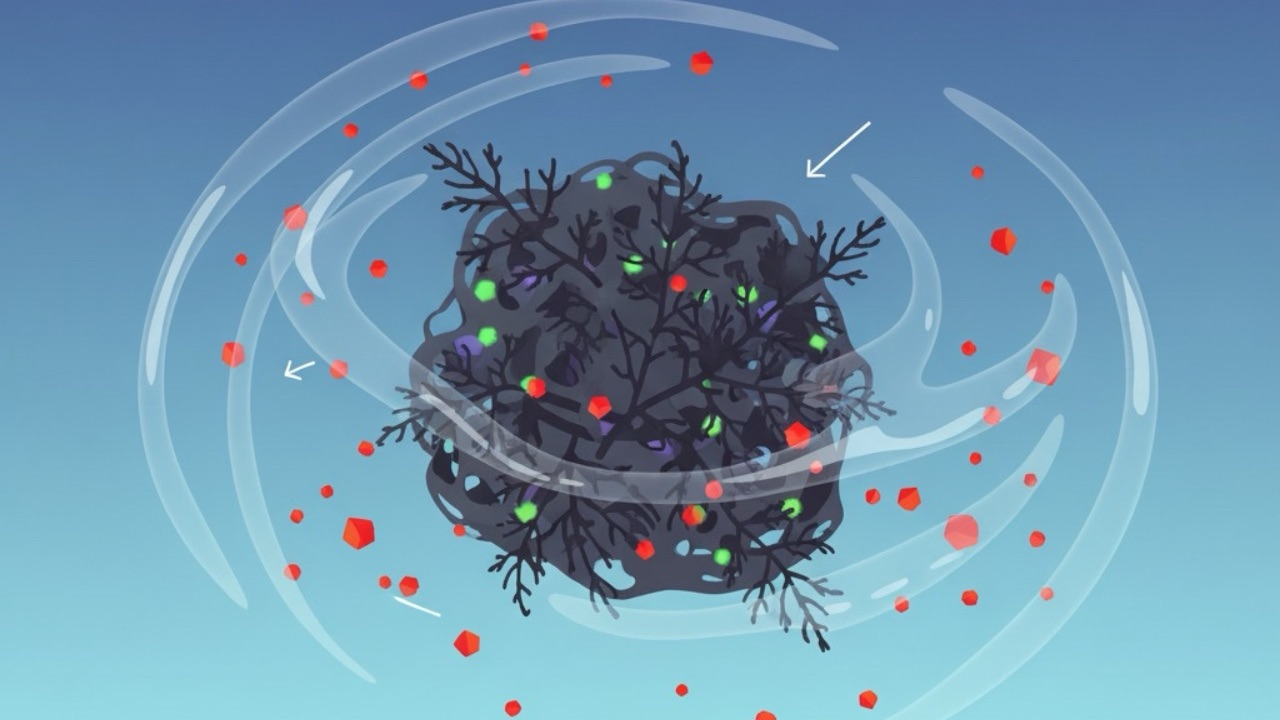
- The Filter’s Secret Weapon is PorosityPorosity of biochar is a key factor in its effectiveness as a soil amendment and its ability to retain water and nutrients. Biochar’s porosity is influenced by feedstock type and pyrolysis temperature, and it plays a crucial role in microbial activity and overall soil health. Biochar More: The high removal rate works because the biochar has an incredibly porous and rough surface—like a sponge with extra-sticky sites—which physically traps the pesticide molecules.
- A Win-Win for the Environment: This solution not only cleans polluted water but also provides a useful way to control an invasive weed that is harmful to agriculture and biodiversity, creating a cheap, valuable product from an ecological problem.
A study published in Desalination and Water Treatment by Rija Khalid, Asma Jamil, and colleagues presents a sustainable, dual-benefit solution for water contamination and invasive species management. The research focuses on converting the invasive weed Parthenium hysterophorus (commonly known as ‘famine weed’ or ‘congress grass’) into a functional, low-cost adsorbent to remove the highly toxic pesticide Lambda-Cyhalothrin (LC) from water. LC is a pyrethroid insecticide widely used in agriculture that poses a serious ecological and public health risk due to its persistence and toxicity. The invasive weed, which poses a serious threat to agriculture and biodiversity, was successfully converted into biochar through pyrolysisPyrolysis is a thermochemical process that converts waste biomass into bio-char, bio-oil, and pyro-gas. It offers significant advantages in waste valorization, turning low-value materials into economically valuable resources. Its versatility allows for tailored products based on operational conditions, presenting itself as a cost-effective and efficient More at 500∘C and then activated with KOH to enhance its porosity and surface functionality.
Batch adsorption experiments were conducted to optimize the operational parameters for maximum LC removal. The optimized conditions were identified as a pHpH is a measure of how acidic or alkaline a substance is. A pH of 7 is neutral, while lower pH values indicate acidity and higher values indicate alkalinity. Biochars are normally alkaline and can influence soil pH, often increasing it, which can be beneficial More of 8, a biochar dose of 10 g L−1, and a contact time of 60 min. Under these optimized conditions, the biochar demonstrated a high removal efficiency: it achieved up to 94% LC removal at an initial concentration of 50 mg L−1. Even at a higher concentration of 100 mg L−1, the removal efficiency remained high at 88%. The high initial adsorption rate (up to 88% at 60 min) is attributed to the presence of abundant active sites on the biochar surface. The study found that LC removal decreased with increasing initial concentration, dropping to 73% at 200 mg L−1, as the available adsorption sites became saturated.
Material characterization confirmed the biochar’s suitability as an adsorbent. Scanning Electron Microscopy (SEM) and X-ray Diffraction (XRD) confirmed a highly porous, microporous, and turbostratic structure, ideal for adsorption. Energy Dispersive X-ray spectroscopy (EDX) showed a high elemental composition of oxygen (40.1% by mass) and carbon (29.8% by mass) , along with residual potassium from the KOH activation. Fourier-Transform Infrared spectroscopy (FTIR) revealed several key functional groups on the surface, including hydroxyl (O-H) and aromatic (C=C stretching) groups.The adsorption mechanism is primarily governed by physical adsorption (physisorption) and pore-filling. The presence of aromatic rings favors pi-pi (π-π) interactions with the aromatic components of LC, while the oxygenated groups enable hydrogen bonding and polar interactions. The equilibrium adsorption data were tested using four non-linear isotherm models. The Sips isotherm model provided the best statistical fit to the experimental data, with a near-perfect correlation coefficient (R2) of 0.9999 and the lowest Root Mean Square Error (RMSE) of 0.00335. This result confirms that the LC uptake mechanism is characterized by heterogeneous, multilayer adsorption on the biochar surface, deviating from the simple monolayer assumption of the Langmuir model. The Freundlich model was also a strong fit , supporting the role of a heterogeneous surface. Kinetic analysis showed that the Pseudo-First-Order (PFO) model provided the best numerical fit , indicating that the rate of LC removal is primarily controlled by surface adsorption and physisorption.
The production of the activated Parthenium hysterophorus biochar was estimated to be highly economical. The adsorption cost was calculated to be 0.25 USD g−1 of LC removed, falling within a competitive cost range compared to other biochar-based adsorbents. This research demonstrates the dual benefits of converting an invasive weed into a valuable, low-cost remediation material, simultaneously addressing an ecological problem and providing a sustainable solution for pesticide-contaminated water treatment.
Source: Khalid, R., Jamil, A., Younas, K., Rasheed, S., Ghaffour, N., & Nawaz, M. S. (2025). Removal of pesticide Lambda-Cyhalothrin from aqueous medium by Parthenium hysterophorus biochar with non-linear adsorption modeling. Desalination and Water Treatment, 324, 101480.




Leave a Reply