
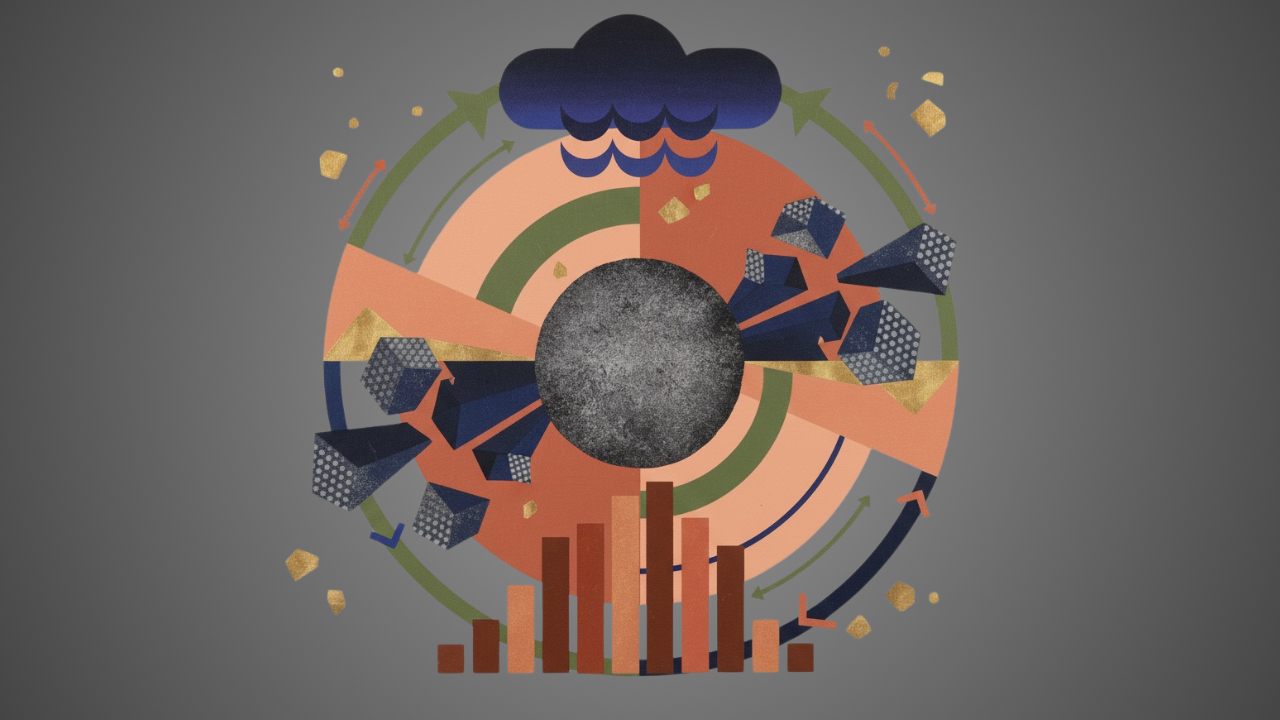
The world produces an estimated 21 million tons of peaches every year, and about 10% of that total—millions of tons—is peach pits (PPs). This immense quantity of biowaste is typically sent to landfills or combusted, which can lead to adverse environmental impacts, including releasing an odor as the hard-shelled pits slowly degrade, and potential biological risks due to the amygdalin content in unripe fruit. Furthermore, disposal via incineration contributes to CO2 emissions and the generation of particulate and polycyclic aromatic hydrocarbons. A new study in Scientific Reports by Zanpei Zhang and colleagues explores a multi-stage approach for the full resource utilization of peach pits, suggesting a viable circular economic model for the peach production industry.
The research began by investigating the potential for extracting valuable compounds from the peach pits using various solvents. Through solid-liquid extraction, the researchers found that ethanol was the most effective solvent for extracting the ingredients in PPs, as its infrared spectrum curve showed a trend similar to the original pit powder. Analyses revealed that the pits contain alcohols, ketones, phenols, aldehydes, and acids. A comprehensive analysis of the extracts using UPLC/Q-TOF MS identified 171 compounds in the ethanol extract and 164 in the acetone extract. These rich bioactive components have potential applications across several sectors, including biomedicines, food additives, and bioenergy. For example, the same ingredients were found in different extractions—including 3-methoxy-4-hydroxybenzoic acid and m-methoxycinnamic acid—which are mainly used as a biomedicine or in cosmetics/spices, respectively.
After the valuable compounds were extracted, the remaining solid residue was subjected to pyrolysisPyrolysis is a thermochemical process that converts waste biomass into bio-char, bio-oil, and pyro-gas. It offers significant advantages in waste valorization, turning low-value materials into economically valuable resources. Its versatility allows for tailored products based on operational conditions, presenting itself as a cost-effective and efficient More to convert the biomassBiomass is a complex biological organic or non-organic solid product derived from living or recently living organism and available naturally. Various types of wastes such as animal manure, waste paper, sludge and many industrial wastes are also treated as biomass because like natural biomass these More into biocharBiochar is a carbon-rich material created from biomass decomposition in low-oxygen conditions. It has important applications in environmental remediation, soil improvement, agriculture, carbon sequestration, energy storage, and sustainable materials, promoting efficiency and reducing waste in various contexts while addressing climate change challenges. More. Biochar is well-known for its ability to adsorb hazardous substances and enhance the soil environment. The researchers pyrolyzed the peach pit powder at two different temperatures, 400∘C and 600∘C, under a nitrogen atmosphere. The experiment showed that the peach pits could be efficiently converted into a high-quality biochar, with the most successful yield being 38.92% at 400∘C. This yield was approximately 11% higher than the yield at 600∘C. Given the global production of peaches, this high recovery rate suggests that the annual production of biochar could reach approximately 127,100 tons if this approach is employed for peach pits. Morphological characterization confirmed that there was no significant difference in the pore size of the biochar obtained at the two temperatures.
The biochar produced at 400∘C was then tested for its adsorption capacity against various heavy metals. The results demonstrated that the peach pit biochar can effectively remove arsenic (As), lead (Pb), and cadmium (Cd) from a solution. Notably, the biochar exhibited the best adsorption effect on cadmium (Cd) compared to As and Pb, whether in a low or high concentration solution. The maximum removal of Cd was a substantial 493.24 μg at a concentration of 100 μg⋅mL−1. In addition to heavy metals, the biochar was also capable of reducing the concentration of methylene blue dye in water, with the removal ability increasing significantly with the amount of biochar used.
In an effort to maximize biochar usage, the researchers explored the impact of different nano-catalysts on the pyrolysis process. The use of nano-catalysts had a negligible effect on the overall weight loss rate during pyrolysis. In fact, the addition of a catalyst did not significantly increase the biomass conversion of biochar, and since the chemical constitution of biochar without a catalyst was similar, it was deemed not economically feasible to add a catalyst for biochar production. However, the study also investigated the products of the pyrolysis process, finding that the functional proportions of the resulting chemical compounds differed based on temperature. At 550∘C, the content of acids was highest, while at 700∘C, the content of phenols reached its maximum. The final pyrolysis products, such as acetic acid and furfural, have applications in biomedicine, bioenergy, food additives, and chemical materials.
This research successfully outlines a framework for the multi-stage utilization of peach pits, turning an environmental burden into a valuable resource. The combination of extracting bioactive compounds and converting the residue into high-quality biochar for environmental remediation offers a compelling blueprint for a sustainable circular economy in the peach industry.
Source: Zhang, Z., Ma, N. L., Ding, S., Qiu, J., Jiao, Q., Lai, Y., Gu, R., Chen, Y., Wang, X., Li, M., Liu, Y., Peng, W., & Zhang, D. (2025). Potential framework for fully resourced of peach pits by multi-recycling approaches. Scientific Reports, 15(33761). https://doi.org/10.1038/s41598-025-97977-2



Leave a Reply