
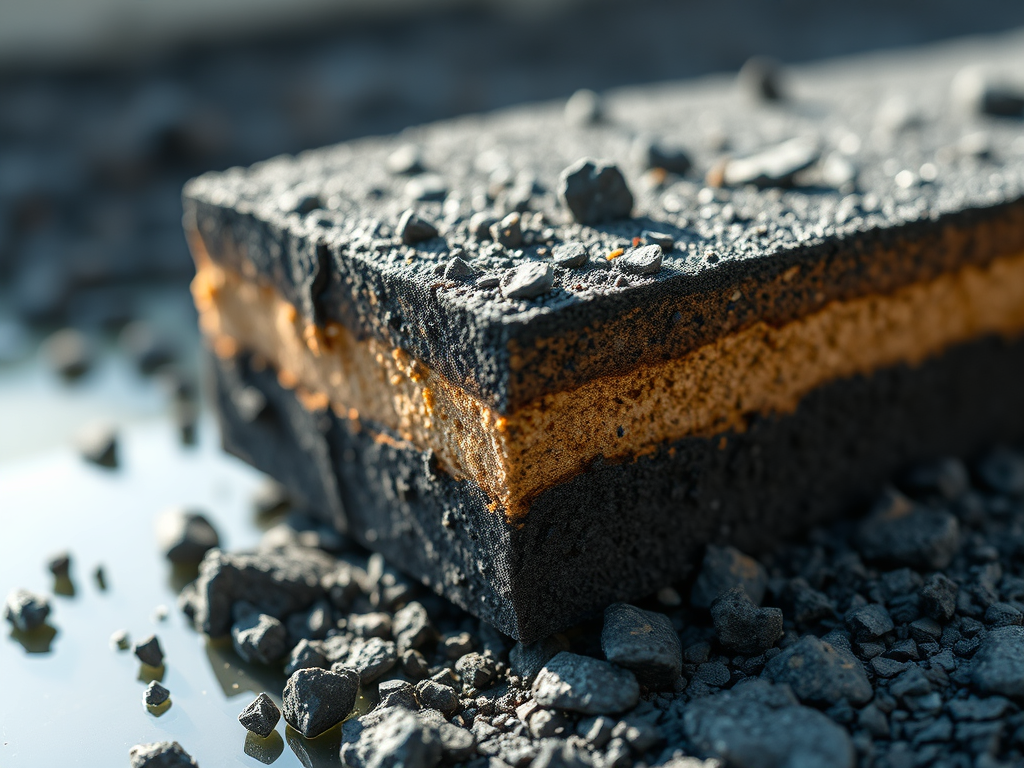
In a review preprint titled “BiocharBiochar is a carbon-rich material created from biomass decomposition in low-oxygen conditions. It has important applications in environmental remediation, soil improvement, agriculture, carbon sequestration, energy storage, and sustainable materials, promoting efficiency and reducing waste in various contexts while addressing climate change challenges. More Waste as a Sustainable Modifier for Bitumen Binder Reinforcement: A Review,” published on Preprints.org, authors Nuha Mashaan, Taranjeet Singh, Ankitkumar Asodariya, and Adeel Iqbal compiled current research on using biochar in asphalt pavements to meet demanding performance and sustainability goals. The global construction industry faces the dual challenge of expanding transportation networks while minimizing environmental harm and tackling premature pavement failure caused by aging. This challenge makes the valorization of waste products, particularly biochar, an important area of study. Biochar serves as both a performance-enhancing modifier and a solution for agricultural and other waste management.
The experimental data analyzed in the review demonstrate a systematic and desirable modification of bitumen properties with increasing biochar content, ranging from 0% to 8% by binder mass. The mechanical properties show a consistent trend toward greater stiffness and thermal stability. Specifically, the penetration value—a measure of binder softness and flexibility—decreased progressively, with an 8% biochar load reducing the unaged binder penetration by 27% (from 85.0 to 62.0) and the aged binder penetration by 23% (from 65.0 to 50.0). Concurrently, the softening point—a key indicator of thermal stability and temperature susceptibility—increased consistently. The 8% biochar content provided the maximum increase, raising the softening point by 18.8% for unaged binders (from 48.0∘C to 57.0∘C) and 21.2% for aged binders (from 52.0∘C to 63.0∘C). This indicates a more rigid and thermally stable binder that is less susceptible to high-temperature deformation like rutting. Furthermore, viscosity at 135∘C increased by 44% at the 8% dosage (from 0.45 Pa-s to 0.65 Pa-s), an increase that remains within acceptable limits for conventional mixing and compaction equipment, demonstrating the material’s feasibility for industrial use.
Beyond mere stiffening, biochar significantly enhances the binder’s resistance to aging. The review highlights that the anti-aging index reduction increased linearly, progressing from 10% at 2% biochar content to a peak of 25% at the 8% concentration. This anti-aging effect is attributed to biochar’s dual-action mechanism: the presence of oxygen functional groups, such as quinone and phenolic groups, acts as a radical scavenger, quenching free radicals that drive oxidative aging. Additionally, the dispersed biochar particles create a tortuous diffusion pathway, reducing oxygen permeability into the bitumen by 25-40% at 6-8% loading, thereby slowing the overall oxidation rate.
Based on a systematic analysis of all measured parameters, the review identifies a 6% biochar content as the optimal dosage. At this level, the material achieves a robust 20% penetration reduction, a 16.7% softening point improvement for unaged binders, and a 20% aging index reduction, while maintaining an acceptable viscosity increase of 35.6%. Incremental performance gains diminish beyond this point, and processing challenges increase, establishing 6% as the practical optimization limit for conventional applications.
The use of biochar aligns perfectly with circular economy principles, transforming agricultural residues (like crop straw and oil palm fiber) and even medical or food waste into an infrastructure asset. This practice not only provides high-performance construction materials but also contributes to climate change mitigation through the biochar’s potential for long-term carbon sequestration. The benefits of biochar are not limited to asphalt; the consistent performance enhancements observed across materials like ultra-high-performance concrete and specialized water-purifying pervious concrete suggest a universal applicability, positioning biochar as a platform technology for sustainable construction materials. However, full industrial adoption requires further long-term field validation, economic optimization studies, and the establishment of standardized testing and regulatory frameworks.
Source: Mashaan, N., Singh, T., Asodariya, A., & Iqbal, A. (2025). Biochar Waste as a Sustainable Modifier for Bitumen Binder Reinforcement: A Review. Preprints.org.





Leave a Reply