
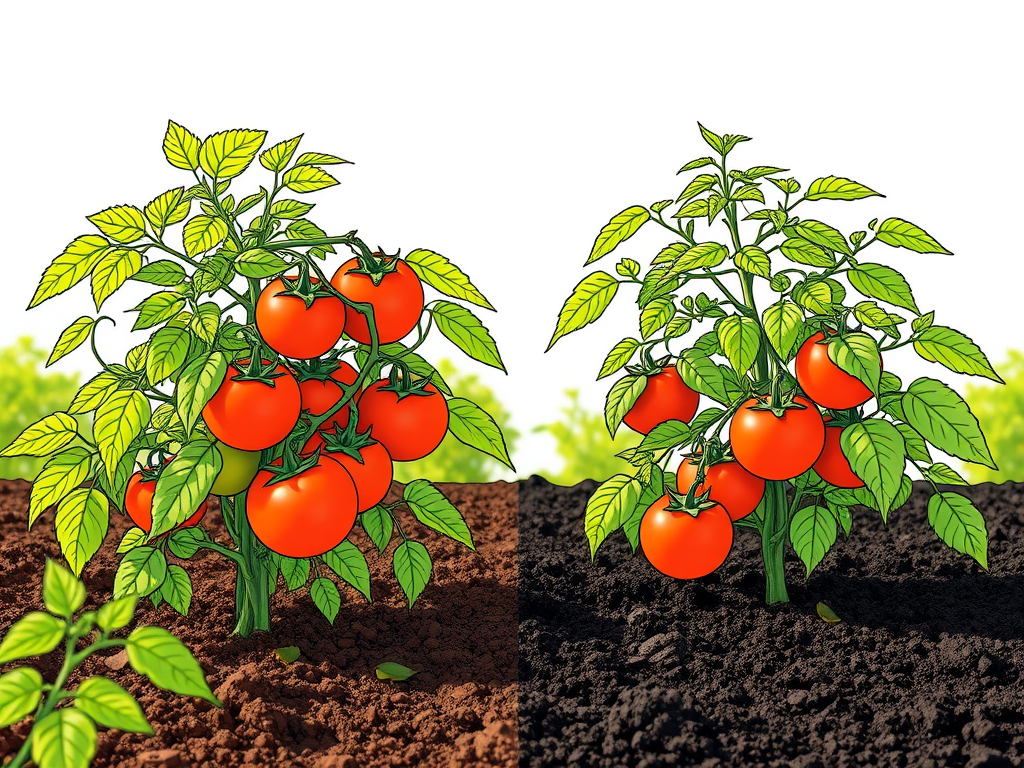
Heavy metal contamination poses a serious global threat to agriculture and food security, with chromium (Cr) being a particularly toxic and bioaccumulative element. In a study published in the Journal of Soils and Sediments, researchers Jamaluddin Kabir, Muhammad Ansar Farooq, Shumaila Parvez, Aamir Alaud Din, Ghulam Abbas, Minggang Xu, and Muhammad Mohsin Abrar investigated how different organic amendments could mitigate the toxic effects of Cr on tomato plants. They found that while biocharBiochar is a carbon-rich material created from biomass decomposition in low-oxygen conditions. It has important applications in environmental remediation, soil improvement, agriculture, carbon sequestration, energy storage, and sustainable materials, promoting efficiency and reducing waste in various contexts while addressing climate change challenges. More (BC) and iron-enriched biochar (Fe-BC) were effective, vermicompost (VC) demonstrated the most significant improvements in plant growth and stress tolerance.
The study subjected tomato plants to varying levels of Cr stress (0, 25, 50, and 100 mg kg−1) and then treated them with four different organic amendments: 5% BC, 0.5% Fe-BC, 5% farmyard manure (FYM), and 5% VC. At Cr concentrations of 25 and 50 ppm, the metal significantly reduced plant growth, relative water content, and membrane stability. At 100 ppm, the Cr toxicity was so severe that plants could not survive without an amendment. However, the addition of any of the organic amendments enabled the plants to survive even at the highest Cr concentration.
Among the tested amendments, vermicompost consistently delivered the best results. Tomato plants treated with VC under Cr stress showed a 2.3-fold increase in shoot length, a 2.0-fold increase in fresh weight, and a 1.7-fold increase in membrane stability compared to stressed plants without the amendment. The study also found that VC was more effective at reducing plant Cr uptake compared to the other amendments, decreasing Cr concentrations in plant tissues by 52% at 50 ppm Cr and by 49% at 100 ppm Cr. In contrast, Fe-BC reduced Cr uptake by 39% at 50 ppm and 29% at 100 ppm. FYM had a non-significant effect on Cr contamination.
The organic amendments worked primarily by reducing Cr bioavailability and activating the plants’ antioxidant defense systems. Cr toxicity led to a significant increase in oxidative damage, with hydrogen peroxide (H2O2) accumulation increasing by 1.9- and 2.7-fold at 25 and 50 ppm Cr, respectively. All amendments reduced this oxidative stress, but VC and Fe-BC were the most effective. The application of VC resulted in a 0.5- and 0.47-fold reduction in H2O2 content at 25 and 50 ppm Cr, respectively, while Fe-BC caused a 0.75- and 0.81-fold reduction at the same concentrations. These changes correlated with increased activities of antioxidant enzymes such as superoxide dismutase (SOD), catalase (CAT), peroxidase (POD), and ascorbate peroxidase (APX).While Fe-BC and biochar showed their own benefits, such as high surface area, porosityPorosity of biochar is a key factor in its effectiveness as a soil amendment and its ability to retain water and nutrients. Biochar’s porosity is influenced by feedstock type and pyrolysis temperature, and it plays a crucial role in microbial activity and overall soil health. Biochar More, and stability for metal immobilization, the superior performance of vermicompost was attributed to its unique properties. Vermicompost is rich in humic substances and has a high cation exchange capacity (CEC), which allows it to chelate metal ions and alter their fractional distribution in the soil, thereby reducing their bioavailability. These findings highlight the potential of organic amendments as a cost-effective and sustainable strategy for soil remediation and for safeguarding food production from the adverse effects of heavy metal contamination.
Source: Kabir, J., Farooq, M. A., Parvez, S., Din, A. A., Abbas, G., Xu, M., & Abrar, M. M. (2025). Comparative assessment of biochar and vermicompost on chromium bioavailability and stress alleviation in tomato (Solanum lycopersicum). Journal of Soils and Sediments.



Leave a Reply