
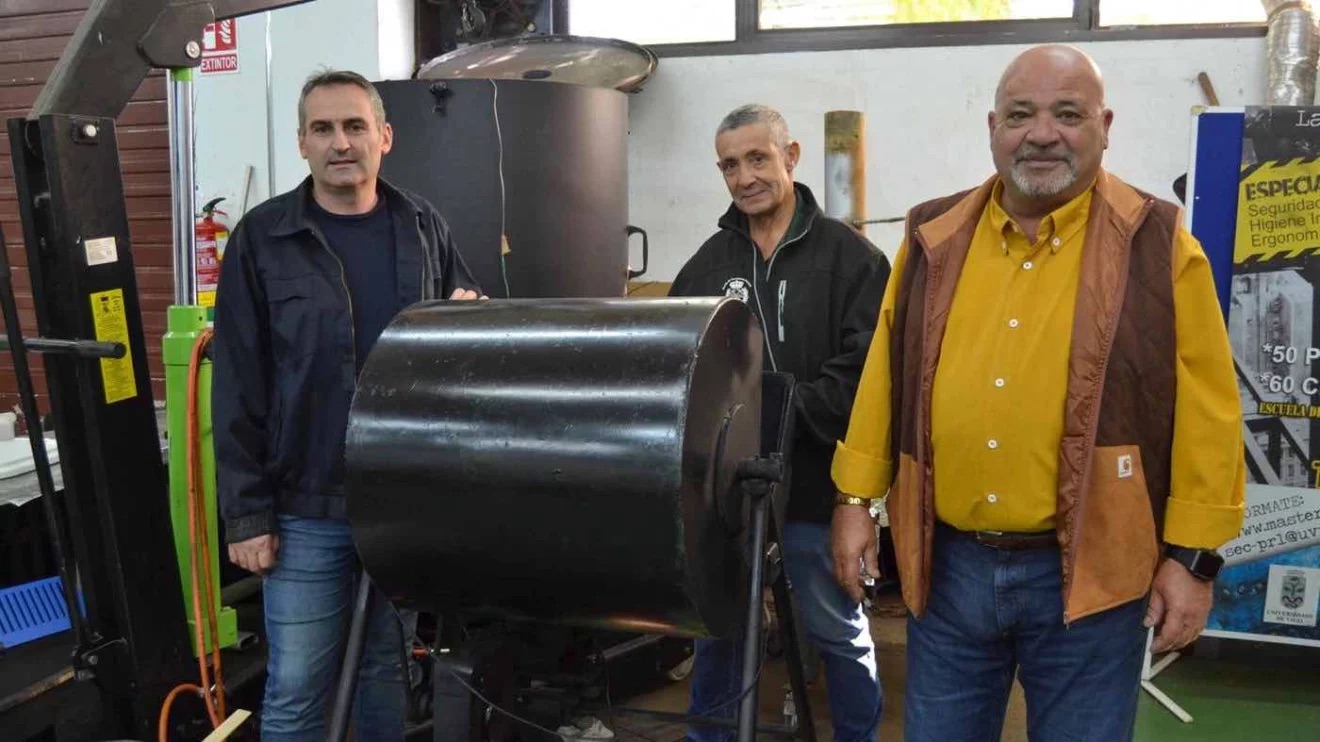
Researchers at the University of Vigo (UVigo) in Spain, partnering with environmental consultancy Foresin and the Mabegondo Agricultural Research Center (CIAM), have engineered a specialized biocharBiochar is a carbon-rich material created from biomass decomposition in low-oxygen conditions. It has important applications in environmental remediation, soil improvement, agriculture, carbon sequestration, energy storage, and sustainable materials, promoting efficiency and reducing waste in various contexts while addressing climate change challenges. More to mitigate the environmental footprint of livestock operations. Under the EcoChar innovation project, supported by the Galician Agency for Food Quality, the team transformed local forestry residues—specifically pine and acacia—into a high-value filtration agent. The initiative focuses on deploying this material as a floating cover for slurry pits to intercept harmful emissions.
A persistent challenge in sustainable livestock management is controlling the release of atmospheric pollutants like methane and ammonia from liquid manure storage. Technically, the difficulty lies in identifying a cover material that remains buoyant on the slurry surface for the duration of its use. Previous attempts with various carbonized materials often failed because the substances would eventually saturate with liquid and sink, losing their efficacy as a barrier against gas volatilization.
The solution emerged through rigorous testing by the HydroForest group, which experimented with pyrolysisPyrolysis is a thermochemical process that converts waste biomass into bio-char, bio-oil, and pyro-gas. It offers significant advantages in waste valorization, turning low-value materials into economically valuable resources. Its versatility allows for tailored products based on operational conditions, presenting itself as a cost-effective and efficient More temperatures between 500 and 700 degrees Celsius. The researchers discovered that biochar made from pine chips and bark, when micronized into microscopic particles, exhibited exceptional hydrophobic properties. This pulverization process allows the material to leverage water surface tension, preventing saturation. Consequently, the biochar functions as a permanent, floating sponge that adsorbs rising gases without degrading or sinking.
Results published in the journal BiomassBiomass is a complex biological organic or non-organic solid product derived from living or recently living organism and available naturally. Various types of wastes such as animal manure, waste paper, sludge and many industrial wastes are also treated as biomass because like natural biomass these More indicate that while standard pellets lacked stability, the micronized pine biochar achieved high fixed carbon levels and maintained buoyancy indefinitely. This innovation not only provides a mechanism for significant emission reductions but also valorizes forestry waste and invasive species. The material has shown additional potential in soil regeneration and water filtration, with successful scalability tests conducted in semi-industrial reactors.



Leave a Reply