
Key Takeaways
- Microalgae can become renewable liquid fuel, but it naturally contains unwanted oxygen and nitrogen that lower its overall quality.
- Heating the algae in pressurized water before processing helps remove these unwanted chemical elements early on.
- A special filter made of plant charcoalCharcoal is a black, brittle, and porous material produced by heating wood or other organic substances in a low-oxygen environment. It is primarily used as a fuel source for cooking and heating. More and a porous mineral increases the production of valuable fuel chemicals to over ninety-six percent.
- This filter reduces the unwanted oxygen and nitrogen compounds in the final liquid from over eighty-two percent to roughly three percent.
- The biocharBiochar is a carbon-rich material created from biomass decomposition in low-oxygen conditions. It has important applications in environmental remediation, soil improvement, agriculture, carbon sequestration, energy storage, and sustainable materials, promoting efficiency and reducing waste in various contexts while addressing climate change challenges. More part breaks down large molecules first, preventing the mineral part from clogging and allowing it to last much longer.
A recent study published in the journal Biochar by researchers Jinye Hu, Yunpu Wang, Haiwei Jiang, Jiabo Wu, Ting Luo, Qi Wang, Yuhang Hu, Kaisong Hu, Wenguang Zhou, and Liangliang Fan explores converting aquatic plant life into usable energy. Microalgae represent a promising renewable energy source because they grow quickly without requiring agricultural land. However, converting these plants into high-quality fuel presents chemical challenges. The resulting liquid naturally contains high amounts of oxygen and nitrogen. These elements make the fuel unstable and less energy-dense while contributing to severe pollution when burned.
To solve this contamination issue, the research team utilized a technique that heats the raw algae in pressurized hot water. This pretreatment breaks down the material without requiring a highly energy-intensive drying phase. The pressurized hot water causes the proteins and carbohydrates within the algae to undergo initial chemical breakdowns, helping the material shed unwanted oxygen and nitrogen early. Afterward, the condensed algae material is exposed to extreme heat in the absolute absence of oxygen to convert it into a crude liquid fuel.
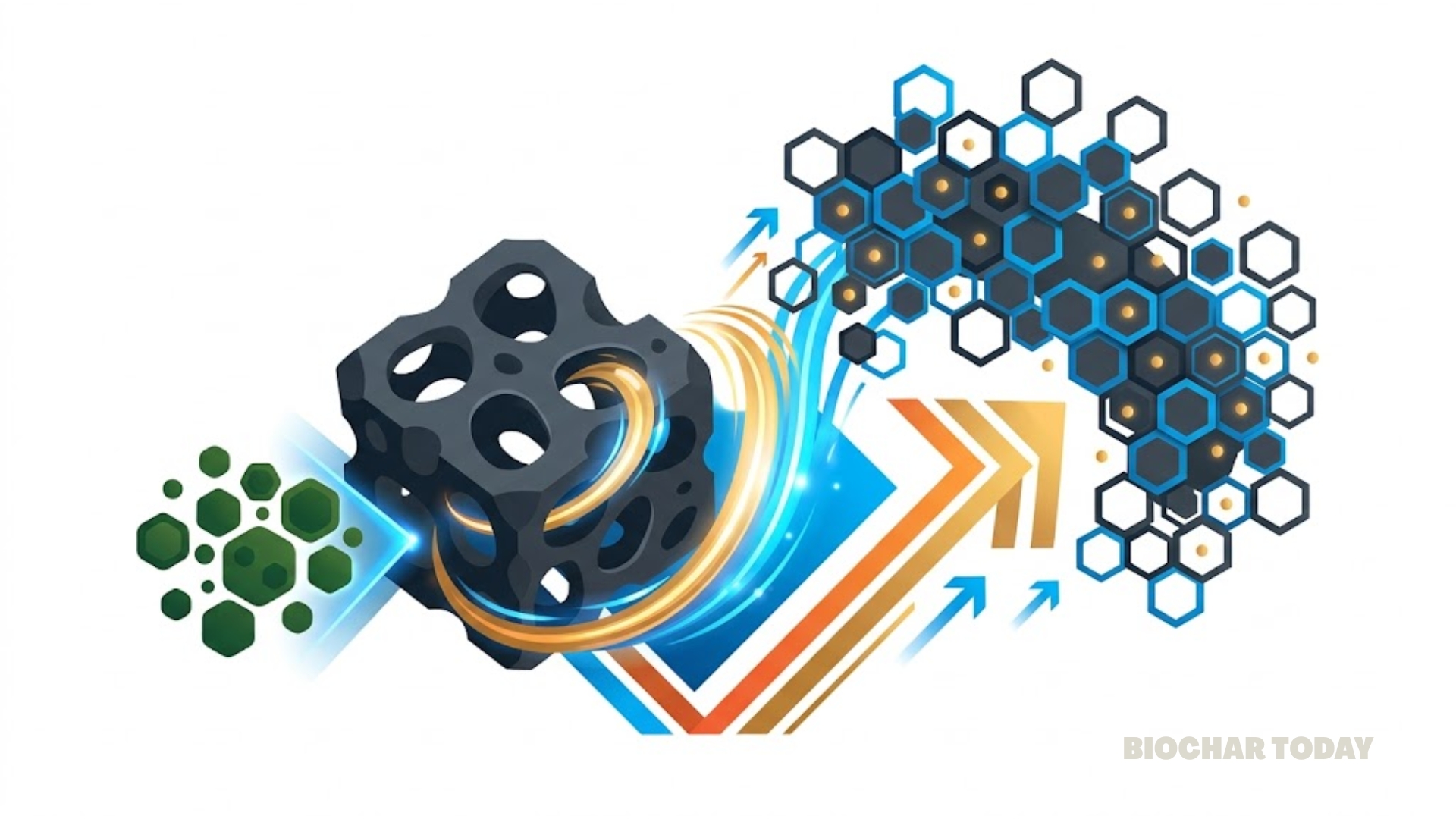
The most critical aspect of this second heating step relies on a specially designed chemical catalyst to guide the physical transformation. The researchers combined ordinary plant charcoal with a highly porous, acidic mineral to create a composite filter. Standard mineral filters are excellent at removing oxygen and nitrogen to create high-quality aromatic hydrocarbons desired for fuel. However, the bulky molecules produced by heating algae quickly clog their microscopic pores, causing them to stop working almost immediately. By coating the charcoal with this mineral, the researchers created a highly efficient two-tiered system. The charcoal contains larger pores that catch and break apart the bulky algae molecules first. Once fractured, these smaller pieces flow easily into the microscopic pores of the mineral for final purification.
The quantitative results of utilizing this combined charcoal and mineral filter were highly significant. When the pretreated algae was processed at an optimal temperature, the conversion yielded a liquid product consisting of over ninety-six percent aromatic hydrocarbons. These specific aromatic hydrocarbons are required to produce stable, high-energy transportation fuels. Furthermore, the total concentration of detrimental oxygen and nitrogen compounds dropped dramatically. In control processes run completely without the filter, these chemical impurities made up over eighty-two percent of the final liquid product. The specialized charcoal and mineral filter reduced these exact same impurities down to just over three percent.
In addition to producing a significantly cleaner liquid fuel, the combined filter demonstrated remarkable physical endurance. Because the charcoal component successfully shattered the bulky molecules early in the reaction, the microscopic mineral component did not become clogged with heavy carbon buildup. The researchers determined that the amount of carbon waste was less than half a percent when using the charcoal combination. Using the mineral alone produced nearly six times as much carbon waste. The team verified durability by reusing the exact same filter multiple times without observing a significant loss in performance. This physical resilience makes the processing method far more practical for large-scale, continuous fuel production.
Source: Hu, J., Wang, Y., Jiang, H., Wu, J., Luo, T., Wang, Q., Hu, Y., Hu, K., Zhou, W., & Fan, L. (2026). In-depth into the mechanism of aromatic production from catalytic pyrolysisPyrolysis is a thermochemical process that converts waste biomass into bio-char, bio-oil, and pyro-gas. It offers significant advantages in waste valorization, turning low-value materials into economically valuable resources. Its versatility allows for tailored products based on operational conditions, presenting itself as a cost-effective and efficient More of wet-torrefied microalgae with HZSM-5 coated biochar. Biochar, 8(91).





Leave a Reply