
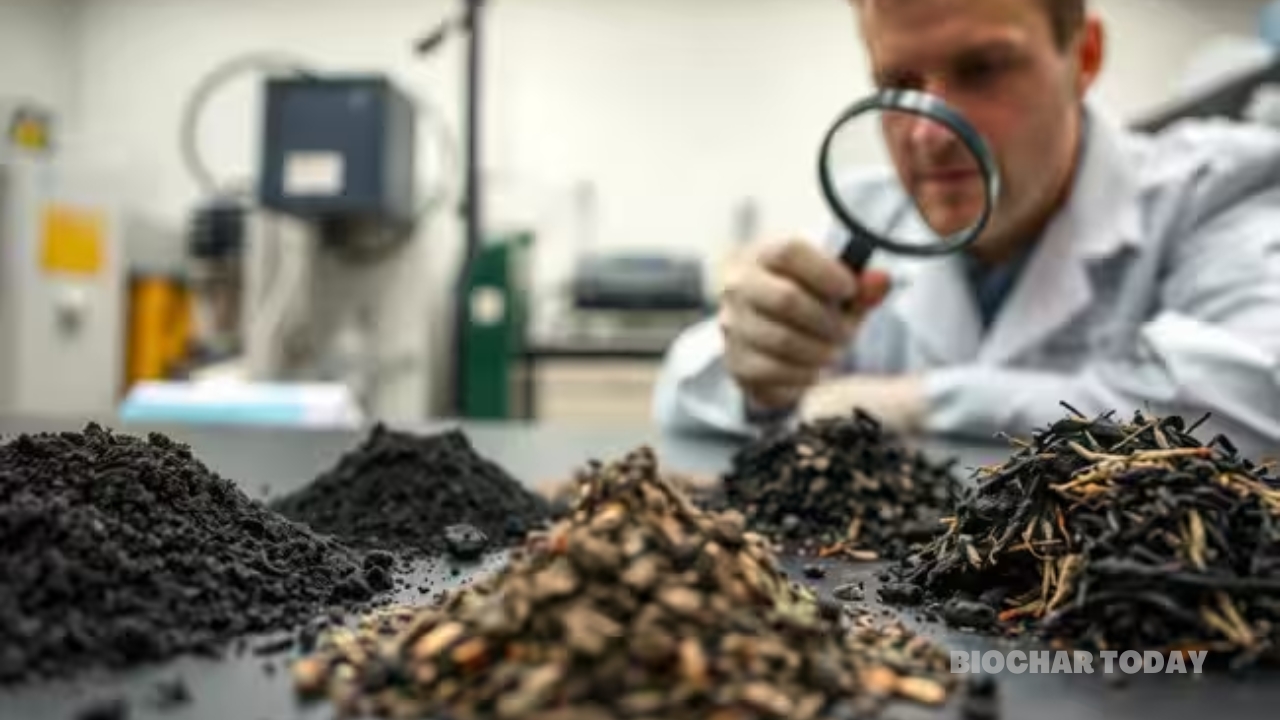
Researchers from the U.S. Department of Agriculture’s Agricultural Research Service (USDA-ARS) have demonstrated that engineered high-temperature wood biochars can effectively immobilize per- and polyfluoroalkyl substances (PFAS) in soil, preventing their leachingLeaching is the process where nutrients are dissolved and carried away from the soil by water. This can lead to nutrient depletion and environmental pollution. Biochar can help reduce leaching by improving nutrient retention in the soil. More into groundwater systems. Published in Environmental Science & Technology, the study evaluated soil-column transport of perfluorooctane sulfonate (PFOS) and perfluorobutane sulfonate (PFBS) under conditions representative of contaminated military training facilities in the United States. Concurrently, broader USDA research programs are evaluating biochars synthesized from agricultural residues and invasive biomassBiomass is a complex biological organic or non-organic solid product derived from living or recently living organism and available naturally. Various types of wastes such as animal manure, waste paper, sludge and many industrial wastes are also treated as biomass because like natural biomass these More, such as black mustard (Brassica nigra), for specialized contaminant capture applications in wastewater and soil remediation.
PFAS contamination, particularly from aqueous film-forming foams used at U.S. Air Force bases and military installations, poses a severe environmental threat to adjacent groundwater supplies and surrounding ecosystems. These synthetic “forever chemicals” resist natural degradation and leach rapidly through soil, making conventional physical containment and pump-and-treat extraction methods technically complex and economically prohibitive. Without cost-effective in-situ stabilization mechanisms, persistent fluorinated compounds continuously migrate from surface soils into drinking water aquifers, creating long-term public health and environmental liabilities.
To address subsurface PFAS transport, USDA-ARS researchers evaluated the incorporation of specialized high-temperature biochars into contaminated sandy-loam soils. The team tested wood-based biocharBiochar is a carbon-rich material created from biomass decomposition in low-oxygen conditions. It has important applications in environmental remediation, soil improvement, agriculture, carbon sequestration, energy storage, and sustainable materials, promoting efficiency and reducing waste in various contexts while addressing climate change challenges. More produced at pyrolysisPyrolysis is a thermochemical process that converts waste biomass into bio-char, bio-oil, and pyro-gas. It offers significant advantages in waste valorization, turning low-value materials into economically valuable resources. Its versatility allows for tailored products based on operational conditions, presenting itself as a cost-effective and efficient More temperatures exceeding 900°C, applied at a 1% mass ratio to soil columns, followed by secondary thermal conditioning in air at 400°C. Parallel USDA research initiatives synthesized biochars from diverse biomass feedstocks—including invasive black mustard, agricultural manures, and nut shells—to analyze how pyrolysis parameters and feedstockFeedstock refers to the raw organic material used to produce biochar. This can include a wide range of materials, such as wood chips, agricultural residues, and animal manure. More functional groups dictate the adsorption kinetics of fluorinated surfactants and biological contaminants in aqueous environments.
The primary outcome of the laboratory study demonstrated that 900°C wood-based biochar added to soil at 1% by mass retained more than 99% of PFOS within the soil matrix, while secondary 400°C thermal treatment reduced PFBS concentration in column leachate to virtually non-detectable levels. These findings confirm that thermally engineered biochars can serve as effective physical and chemical sorbents to prevent downward PFAS leaching toward groundwater tables. By demonstrating that tailored biochar formulations can immobilize persistent organic pollutants on-site, the USDA research provides a scalable, potentially low-cost framework for soil remediation and groundwater protection at contaminated military installations and industrial sites across the United States.



Leave a Reply