
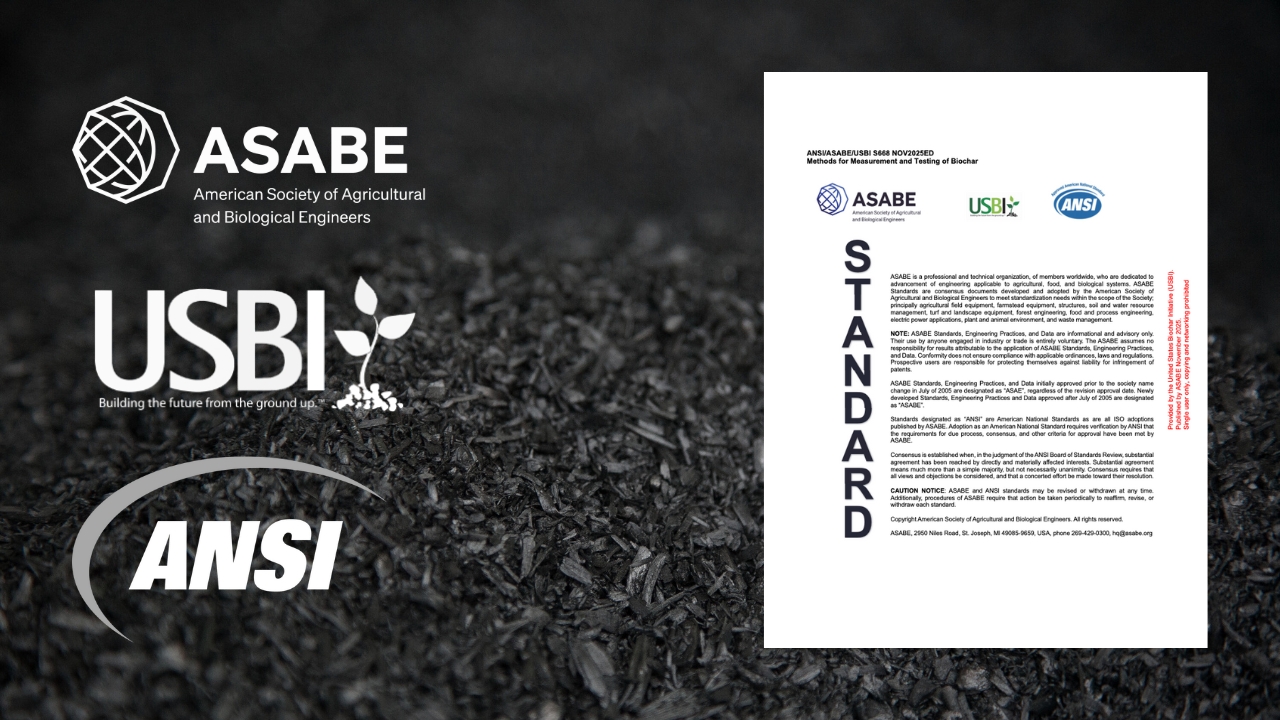
Last week marked a significant development for the North American biomassBiomass is a complex biological organic or non-organic solid product derived from living or recently living organism and available naturally. Various types of wastes such as animal manure, waste paper, sludge and many industrial wastes are also treated as biomass because like natural biomass these More carbon sector with the official publication of ANSI / ASABE / USBI S668: Methods for the Analysis and Testing of BiocharBiochar is a carbon-rich material created from biomass decomposition in low-oxygen conditions. It has important applications in environmental remediation, soil improvement, agriculture, carbon sequestration, energy storage, and sustainable materials, promoting efficiency and reducing waste in various contexts while addressing climate change challenges. More. This new standard, developed specifically to support commercial laboratories, is now publicly available. The release represents the culmination of a collaborative effort to establish a unified protocol for analyzing biochar materials, aiming to facilitate broader adoption and verification across the United States, Canada, and Mexico.
This initiative seeks to address the need for a standard specifically optimized for the North American regulatory and operational landscape. While the International Biochar Initiative and Carbon Standards International AG have established global benchmarks, the industry required a framework developed through an open process that could seamlessly integrate with North American commercial laboratories. Without a regionally harmonized approach, utilizing biochar within specific domestic regulatory contexts remained complex for many stakeholders.
To solve this, the standard was developed in partnership with the American Society of Agricultural and Biological Engineers (ASABE). The process involved a technical committee of over 30 experts from industry, academia, and government sectors across North America. The resulting S668 standard utilizes a coherent analytical framework based primarily on existing International Organization for Standardization (ISO) methods, ensuring commercial labs can easily implement the protocols. Crucially, the standard relies on US EPA methods for analyzing potential pollutants, ensuring the material meets the specific regulatory requirements of the region.
The immediate outcome is a robust, ANSI-accredited standard that is available free of charge for the first three years to encourage widespread adoption. This accessibility is expected to increase the number of laboratories offering analysis services and build general trust in biochar products. Looking ahead to Q1 2026, the group plans to develop three additional standards focusing on “do no harm” usage thresholds, standardized data reporting, and harmonized industrial production requirements. For the wider industry, the work led by Britni Wall and Chris Wiberg demonstrates that aligning technical standards with regional regulatory frameworks is essential for scaling commercialization and ensuring market confidence.
Check out the new standard here:




Leave a Reply