
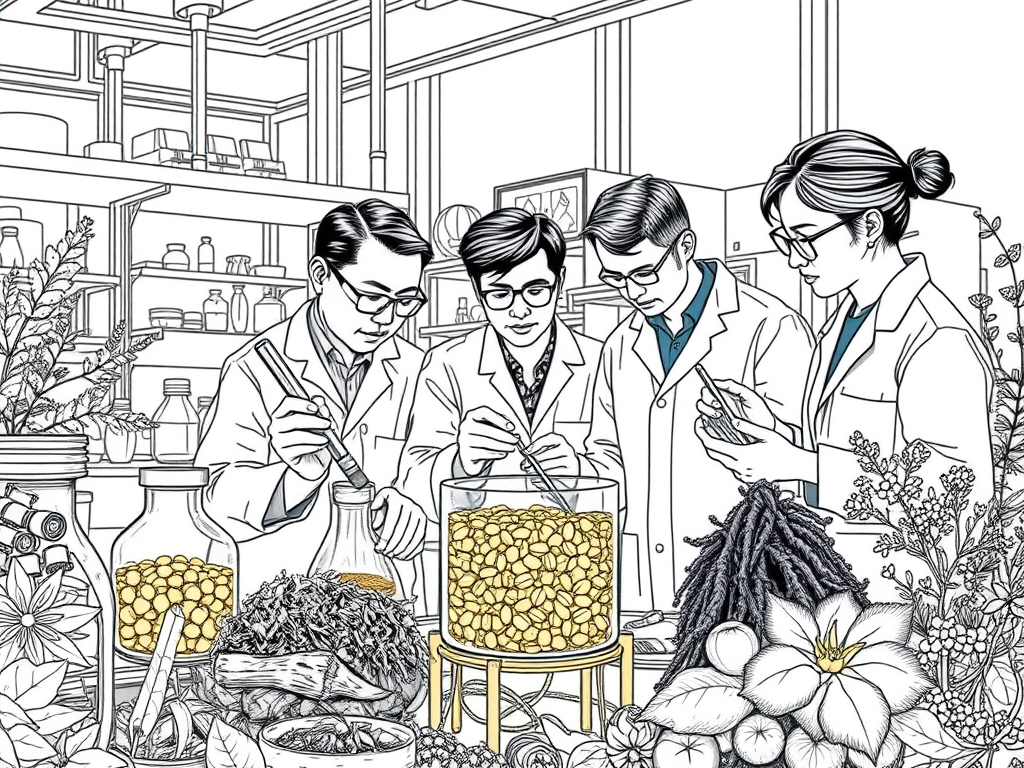
A groundbreaking study published in Nature Communications by Sarah Lück, Max Callaghan, Malgorzata Borchers, Annette Cowie, Sabine Fuss, Matthew Gidden, Jens Hartmann, Claudia Kammann, David P. Keller, Florian Kretschmer, William F. Lamb, Niall Mac Dowell, Finn Müller-Hansen, Gregory F. Nemet, Benedict S. Probst, Phil Renforth, Tim Repke, Wilfried Rickels, Ingrid Schulte, Pete Smith, Stephen M. Smith, Daniela Thrän, Tiffany G. Troxler, Volker Sick, Mijndert van der Spek, and Jan C. Minx, reveals that the scientific literature on carbon dioxide removal (CDR) is far more extensive than previously understood. By leveraging artificial intelligence (AI), the researchers identified 28,976 studies on CDR, a volume 3-4 times larger than earlier estimates. This comprehensive mapping provides crucial insights into the evolving landscape of CDR research, its geographical distribution, and the dominant technologies being investigated.
The study highlights a rapid expansion in CDR research, with an average annual growth rate of 17% over the past decade, outpacing the 12% growth rate observed for climate change research as a whole. This acceleration underscores the increasing importance of CDR in strategies to limit global warming to well below 2°C, as outlined in the Paris Agreement. CDR plays vital roles in climate change mitigation: reducing near-term net CO2 emissions, offsetting residual emissions from hard-to-mitigate sectors, and supporting long-term net-negative emissions to lower global temperatures in overshoot scenarios.
A striking finding is the uneven distribution of research across different CDR options, with biocharBiochar is a carbon-rich material created from biomass decomposition in low-oxygen conditions. It has important applications in environmental remediation, soil improvement, agriculture, carbon sequestration, energy storage, and sustainable materials, promoting efficiency and reducing waste in various contexts while addressing climate change challenges. More emerging as the undisputed leader. Biochar research accounts for a substantial 56% of all 28,976 identified scientific publications on CDR. This share further increased to 62% in 2022 alone. With an 18% annual growth rate over the past five years, biochar is the primary driver behind the high overall growth rate of the CDR literature. Other prominent land-based methods include soil carbon sequestration (24% of the total literature, growing at 14% annually) and afforestation/reforestation (12%). In contrast, technologies frequently featured in climate mitigation scenarios, such as Bioenergy with Carbon Capture and Storage (BECCS) and Direct Air Carbon Capture and Storage (DACCS), represent a smaller portion of the scientific literature, at 5.6% and 2.8% of all CDR studies, respectively. Other ocean-based CDR options, like ocean fertilization, enhanced weathering, and ocean alkalinity enhancement, each comprise less than 50 studies per year.
Geographically, China leads the way in CDR research, contributing 6,452 studies, which accounts for 30% of all studies with an available first author affiliation. The United States follows with 2,667 studies (13%), and the United Kingdom with 953 studies (4%). This concentration of research in China, particularly in biochar, highlights a potential interplay between institutional developments, scientific networks, and policy support in shaping research priorities. While global trends favor land-based CDR, regional specializations exist: China shows a stronger focus on biochar, Europe on BECCS, and North America, especially the U.S., on DACCS.
The study also delves into research methodologies and disciplinary focus. Approximately 89% of all CDR studies are categorized as “technology research,” aiming to understand, design, or develop CDR options and their effects. The majority of these studies employ experimental methods (86%), with laboratory experiments accounting for 48% and field experiments for 38%. Reviews (21%) and modeling studies (18%) also form a significant proportion. CDR research is predominantly published in natural sciences (50%), agricultural sciences (26%), and engineering and technology journals (22%). Only 3% of publications are in social science journals.
Interestingly, the research landscape differs significantly from the focus of Intergovernmental Panel on Climate Change (IPCC) assessments and actual deployment efforts. Only about 2% of the vast CDR literature is directly assessed by the IPCC’s 6th Assessment Report. The IPCC tends to emphasize BECCS (27% of its citations) and scenario modeling work (37% of its citations), reflecting its role in informing policy development and exploring mitigation pathways. This contrasts with the scientific community’s dominant focus on biochar research. Furthermore, while afforestation and reforestation currently account for virtually all (99.9%) of deployed CDR, novel options like BECCS and biochar receive substantial scientific attention. Similarly, DACCS and BECCS dominate patenting activity and announced investments in novel CDR.
This discrepancy between research, policy assessments, and deployment highlights differing stages of technological readiness and societal factors. The study emphasizes the need for more systematic reviews to integrate the burgeoning body of CDR research into policy-relevant assessments. It also points to evidence gaps, particularly in place-specific research for novel CDR options and in social science and humanities research related to governance and equity, which will become increasingly crucial as CDR implementation scales up.
This AI-enhanced systematic map provides an invaluable public resource, offering an unprecedented quantification of the CDR research landscape and facilitating future evidence syntheses for the research community and policy assessments.
Source: Lück, S., Callaghan, M., Borchers, M., Cowie, A., Fuss, S., Gidden, M., Hartmann, J., Kammann, C., Keller, D. P., Kretschmer, F., Lamb, W. F., Mac Dowell, N., Müller-Hansen, F., Nemet, G. F., Probst, B. S., Renforth, P., Repke, T., Rickels, W., Schulte, I., Smith, P., Smith, S. M., Thrän, D., Troxler, T. G., Sick, V., van der Spek, M., & Minx, J. C. (2025). Scientific literature on carbon dioxide removal revealed as much larger through AI-enhanced systematic mapping. Nature Communications, 16(6632).



Leave a Reply