
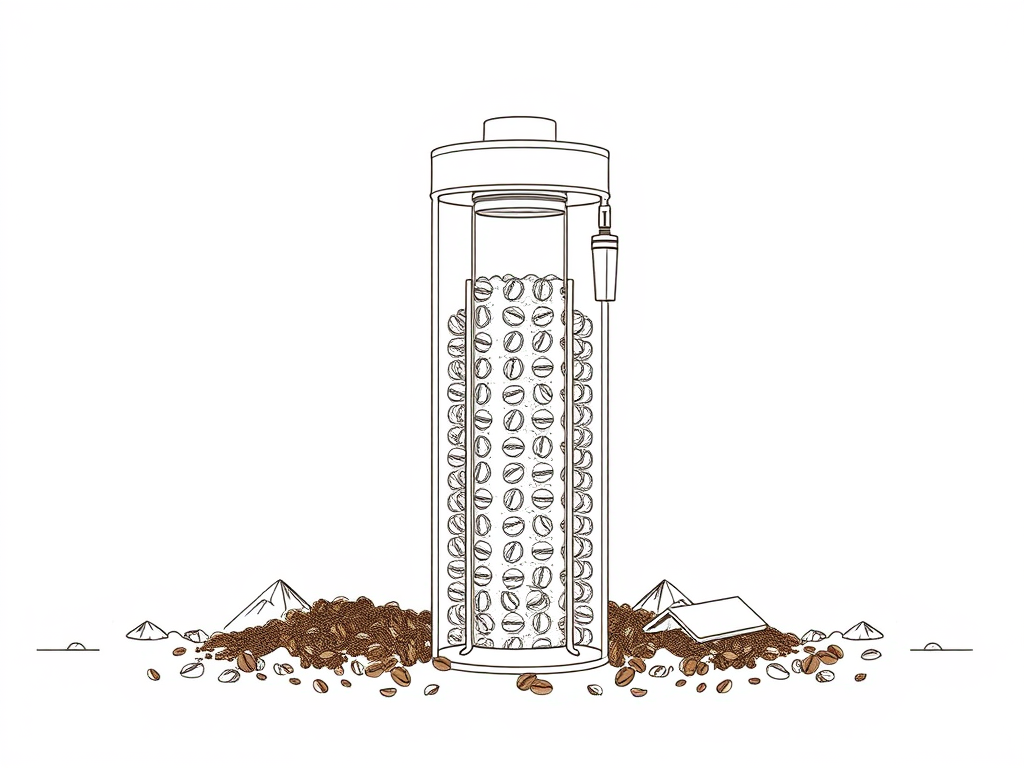
In a significant stride for environmental monitoring, recent research published in Environmental Science and Pollution Research by Wittaya Tala, Suparin Chaiklangmuang, and Somporn Chantara, introduces a cost-effective and efficient method for sampling gaseous polycyclic aromatic hydrocarbons (PAHs) from ambient air. These harmful pollutants, with their two or more fused aromatic rings, pose considerable health risks, including eye and skin irritation, respiratory issues, and even cancer, depending on exposure levels. While current sampling methods exist, they often come with high operational costs and limitations, particularly for developing nations. This study champions an innovative approach using biocharBiochar is a carbon-rich material created from biomass decomposition in low-oxygen conditions. It has important applications in environmental remediation, soil improvement, agriculture, carbon sequestration, energy storage, and sustainable materials, promoting efficiency and reducing waste in various contexts while addressing climate change challenges. More derived from spent coffee grounds (SCGs) as a sustainable alternative.
PAHs are pervasive in our atmosphere, existing in both gaseous and particulate forms. Lighter PAHs (two to three rings) are predominantly found in the gaseous phase, while heavier ones (five to seven rings) are more associated with particulate matter. Conventional sampling relies on high-volume active air samplers that trap PAHs on filters and adsorbents like polyurethane foam (PUF) or XAD resins. However, these methods are prone to issues like “blow-off” (loss of PAHs due to volatilization) and oxidation at elevated temperatures, leading to significant inaccuracies. Passive and low-flow active sampling methods offer advantages like cost-effectiveness and ease of operation, but still face challenges such as extended sampling durations and susceptibility to photodegradation.
This is where biochar enters the scene as a game-changer. Biochar, a carbon-rich material produced from biomassBiomass is a complex biological organic or non-organic solid product derived from living or recently living organism and available naturally. Various types of wastes such as animal manure, waste paper, sludge and many industrial wastes are also treated as biomass because like natural biomass these More waste through a process called pyrolysisPyrolysis is a thermochemical process that converts waste biomass into bio-char, bio-oil, and pyro-gas. It offers significant advantages in waste valorization, turning low-value materials into economically valuable resources. Its versatility allows for tailored products based on operational conditions, presenting itself as a cost-effective and efficient More, has gained attention for its beneficial properties, including a large specific surface area and a highly porous structure. While previous studies explored biochar for removing PAHs from soil and water, its application in gaseous PAH sampling remained largely uncharted. The researchers developed a three-part sampling device comprising an air filtration component, an air sampling component (a glass tube filled with lab-made biochar), and a flow controller.
The findings are compelling. The developed sampling device demonstrated high potential for collecting gaseous PAHs, including naphthalene, acenaphthylene, acenaphthene, fluorene, phenanthrene, anthracene, fluoranthene, and pyrene. Optimal collection was achieved under low air flow rates (up to 4 L/min) and low temperatures (below 10°C). A notable discovery was that two connected glass sampling tubes filled with biochar performed better than a single tube, and crucially, required less than three hours to prevent significant loss of gaseous PAHs. This suggests an equilibrium between adsorption and desorption rates is reached within this timeframe, after which desorption can start to outweigh adsorption, potentially leading to analyte loss, especially if moisture breakthroughs occur.
A key highlight of the study is the direct comparison with XAD-2, a widely used commercial adsorbent. The results showed no significant difference in efficiency between biochar and XAD-2. What truly sets biochar apart, however, is its production cost. The average price of biochar produced from biomass is estimated to be approximately 0.18% of the cost of commercial XAD-2 per sampling. Specifically, the estimated cost of biochar for one sampling (using two tubes with 250 mg and 150 mg of biochar) is a mere €0.00032, making it roughly 200 times cheaper than commercial XAD-2.
While biochar’s heterogeneous surface and lower specific surface area compared to XAD-2 present some limitations, particularly concerning moisture retention, the innovative sampler design effectively mitigates these issues. The study also confirms that maintaining low sampling temperatures significantly reduces the loss of volatile compounds, enhancing efficiency. The overall accuracy of the biochar-based sampling device was validated with recovery rates greater than 80% for all tested compounds using the spiking method, falling within acceptable ranges for field validation.
This research paves the way for more accessible and sustainable air quality monitoring, especially in regions where the high cost of conventional adsorbents is a barrier. The development of this cost-effective, high-performing biochar-based sampling device represents a significant step forward in our ability to better understand and manage environmental PAH pollution.
Source: Tala, W., Chaiklangmuang, S., & Chantara, S. (2025). Cost-effective biochar from spent coffee grounds as a sampling device of gaseous polycyclic aromatic hydrocarbons. Environmental Science and Pollution Research.



Leave a Reply