
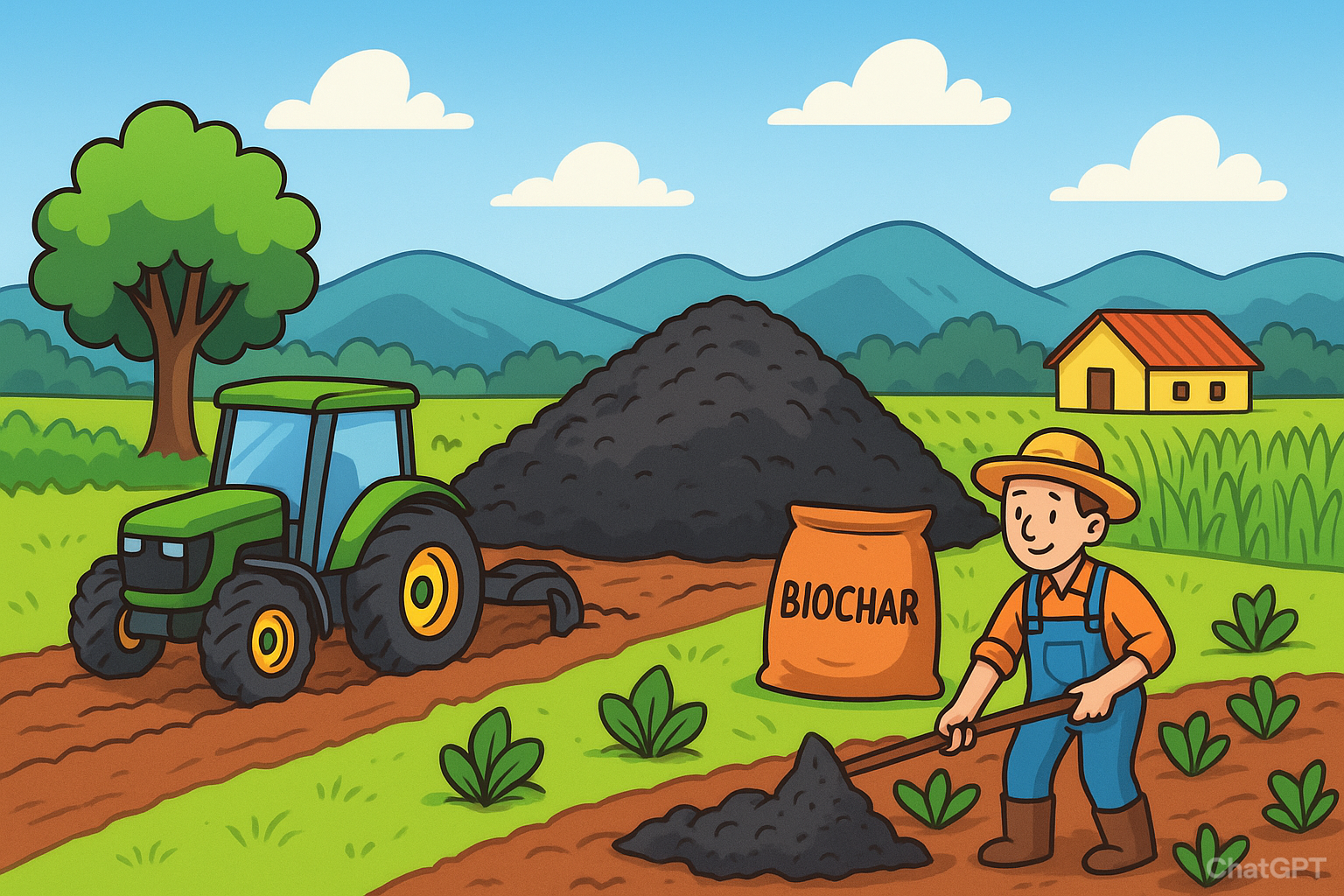
The Faculty of Agricultural Sciences at the National University of Jujuy (UNJu) and the agricultural company La Asunción SA have initiated a three-year collaborative agreement to research and produce biocharBiochar is a carbon-rich material created from biomass decomposition in low-oxygen conditions. It has important applications in environmental remediation, soil improvement, agriculture, carbon sequestration, energy storage, and sustainable materials, promoting efficiency and reducing waste in various contexts while addressing climate change challenges. More. The partnership, signed at a ceremony in San Salvador de Jujuy, aims to evaluate biochar as a soil-enhancing tool for regional agriculture and to inform future public policy.
The project will focus on the sustainable production of biochar, a form of charcoalCharcoal is a black, brittle, and porous material produced by heating wood or other organic substances in a low-oxygen environment. It is primarily used as a fuel source for cooking and heating. More created through the pyrolysisPyrolysis is a thermochemical process that converts waste biomass into bio-char, bio-oil, and pyro-gas. It offers significant advantages in waste valorization, turning low-value materials into economically valuable resources. Its versatility allows for tailored products based on operational conditions, presenting itself as a cost-effective and efficient More of organic waste. Unlike fuel-grade charcoal, biochar is applied to soil to improve fertility, increase water retention, and provide a habitat for beneficial microorganisms, potentially reducing the need for chemical fertilizers. A key benefit is its ability to sequester carbon for centuries, making it a relevant strategy for climate change mitigation.
Led by professor and researcher Raúl Colque, the UNJu team will conduct laboratory and field trials to analyze the properties of biochar-treated soils, monitor local crops, and study its carbon sequestration potential. La Asunción SA, coordinated by agronomist Santiago Farfán Marque, will be responsible for supplying the biochar from specific biomassBiomass is a complex biological organic or non-organic solid product derived from living or recently living organism and available naturally. Various types of wastes such as animal manure, waste paper, sludge and many industrial wastes are also treated as biomass because like natural biomass these More. The results of the research will be disseminated through scientific publications, reports, and meetings with agricultural producers and technicians.
The collaboration seeks to provide sustainable alternatives to protect the province’s soils and assist agriculture in adapting to climate change. The agreement was formally signed by Dr. Noemí Bejarano, dean of the Faculty of Agricultural Sciences, and Mr. Néstor Farfán, president of La Asunción SA.


Leave a Reply