
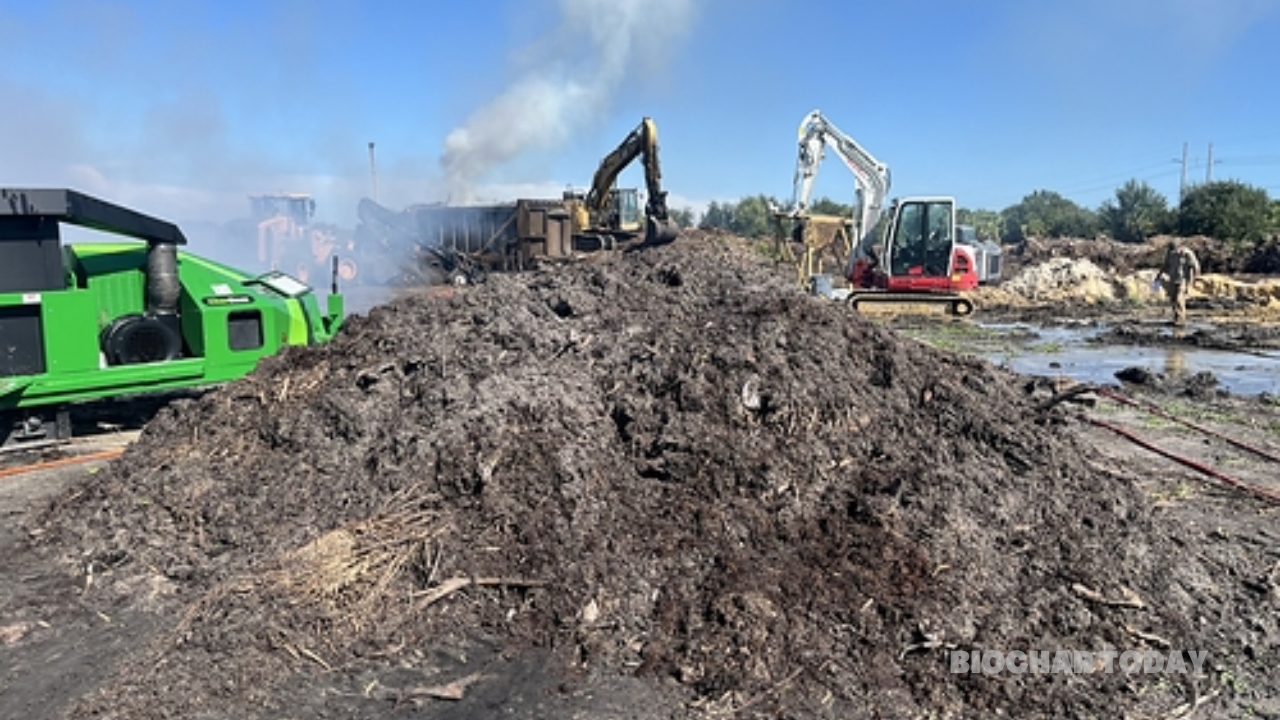
The University of Florida (UF), supported by funding from the U.S. Environmental Protection Agency (EPA) Region 4, has selected climate technology firm Myno Carbon to collaborate on a research project transforming coastal sargassum biomassBiomass is a complex biological organic or non-organic solid product derived from living or recently living organism and available naturally. Various types of wastes such as animal manure, waste paper, sludge and many industrial wastes are also treated as biomass because like natural biomass these More into enhanced biocharBiochar is a carbon-rich material created from biomass decomposition in low-oxygen conditions. It has important applications in environmental remediation, soil improvement, agriculture, carbon sequestration, energy storage, and sustainable materials, promoting efficiency and reducing waste in various contexts while addressing climate change challenges. More for water treatment. Led by UF Professor Dengjun (Kevin) Wang, the initiative applies advanced pyrolysisPyrolysis is a thermochemical process that converts waste biomass into bio-char, bio-oil, and pyro-gas. It offers significant advantages in waste valorization, turning low-value materials into economically valuable resources. Its versatility allows for tailored products based on operational conditions, presenting itself as a cost-effective and efficient More to convert problematic seaweed into a valuable material designed to improve water quality and immobilize contaminants.
Coastal communities in regions like the Gulf of Mexico face significant environmental and economic challenges due to massive, record-breaking accumulations of sargassum washing ashore, which disrupt near-shore ecosystems and tourism. Disposing of this excessive biomass as a standard waste stream fails to capture its potential value or address the underlying volume of material.
To solve this, the project utilizes Myno Carbon’s pyrolysis and biochar expertise to process harvested sargassum into a stable, carbon-rich material. Researchers are evaluating this resulting biochar for targeted water-treatment applications, specifically assessing its capacity to capture or immobilize contaminants and improve water quality in environments like oyster beds.
The collaboration successfully advances Myno Carbon’s “Biochar 3.0” initiative—moving beyond traditional soil amendments and carbon credits toward customized carbon materials tailored for environmental remediation. Furthermore, the pyrolysis process permanently converts biomass carbon into a durable form, simultaneously delivering a scalable waste-to-value, carbon-management, and water-remediation solution.


Leave a Reply