
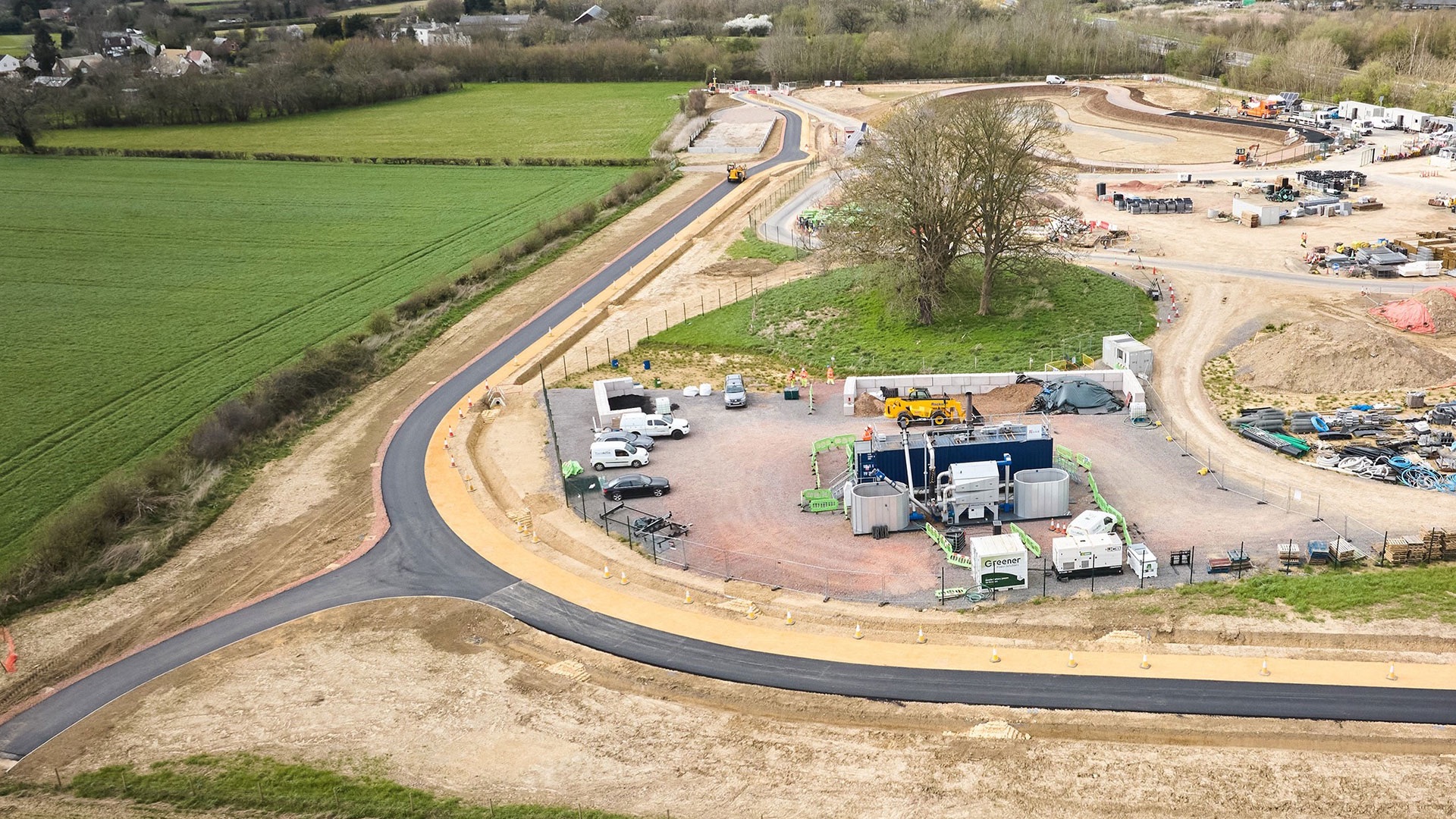
A new trial led by Kier and TerrAffix on the A417 Missing Link project in Gloucestershire is testing a circular approach to carbon reduction by converting vegetation cleared from the site into biocharBiochar is a carbon-rich material created from biomass decomposition in low-oxygen conditions. It has important applications in environmental remediation, soil improvement, agriculture, carbon sequestration, energy storage, and sustainable materials, promoting efficiency and reducing waste in various contexts while addressing climate change challenges. More. The initiative, funded by National Highways’ Environmental and Wellbeing Designated Fund, aims to cut carbon emissions and reduce waste in road construction.
Five tonnes of biochar were produced on-site through pyrolysisPyrolysis is a thermochemical process that converts waste biomass into bio-char, bio-oil, and pyro-gas. It offers significant advantages in waste valorization, turning low-value materials into economically valuable resources. Its versatility allows for tailored products based on operational conditions, presenting itself as a cost-effective and efficient More, preventing the release of an estimated 13 tonnes of CO₂. Rather than transporting green waste offsite, the biochar is being reused in various elements of the project, aligning with National Highways’ net zero targets.
The trial explores multiple applications:
- Landscaping: Biochar is being blended into planting soil to support tree establishment and enhance carbon sequestration. Green Bridge
- Construction: On what will be the UK’s largest green bridge, biochar will replace synthetic water-retention gels, improving plant resilience and reducing reliance on manufactured materials.
- Drainage Systems: Biochar will also be used in highway runoff treatment to capture microplastics, adding a layer of environmental protection.
Using site-won biochar supports a circular economy model. It helps sequester carbon long-term, reduces haulage emissions, and minimizes the need for imported materials. According to TerrAffix, it also enhances biodiversity and soil function by improving water retention and nutrient cycling.
The project’s success could lead to wider adoption across National Highways’ schemes, supporting goals to build and operate roads more sustainably. A formal case study will document lessons learned and assess feasibility for broader rollout.
This trial not only demonstrates the technical viability of producing and applying biochar at scale in a construction context—it also highlights the tangible environmental benefits of integrating carbon capture and reuse directly into infrastructure projects. If proven successful, it may set a new precedent for managing biomassBiomass is a complex biological organic or non-organic solid product derived from living or recently living organism and available naturally. Various types of wastes such as animal manure, waste paper, sludge and many industrial wastes are also treated as biomass because like natural biomass these More in civil engineering.



Leave a Reply