
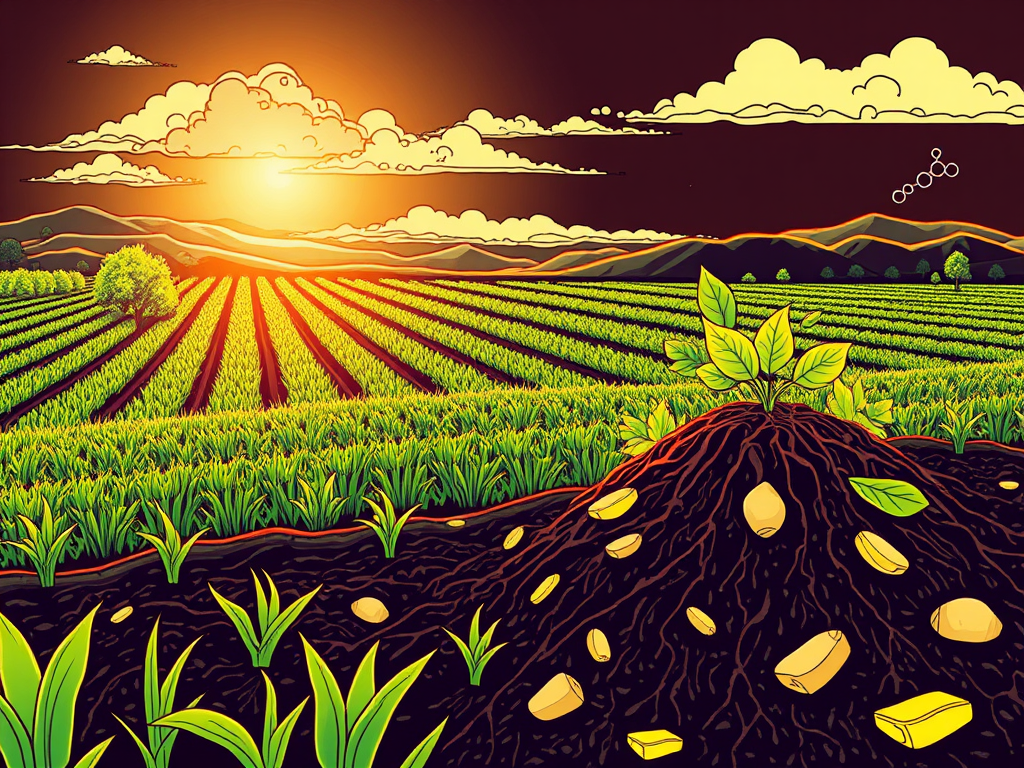
Food waste is a global challenge, and its effective management is crucial for environmental sustainability. In a recent study published in BiocharBiochar is a carbon-rich material created from biomass decomposition in low-oxygen conditions. It has important applications in environmental remediation, soil improvement, agriculture, carbon sequestration, energy storage, and sustainable materials, promoting efficiency and reducing waste in various contexts while addressing climate change challenges. More, Disni Gamaralalage and colleagues explored a promising solution: converting food waste digestate into biochar, a charcoal-like substance, for long-term carbon storage and agricultural benefits. Their techno-economic and life cycle assessment reveals that this process can achieve significant greenhouse gas (GHG) removal at a competitive cost, particularly when production facilities are co-located with existing anaerobic digestion (AD) facilities.
Food waste, often destined for landfills where it generates intensive landfill gas emissions, is increasingly being managed through anaerobic digestion in the UK. However, the resulting digestate frequently contains plastic contamination, which prohibits its direct use on agricultural fields and often leads to costly incineration. The high moisture content of digestate also makes it unsuitable for conventional thermal processes like pyrolysisPyrolysis is a thermochemical process that converts waste biomass into bio-char, bio-oil, and pyro-gas. It offers significant advantages in waste valorization, turning low-value materials into economically valuable resources. Its versatility allows for tailored products based on operational conditions, presenting itself as a cost-effective and efficient More without expensive pre-treatment. This is where hydrothermal carbonization followed by high-temperature post-carbonization (HTC-PC) offers a viable alternative, efficiently producing stable biochar from this challenging wet biowaste.
The study highlights the substantial carbon sequestration potential of this approach. The produced biochar boasts an impressive 88% stable carbon fraction, meaning a large portion of the carbon remains locked away in the soil, resisting degradation for centuries. This translates to a net emission reduction of 1.15 to 1.20 tonnes of CO2 equivalent per tonne of biochar, primarily due to the long-term storage of durable carbon. To put this into perspective, utilizing just 50% of the UK’s projected available food waste digestate by 2030 could sequester 93 kilotonnes of CO2 equivalent annually, requiring 28 biochar facilities, each with a 20 kilotonnes per annum capacity.
Economically, the process is particularly attractive. The base case scenario, which assumes co-location of HTC-PC facilities with AD facilities to minimize digestate transport, achieved a biochar production cost of £88 per tonne. This competitive cost is largely due to revenue generated from a “gate fee” charged for processing the food waste digestate. This gate fee, estimated at £65 per tonne of digestate (a midpoint between composting and incineration costs), is crucial for financial viability. In fact, the study found that a gate fee exceeding £74 per tonne of digestate in co-located facilities, or £84 per tonne with digestate transportation, makes biochar production financially break-even, potentially even leading to negative GHG removal costs. This is less than the current incineration gate fee of £93 per tonne that some food waste AD operators pay, suggesting a financial incentive to transition to biochar production.
Transportation costs, especially for the high-moisture digestate, were identified as a significant factor influencing overall economics. When digestate transport to a centralized facility was included, the biochar production cost more than doubled to £183.9 per tonne, emphasizing the benefits of co-locating facilities. While there are some GHG emissions associated with the oxidation of plastic content in the digestate during the HTC-PC process, these are comparable to emissions from current incineration practices. Moreover, the robust stability of the produced biochar, with an atomic H/C ratio between 0.1-0.4, meets the European Biochar Certificate (EBC) standards for high stability.
While some potential co-benefits of biochar application to soil, such as improved crop yield and reduced fertilizer use, are acknowledged, their quantitative impact on GHG emissions was found to be modest and requires further investigation. Nevertheless, the core finding remains strong: converting food waste digestate to biochar via HTC-PC offers a cost-effective and environmentally sound solution for carbon removal, providing a dual benefit of waste management and climate change mitigation.
Source: Gamaralalage, D., Rodgers, S., Gill, A., Meredith, W., Bott, T., West, H., Alces, J., Snape, C., & McKechnie, J. (2025). Biowaste to biochar: a techno-economic and life cycle assessment of biochar production from food-waste digestate and its agricultural field application. Biochar, 7(1), 50.


Leave a Reply