
Key Takeaways
- Türkiye has a massive, untapped resource, generating 270 million tons of waste annually that could be converted into 67.5 to 94.5 million tons of biocharBiochar is a carbon-rich material created from biomass decomposition in low-oxygen conditions. It has important applications in environmental remediation, soil improvement, agriculture, carbon sequestration, energy storage, and sustainable materials, promoting efficiency and reducing waste in various contexts while addressing climate change challenges. More.
- The single largest source of this waste is animal manure (191 million tons), with dairy cattle alone producing 76.8 million tons of manure per year.
- While wheat straw is the largest agricultural waste by volume (20 million tons/year), hazelnut shells (over 1 million tons/year) are considered a top-priority feedstockFeedstock refers to the raw organic material used to produce biochar. This can include a wide range of materials, such as wood chips, agricultural residues, and animal manure. More due to their high quality and ease of collection.
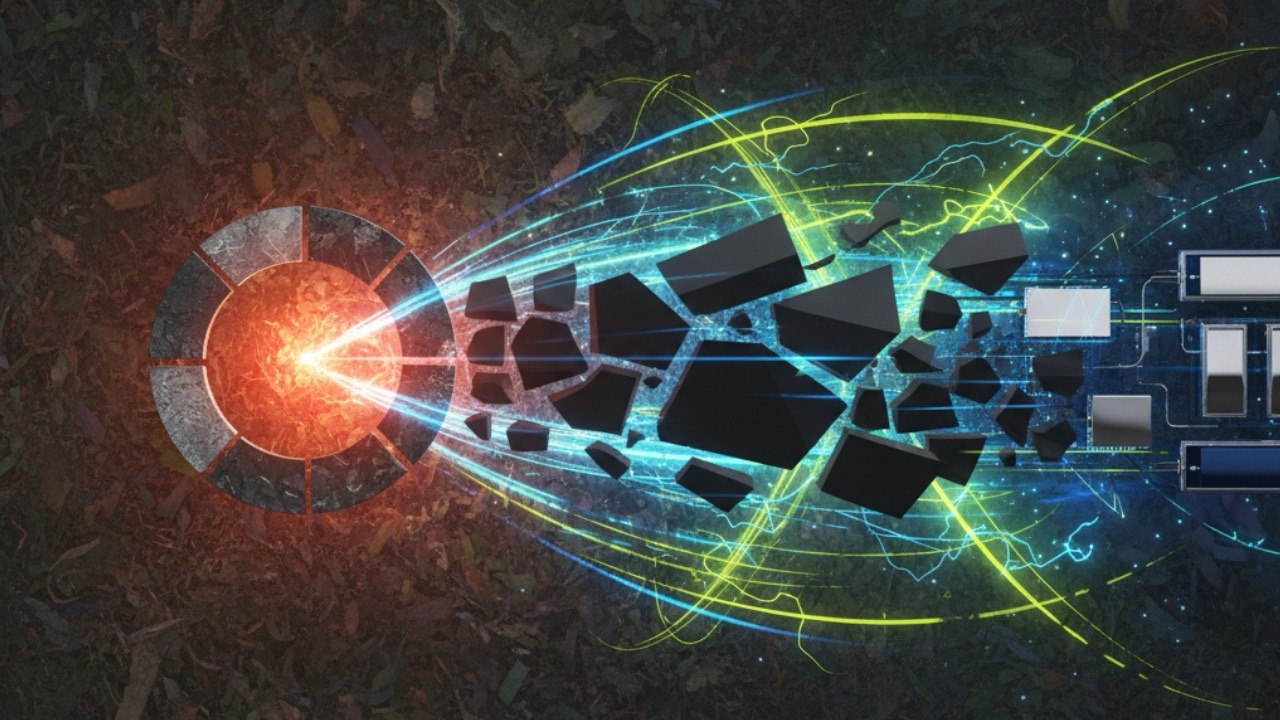
- This biochar is a high-tech, low-cost material for energy storage. It’s a high-performance electrode for supercapacitors, with some studies reporting capacitance values up to 1600 F/g.
- Using this waste solves two problems at once: it creates a domestic, sustainable supply for energy technologies and reduces the environmental burden of landfills and agricultural waste.
The world needs better, cheaper, and greener ways to store energy. This challenge is the focus of a new book chapter by Serhat Bilgin from Tokat Gaziosmanpaşa University. In the chapter, published in International Research And Evaluations In The Field Of Mechanical Engineering – October 2025, Bilgin explores how biochar can be a key player in sustainable energy storage and outlines the massive, untapped potential Türkiye has to produce it.
At its core, biochar is a high-tech form of charcoalCharcoal is a black, brittle, and porous material produced by heating wood or other organic substances in a low-oxygen environment. It is primarily used as a fuel source for cooking and heating. More. It’s produced by heating organic materials (biomassBiomass is a complex biological organic or non-organic solid product derived from living or recently living organism and available naturally. Various types of wastes such as animal manure, waste paper, sludge and many industrial wastes are also treated as biomass because like natural biomass these More) like wood, manure, or crop residues in a low-oxygen environment, a process called pyrolysisPyrolysis is a thermochemical process that converts waste biomass into bio-char, bio-oil, and pyro-gas. It offers significant advantages in waste valorization, turning low-value materials into economically valuable resources. Its versatility allows for tailored products based on operational conditions, presenting itself as a cost-effective and efficient More. This process locks carbon into a stable, solid form. What makes this material so exciting for engineers is its physical structure. Biochar is incredibly porous, giving it a vast internal surface area. It also has high carbon content and, when produced at high temperatures, excellent electrical conductivity. These properties make it a nearly ideal, low-cost material for building electrodes—the components in batteries and capacitors that store and release energy.
The review highlights that biochar is already a star performer in energy storage research. In supercapacitors (devices that charge lightning-fast and last for millions of cycles), biochar’s huge surface area provides a massive “parking lot” for energy-storing ions. The chapter notes that some biochar electrodes can perform as well as, or even better than, traditional activated carbonActivated carbon is a form of carbon that has been processed to create a vast network of tiny pores, increasing its surface area significantly. This extensive surface area makes activated carbon exceptionally effective at trapping and holding impurities, like a molecular sponge. It is commonly More, achieving impressive capacitance values as high as 1600 F/g. Biochar is also a promising sustainable alternative for batteries. It’s being used as an anode material in sodium-ion batteries (a cheap and abundant alternative to lithium) and in advanced lithium-sulfur batteries, where its porous structure helps trap components and extend the battery’s life.
This technology is a perfect match for Türkiye, which generates an enormous amount of organic waste. Bilgin’s research quantifies this opportunity. The total annual waste potential in Türkiye is a staggering 270.2 million tons. If all of this were converted, it could produce between 67.5 and 94.5 million tons of biochar every single year.
The largest source of this waste, by a wide margin, is animal manure, topping 191 million tons. Dairy cattle are the single biggest contributor, producing 76.8 million tons of manure annually. The largest source of agricultural waste is wheat straw, at 20 million tons per year. However, the chapter identifies hazelnut shells (over 1 million tons/year) as a “high priority” feedstock because the material is dense, high-quality, and easy to collect from processing centers. Even pruning waste from the country’s vast orchards—apple, apricot, and cherry trees—adds up to a biochar potential of 175,000 tons.
This isn’t just about managing waste; it’s about a fundamental shift in resources. This 270-million-ton problem could be a 94.5-million-ton solution. Converting this waste into biochar would simultaneously reduce the burden on landfills, cut greenhouse gas emissions from decomposing manure, and create a domestic, sustainable supply of advanced materials for Türkiye’s energy sector. It represents a perfect example of a circular economy, turning a costly environmental liability into a high-value technological asset.
Source: Bilgin, S. (2025). Biochar for sustainable energy storage applications and Turkiye’s biochar potential from waste. In International Research And Evaluations In The Field Of Mechanical Engineering – October 2025 (pp. 41-66).



Leave a Reply