
Key Takeaways
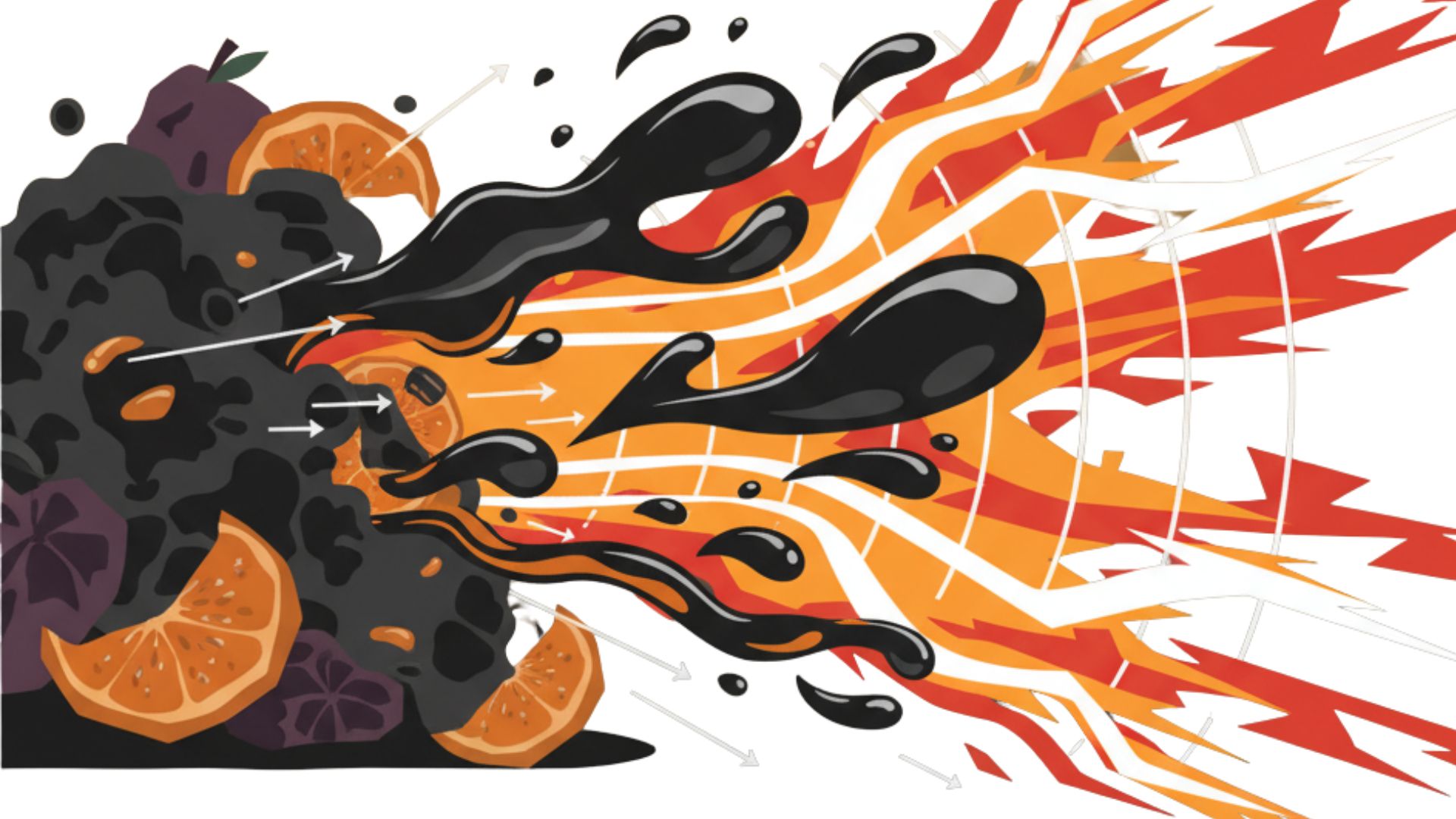
- BiocharBiochar is a carbon-rich material created from biomass decomposition in low-oxygen conditions. It has important applications in environmental remediation, soil improvement, agriculture, carbon sequestration, energy storage, and sustainable materials, promoting efficiency and reducing waste in various contexts while addressing climate change challenges. More produced from Cerbera manghas fruit waste effectively removes crude, engine, and motor oils from water.
- The material achieves a maximum adsorption capacity of 11.10 grams of oil per gram of biochar.
- Reducing the particle size of the biochar increases oil removal efficiency by nearly 170 percent.
- The oil-saturated biochar can be repurposed as a fuel source, generating significantly higher heat than raw biochar.
- Saltwater environments enhance the adsorption process, making this solution ideal for marine applications.
Marine ecosystems face constant threats from pollution, particularly oil spills that disrupt the natural environmental balance and threaten aquatic life. In a recent study published in the Journal of Geography, Environment and Earth Science International, researchers H.G.D.M. Nishshanka and R.C.L. De Silva investigated a sustainable solution derived from nature itself. They explored the potential of biochar created from the fruit of Cerbera manghas, locally known in Sri Lanka as Wel Kaduru, to remediate contaminated water. This fruit, often considered waste due to its toxicity, possesses a fibrous mesocarp that makes it an ideal candidate for creating a buoyant and porous sorbent material.
The researchers determined that the efficiency of this natural sponge is highly dependent on the type of pollutant present. Their experiments revealed that the biochar exhibited a maximum adsorption capacity of approximately 11.10 grams of oil per gram of biochar when treating motor oil. Engine oil and crude oil showed slightly lower but still significant capacities, with the overall range for these pollutants falling between 4.90 and 11.10 grams per gram. This variability indicates that the viscosity and chemical composition of the oil play crucial roles in how effectively the biochar can trap the liquid within its porous structure.
To optimize the cleanup process, the study examined how the physical state of the biochar influenced its performance. The data showed that reducing the size of the sorbent material significantly improved oil removal. While using the entire fruit resulted in an adsorption capacity of only 3.57 grams per gram, breaking the material down into smaller pieces of approximately 0.50 grams increased this capacity to 9.61 grams per gram. This improvement is attributed to the expansion of the interfacial area available for oil binding. Furthermore, the process is relatively rapid, with the material reaching its maximum adsorption saturation within a contact time of 30 to 45 minutes.
Real-world application requires understanding how the sorbent behaves in diverse aquatic environments. Interestingly, the study found that salinity positively impacts the adsorption process. Tests conducted with salt solutions mimicking marine environments resulted in higher adsorption capacities compared to deionized water, likely due to interactions between the functional groups on the biochar surface and the ions in the solution. However, the age of the oil spill matters. As oil weathers and loses volatile components over time, it becomes more viscous and harder to remove. The researchers observed a decline in adsorption capacity from 6.71 grams per gram one day after a spill to 5.30 grams per gram after nine days.
A critical aspect of the study involved determining the fate of the material after it has done its job. Rather than becoming a secondary waste product, the oil-saturated biochar showed potential as a renewable energy source. When the researchers burned the oil-laden biochar, it generated significantly more heat than raw biochar. The combustion of crude oil-adsorbed biochar raised water temperatures to 54 degrees Celsius, compared to just 35 degrees Celsius for biochar without oil. This suggests that the waste material can be repurposed for heat energy production, offering a circular approach to waste management.
The analysis of the adsorption mechanism revealed that the oil is trapped through multilayer physical adsorption rather than chemical bonding. This means the oil molecules adhere to the surface and to each other through cohesive forces, filling the porous network of the biochar. The study concludes that Cerbera manghas biochar is a hydrophobic material that naturally repels water while attracting oil, making it an effective, low-cost, and buoyant solution for mitigating marine pollution. By converting a toxic fruit waste product into a functional environmental tool, this research highlights a practical path toward sustainable oil spill remediation.
Source: Nishshanka, H. G. D. M., & De Silva, R. C. L. (2025). Removal of oil spills on water using biochar of the fruit of Cerbera manghas (Wel Kaduru). Journal of Geography, Environment and Earth Science International, 29(11), 173–188.



Leave a Reply