
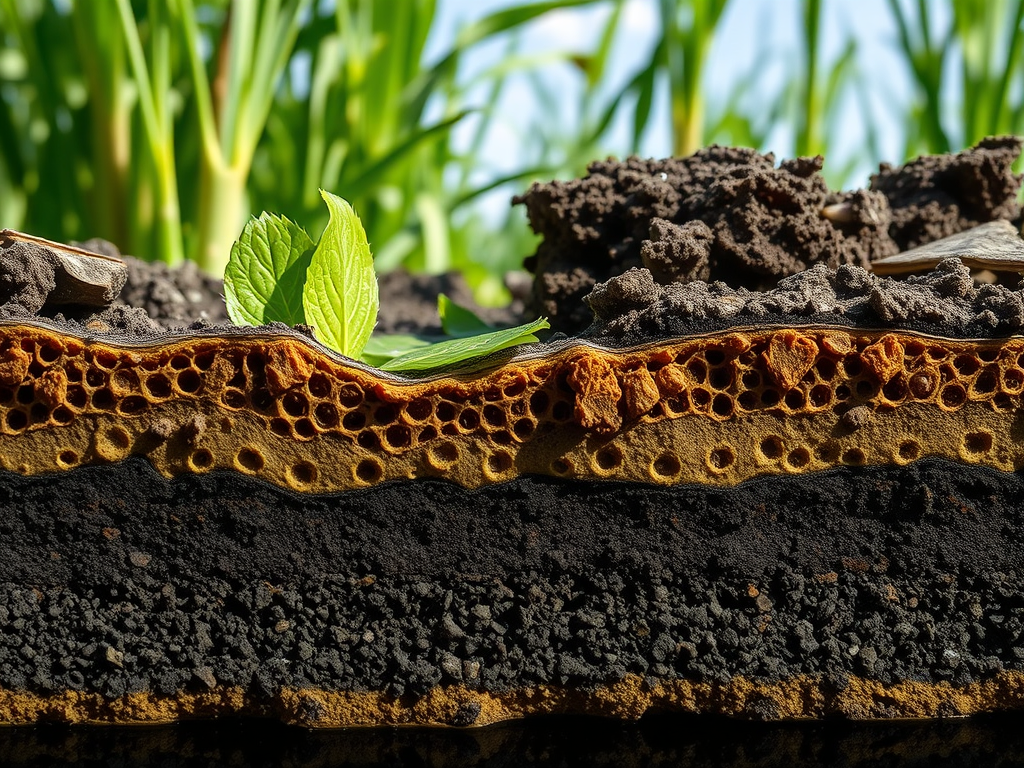
The problem of water eutrophication, often caused by wastewater with a low carbon-to-nitrogen (C/N) ratio, is a significant challenge in environmental management. Conventional constructed wetlands (CWs) struggle to remove nitrogen from this type of wastewater due to a lack of carbon and oxygen. A recent study published in the journal Water explored an innovative solution: coupling biocharBiochar is a carbon-rich material created from biomass decomposition in low-oxygen conditions. It has important applications in environmental remediation, soil improvement, agriculture, carbon sequestration, energy storage, and sustainable materials, promoting efficiency and reducing waste in various contexts while addressing climate change challenges. More with intermittent aeration in a laboratory-scale CW system. The researchers, led by Mengbing Li, Sili Tan, and others, tested three types of biochar—corncob (YBC), walnut shell (HBC), and manure (FBC)—to find the most effective combination for treating low C/N wastewater.
The study found that all three biochars contain silicon-oxygen (Si-O) bonds, which enhance ammonium (NH4+) adsorption. However, walnut shell biochar (HBC) demonstrated superior performance. Its high porosityPorosity of biochar is a key factor in its effectiveness as a soil amendment and its ability to retain water and nutrients. Biochar’s porosity is influenced by feedstock type and pyrolysis temperature, and it plays a crucial role in microbial activity and overall soil health. Biochar More and acidic functional groups enabled it to achieve an efficientNH4+−N adsorp tion capacity of 32.44 mg/L. The study explains this is due to a synergistic mechanism of “adsorption-biofilm-microzone oxygen regulation,” where the porous structure provides an optimal environment for microbial activity.
The researchers configured four vertical flow wetland systems: one for each biochar type (CW-YBC, CW-HBC, CW-FBC) and a biochar-free control group (CW-BC). They regulated hydraulic retention time (HRT) from 1 to 3 days and influent C/N ratios of 1, 3, and 5 to simulate different conditions. The results showed that under optimal conditions (HRT=3 d, C/N=5), the CW-HBC system excelled, achieving impressive removal efficiencies: 97.8% for NH4+−N, 98.8% for total nitrogen (TN), and 79.6% for chemical oxygen demand (COD).
The intermittent aeration was a key factor. Without aeration, nitrogen removal was limited by oxygen supply, causing NH4+−N to accumulate. When aeration was introduced, it provided the necessary oxygen for nitrifying bacteria, making the nitrification-denitrification process the primary removal pathway. The biochar’s porous structure was crucial, as it created both aerobic and anoxic zones that enriched nitrifying and denitrifying bacteria, respectively.
The addition of biochar also significantly altered the microbial community structure. In biochar-amended systems, the dominant bacterial phylum shifted toward Actinobacteriota (29.79%), Proteobacteria (17.61%), and Cyanobacteria (15.41%). These phyla are strongly associated with nitrogen removal processes. The study also found that the HBC provided a slow-release carbon source, which helped alleviate carbon limitation for the bacteria. This synergistic effect of adsorption and microbial activity was what made the CW-HBC system so effective.
Based on these technical findings, the study proposes a framework for institutional and regulatory change. The authors suggest a “standards-legislation” approach. This involves incorporating biochar’s physicochemical parameters and aeration strategies into multi-level technical standards for water treatment. They also propose that key technical mechanisms, such as the Si-O adsorption process, should be converted into legal requirements through legislative amendments to support watershed restoration efforts.
Source: Li, M.; Tan, S.; Huang, J.; Chen, Q.; Yu, G. Laboratory-Scale Biochar-Aerated Constructed Wetlands for Low C/N Wastewater: Standardization and Legal Cooperation from a Watershed Restoration Perspective. Water 2025, 17, 2482.




Leave a Reply