
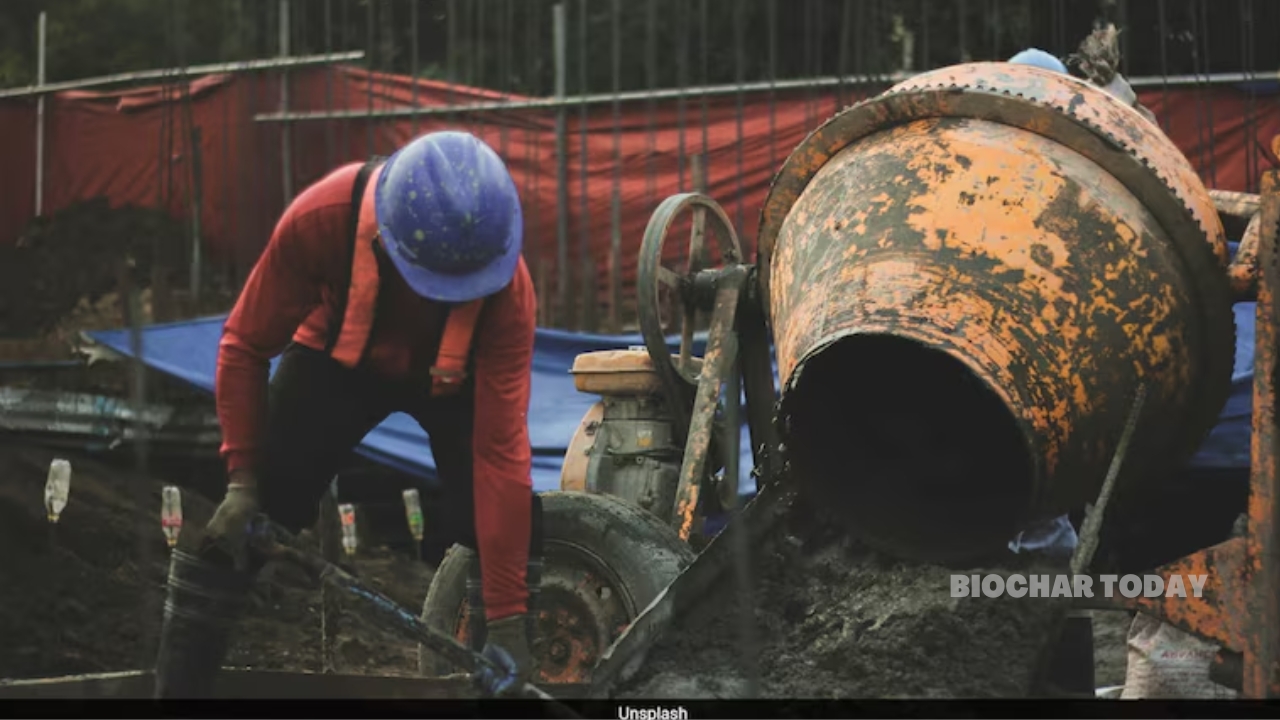
Researchers led by civil engineer Raghuvesh Tiwari at Manipal University Jaipur in India have successfully integrated biocharBiochar is a carbon-rich material created from biomass decomposition in low-oxygen conditions. It has important applications in environmental remediation, soil improvement, agriculture, carbon sequestration, energy storage, and sustainable materials, promoting efficiency and reducing waste in various contexts while addressing climate change challenges. More derived from treated human waste into concrete formulations. The research team processed sewage sludge collected from a wastewater treatment facility in Warangal, India, converting the organic matter into a fine carbonaceous powder via low-oxygen pyrolysisPyrolysis is a thermochemical process that converts waste biomass into bio-char, bio-oil, and pyro-gas. It offers significant advantages in waste valorization, turning low-value materials into economically valuable resources. Its versatility allows for tailored products based on operational conditions, presenting itself as a cost-effective and efficient More at temperatures between 350 and 450 degrees Celsius. In testing partial cement replacement levels of 5%, 10%, and 15%, the scientists observed that incorporating waste-based biochar substantially improves key physical properties of the material after 91 days of curing. The complete findings of the investigation have been accepted for publication in the journal Scientific Reports.
The study addresses the critical challenge of heavy resource consumption and environmental impact associated with conventional cement production, alongside the operational burden of managing municipal sewage sludge. Traditional concrete manufacturing relies heavily on ordinary cement, a primary source of industrial carbon emissions, while municipal sanitation systems worldwide struggle with the safe disposal and stabilization of human waste residues. Standard concrete curing processes can also suffer from moisture loss, structural shrinkage, and elevated porosityPorosity of biochar is a key factor in its effectiveness as a soil amendment and its ability to retain water and nutrients. Biochar’s porosity is influenced by feedstock type and pyrolysis temperature, and it plays a crucial role in microbial activity and overall soil health. Biochar More, which weaken the final matrix over time and compromise structural longevity.
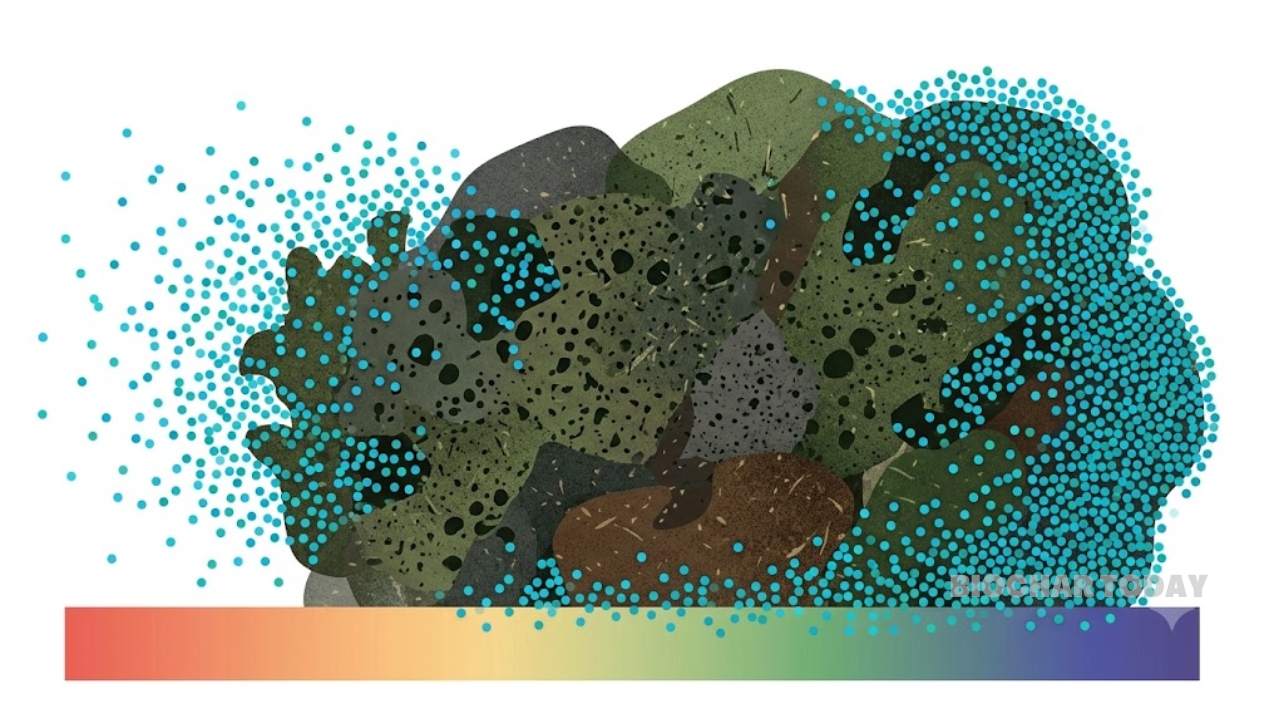
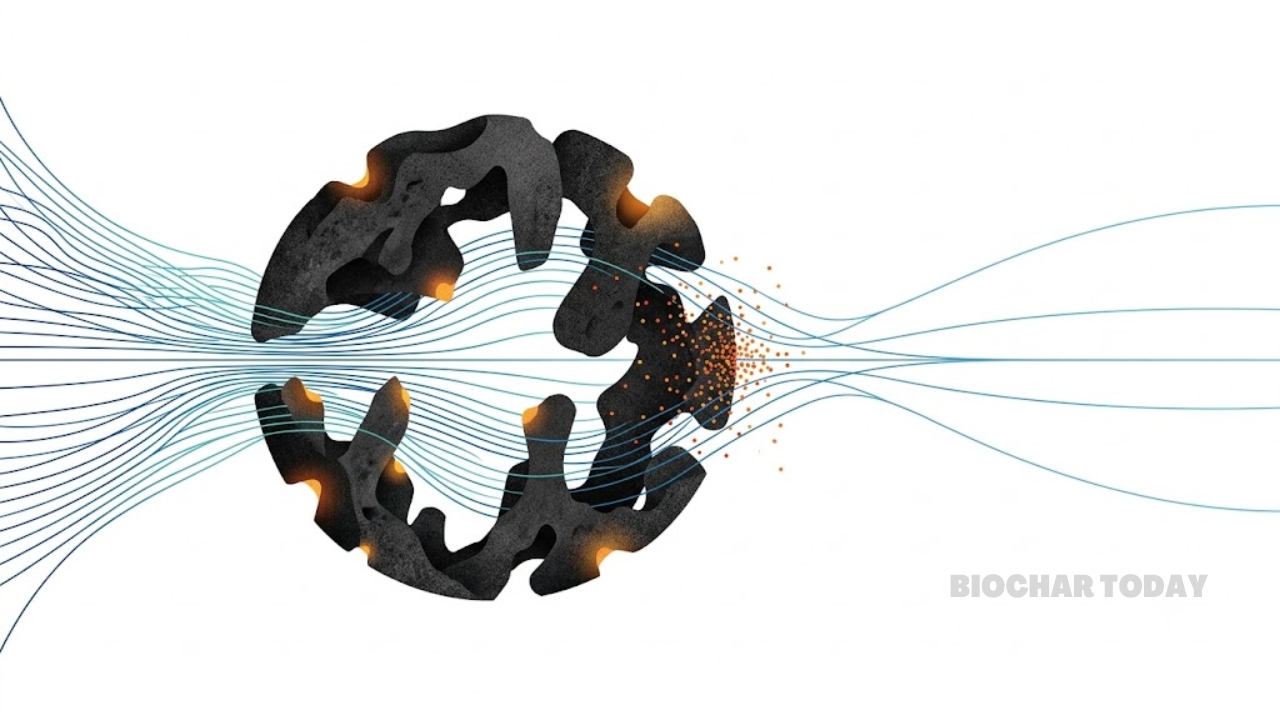
To resolve these performance and environmental limitations, the investigators utilized the sewage-derived biochar as a functional additive to replace portioned amounts of standard cement. The porous architecture of the carbonaceous material acts as an internal reservoir, absorbing excess water during mixing and gradually releasing it during the hardening process to optimize internal hydration reactions. Furthermore, the inherent silica content in the treated sludge biochar chemically reacts within the mixture, promoting the development of secondary binding compounds that reinforce the internal matrix of the concrete.
The experimental outcomes demonstrated substantial mechanical improvements at specific integration ratios, particularly at 5% and 10% cement replacement levels. Concrete modified with 10% biochar achieved a 42% increase in flexural strength and a 21% increase in compressive strength after 91 days, while the 5% mixture showed a 36% increase in flexural strength and a 20% increase in compressive strength. However, exceeding these thresholds proved counterproductive, as a 15% replacement level led to heightened micro-cracking, increased porosity, and reduced overall structural integrity. Despite these initial positive results, the researchers noted that comprehensive evaluation regarding heavy metal leachingLeaching is the process where nutrients are dissolved and carried away from the soil by water. This can lead to nutrient depletion and environmental pollution. Biochar can help reduce leaching by improving nutrient retention in the soil. More risks, freeze-thaw endurance, and performance under extreme thermal and saline exposure remains necessary before commercial implementation can occur.



Leave a Reply