
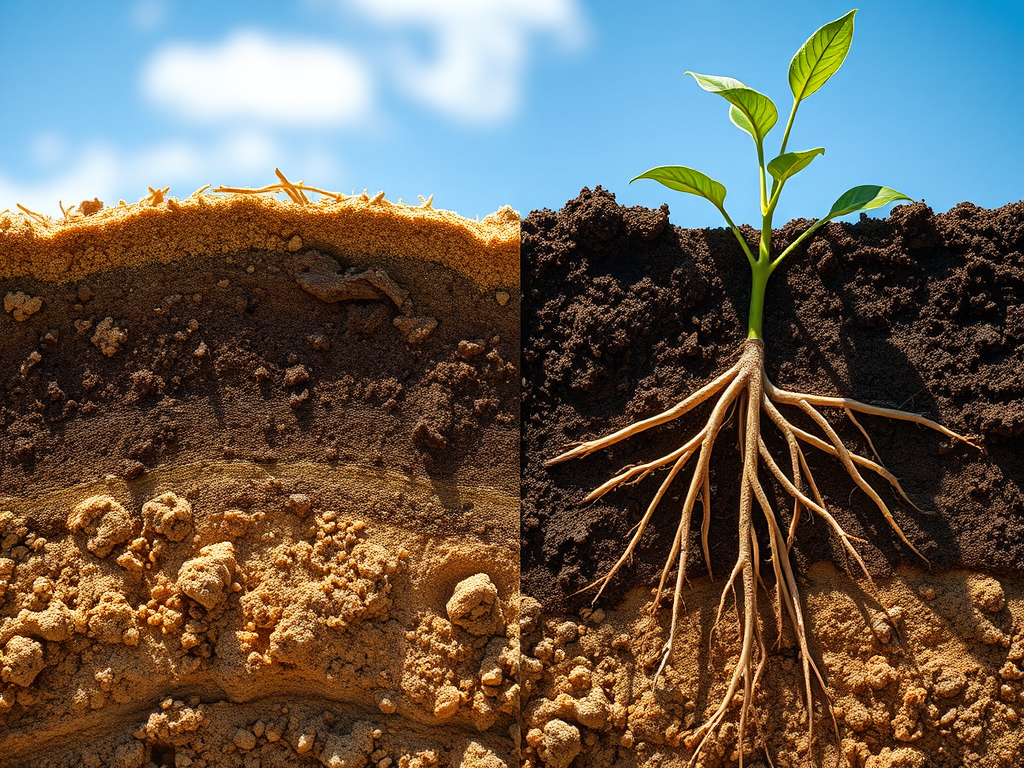
In arid and semi-arid regions, the widespread use of alkaline sandy soils presents a significant challenge to agriculture. These soils, characterized by high pHpH is a measure of how acidic or alkaline a substance is. A pH of 7 is neutral, while lower pH values indicate acidity and higher values indicate alkalinity. Biochars are normally alkaline and can influence soil pH, often increasing it, which can be beneficial More, often hinder the availability of essential nutrients like phosphorus (P) and potassium (K), limiting crop productivity. While biocharBiochar is a carbon-rich material created from biomass decomposition in low-oxygen conditions. It has important applications in environmental remediation, soil improvement, agriculture, carbon sequestration, energy storage, and sustainable materials, promoting efficiency and reducing waste in various contexts while addressing climate change challenges. More application is a popular strategy to enhance soil fertility, its effectiveness in alkaline soils is inconsistent. A recent study by Tamer A. Elbana and his colleagues, published in Scientific Reports, addresses this issue by investigating how acid-modified biochar can improve nutrient availability. The researchers found that the choice of acid and biochar type is crucial for optimizing soil fertility.
The study used biochars derived from two abundant agricultural waste products in Egypt: palm fronds (PF) and guava branches (GB). These biochars were chemically modified with either acetic acid or phosphoric acid to reduce their pH and alter their properties. In a 15-week controlled experiment, the researchers added these modified biochars to alkaline sandy soil that had been pre-treated with a common phosphate fertilizer. The goal was to see if the biochar could prevent the P fixation that typically occurs in these soils and make nutrients more accessible to plants.
The results showed that not all biochars are created equal. Palm frond biochar had a higher cation exchange capacity (CEC) and was rich in potassium, containing an order of magnitude more K than the guava branch biochar. On the other hand, the guava branch biochar had a higher calcium content and lower salinity. Acidification with phosphoric acid was found to be the most effective way to enhance the CEC of both biochar types, while acetic acid had minimal impact.
The incubation experiment yielded a major finding: the specific combination of guava branch biochar and phosphoric acid significantly enhanced phosphorus availabilityPhosphorus is another essential nutrient for plant growth, but it can sometimes be locked up in the soil and unavailable to plants. Biochar can help release phosphorus from the soil and make it more accessible to plants, reducing the need for chemical fertilizers. More. At an application rate of 4.8 Mg ha−1, this treatment caused a rapid increase in available P, reaching a concentration of 104.02 mg kg−1 after just one week. This was a substantial improvement over the soil treated with superphosphate alone, which had a P availability of only 55.76 mg kg−1 at the same time. Even after 15 weeks, the phosphoric acid-treated guava branch biochar maintained a high average P concentration of 64.17 mg kg−1, suggesting it could facilitate a slow, steady release of nutrients over time. In contrast, the phosphorus in the superphosphate-only soil showed signs of P fixation, which is a common issue in alkaline soils.
When it came to potassium, palm frond biochar proved to be the superior choice. Because of its inherently high K content, the palm frond biochar significantly increased exchangeable K levels in the soil, especially at the higher application rate of 4.8 Mg ha−1. This effect was observed regardless of whether the biochar was acidified or not, indicating that palm frond biochar can serve as a reliable source of K fertilizer. Conversely, the guava branch biochar, with its low K content, had no significant effect on soil K levels.
This research highlights that the effectiveness of biochar as a soil amendmentA soil amendment is any material added to the soil to enhance its physical or chemical properties, improving its suitability for plant growth. Biochar is considered a soil amendment as it can improve soil structure, water retention, nutrient availability, and microbial activity. More in alkaline soils is not just about its presence, but about its specific properties and how it’s prepared. The study concludes that selecting the appropriate acid for biochar modification is key to maximizing its benefits, depending on the target nutrient. For phosphorus, phosphoric acid-treated guava branch biochar is a highly effective solution, while for potassium, palm frond biochar is a suitable choice on its own. While these findings are promising, the authors acknowledge that further field studies are needed to confirm these results under real-world agricultural conditions and to assess the long-term environmental impacts. Sources
Source: Wang, G., Zhou, S., Yang, Z., Chen, D., Zhao, H., Chen, Z., Hu, S., Rahman, S. T., & Wu, Q. (2025). Exploring a Porous Biochar-Based Capacitive Deionization Device for Phosphogypsum Wastewater Treatment in Undergraduate Experimental Teaching: Understanding, Development, and Practice. ACS Omega, 5(C05966), 1-11.





Leave a Reply