

The NARA Climate Community BiocharBiochar is a carbon-rich material created from biomass decomposition in low-oxygen conditions. It has important applications in environmental remediation, soil improvement, agriculture, carbon sequestration, energy storage, and sustainable materials, promoting efficiency and reducing waste in various contexts while addressing climate change challenges. More Project, a joint venture between NARA Climate, Criou Energy Ltd., and Planboo, has officially issued, verified, and sold its first batch of carbon dioxide removal (CDR) credits. Located in the Turkana region of Kenya, specifically operating within the Kakuma and Kerio communities, this initiative represents the world’s first refugee-led carbon project. The initial volume consists of 144 metric tons of carbon dioxide equivalent (tCO2e). These credits have been verified and issued as C-Sinks on the Carbon Standards International (CSI) registry, and international buyers have already purchased the entire first batch.
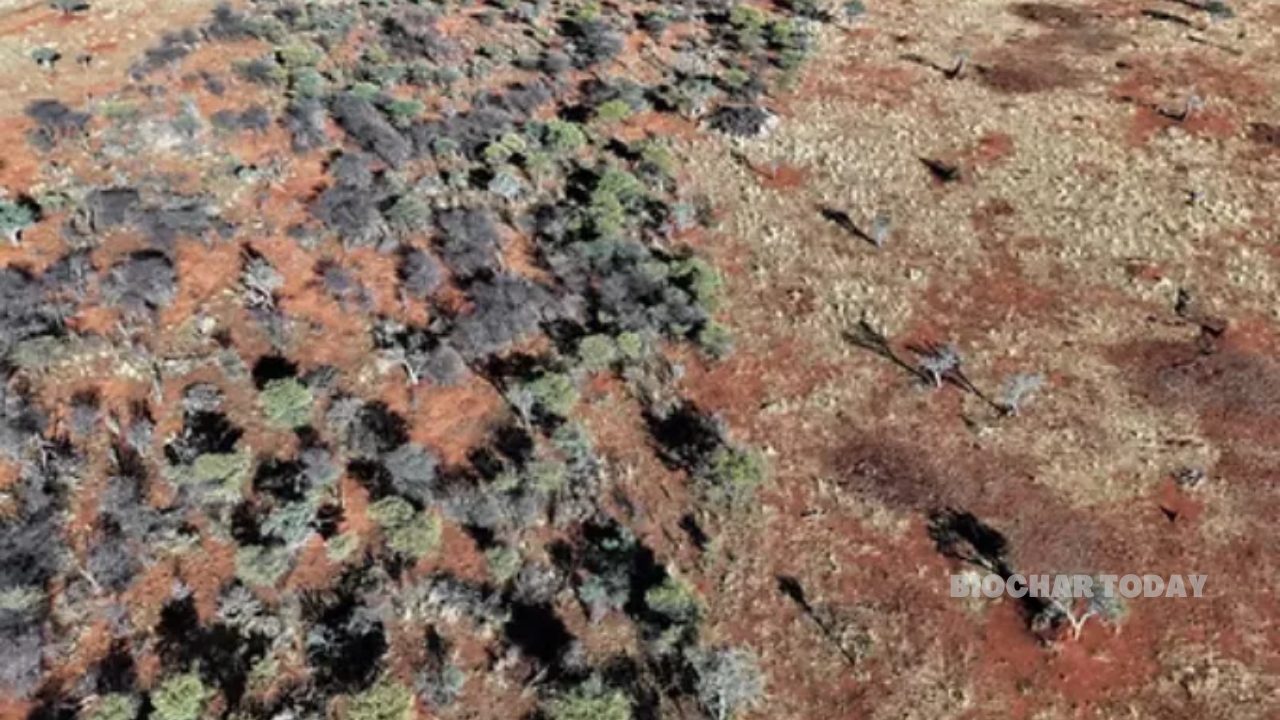
The project addresses a multi-faceted ecological and economic challenge in an arid and underserved region. The local ecosystem suffers from the rapid spread of Prosopis juliflora, an invasive shrub that chokes out native vegetation and reduces the land available for agriculture. Furthermore, the region’s soils are highly saline, which severely limits agricultural productivity and threatens food security for both local residents and the dense refugee population in the Kakuma camp. Historically, verifying carbon sequestration in such remote, resource-constrained environments has also posed a significant logistical challenge.
To resolve these interconnected issues, the project utilizes the invasive Prosopis juliflora as a feedstockFeedstock refers to the raw organic material used to produce biochar. This can include a wide range of materials, such as wood chips, agricultural residues, and animal manure. More to produce carbon-dense biochar. The removal of the invasive shrub effectively clears land, making it available again for local agricultural cooperatives. To ensure transparency and accurate quantification of the sequestered carbon, the partnership deployed a comprehensive digital measuring, reporting, and verification (dMRV) technology developed by Planboo. This system tracks key data points through every stage of the process, from initial biomassBiomass is a complex biological organic or non-organic solid product derived from living or recently living organism and available naturally. Various types of wastes such as animal manure, waste paper, sludge and many industrial wastes are also treated as biomass because like natural biomass these More harvesting to the final application of the biochar to the fields.
The outcomes of this initiative demonstrate both environmental and socioeconomic success. Applying the biochar to the fields has successfully mitigated soil salinity by balancing soil pHpH is a measure of how acidic or alkaline a substance is. A pH of 7 is neutral, while lower pH values indicate acidity and higher values indicate alkalinity. Biochars are normally alkaline and can influence soil pH, often increasing it, which can be beneficial More, increasing water-holding capacity, and improving nutrient retention. On the economic front, the project has generated approximately 123 jobs across five refugee-led community cooperatives that sell crops to local markets and the Kakuma camp. Notably, the workforce comprises roughly 50% women and refugees, providing critical income opportunities and improving food security in this arid region.


Leave a Reply