
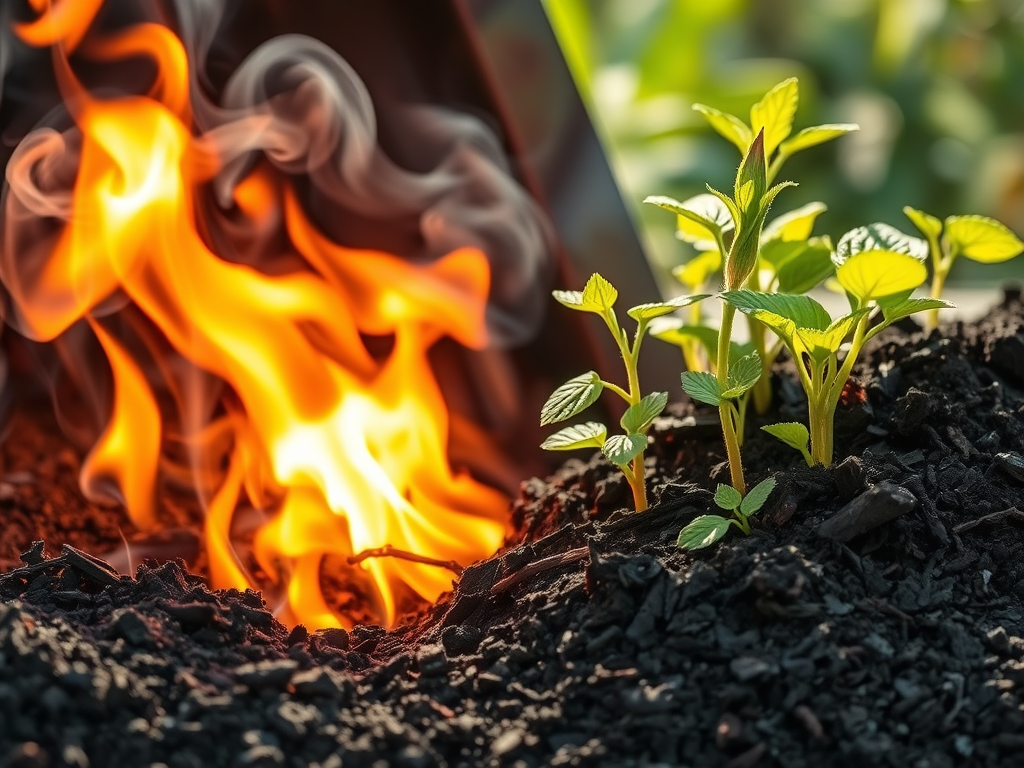
BiocharBiochar is a carbon-rich material created from biomass decomposition in low-oxygen conditions. It has important applications in environmental remediation, soil improvement, agriculture, carbon sequestration, energy storage, and sustainable materials, promoting efficiency and reducing waste in various contexts while addressing climate change challenges. More is gaining recognition as an effective tool for combating climate change. A review article by Matthew C. Enebe, Ram L. Ray, and Richard W. Griffin in the journal Biochar delves into the various ways biochar helps to sequester carbon, improve soil health, and reduce greenhouse gas emissions. The review highlights that high-temperature pyrolysisPyrolysis is a thermochemical process that converts waste biomass into bio-char, bio-oil, and pyro-gas. It offers significant advantages in waste valorization, turning low-value materials into economically valuable resources. Its versatility allows for tailored products based on operational conditions, presenting itself as a cost-effective and efficient More, a key part of the production process, is vital for creating biochar that significantly boosts soil carbon content and suppresses microbial activity.
Biochar production is a process that converts the organic material into a stable form of carbon. When added to soil, biochar can enhance carbon sequestration—the long-term storage of carbon to mitigate climate change—through several mechanisms. One of the most important factors influencing biochar’s effectiveness is the pyrolysis temperature. According to the review, biochar from biomassBiomass is a complex biological organic or non-organic solid product derived from living or recently living organism and available naturally. Various types of wastes such as animal manure, waste paper, sludge and many industrial wastes are also treated as biomass because like natural biomass these More pyrolyzed at a higher temperature, between 500 and 700 °C, has a greater carbon sequestration potential. A study cited in the review found that biochar produced at 700 °C increased soil organic carbon content by 87.7% and reduced carbon dioxide (CO2) emissions by 72.4%. This is because high temperatures create biochar with a high content of stable, aromatic carbon that is resistant to microbial degradation. This contrasts with biochar produced at lower temperatures, which contains more easily degradable carbon.
Biochar’s influence on the soil goes beyond just storing carbon. It acts as a soil conditioner, improving a number of physical and chemical properties. It has a neutral-to-alkaline pHpH is a measure of how acidic or alkaline a substance is. A pH of 7 is neutral, while lower pH values indicate acidity and higher values indicate alkalinity. Biochars are normally alkaline and can influence soil pH, often increasing it, which can be beneficial More, which helps to neutralize acidic soil, making it a more hospitable environment for beneficial microbes. A study found that adding biochar to acidic soil increased its pH by 8.48-79.25%. Biochar also has a high porosityPorosity of biochar is a key factor in its effectiveness as a soil amendment and its ability to retain water and nutrients. Biochar’s porosity is influenced by feedstock type and pyrolysis temperature, and it plays a crucial role in microbial activity and overall soil health. Biochar More and large surface area, which helps it to retain water and nutrients and reduce soil bulk density.
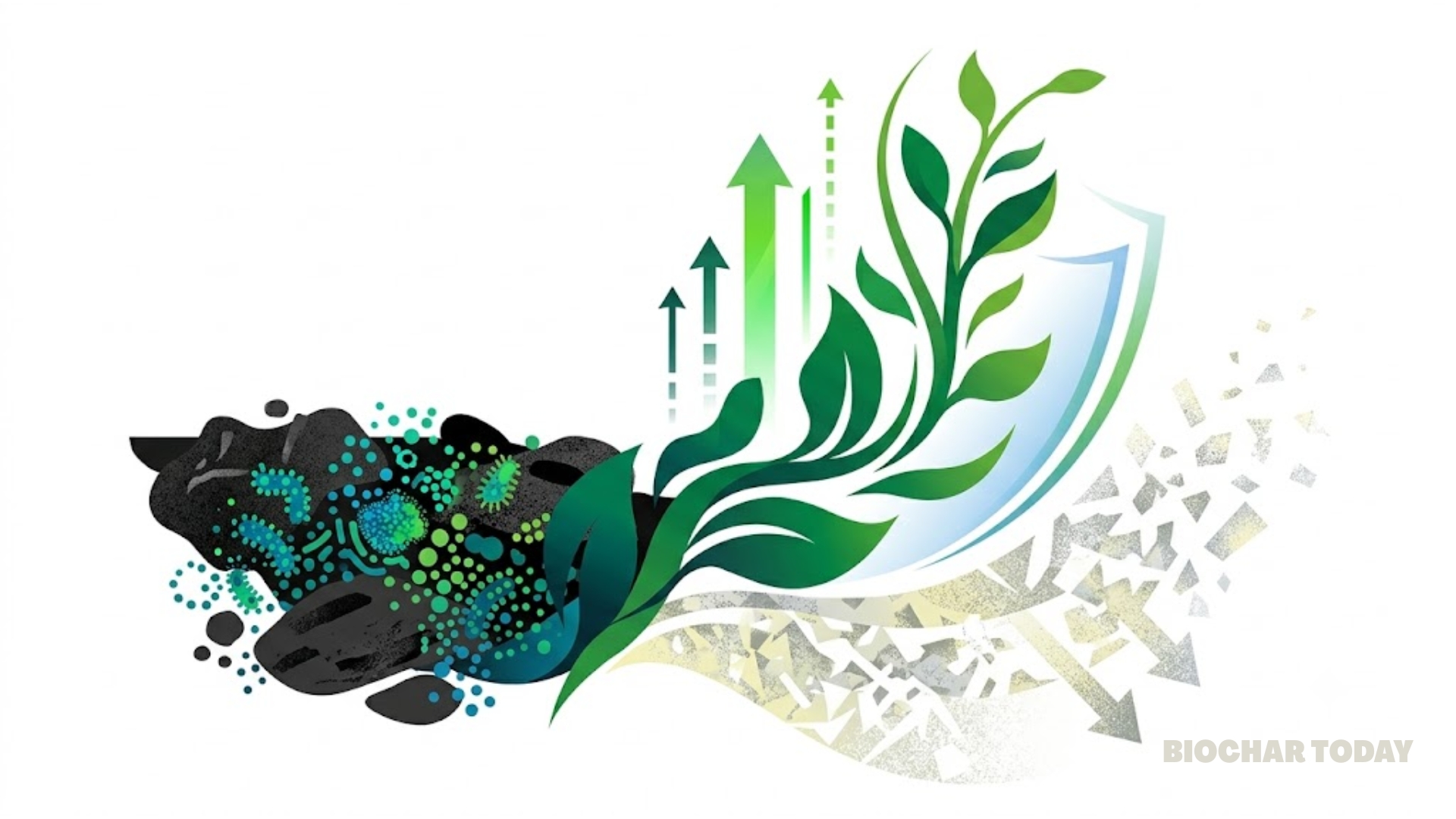
A crucial mechanism behind biochar’s effectiveness is its effect on soil microbial communities. Biochar induces a “negative priming effect,” which means it reduces the microbial mineralization of native soil organic carbon. It does this by limiting microbes’ access to carbon and increasing their carbon use efficiency, allowing them to incorporate more carbon into their biomass and respire less CO2. High-temperature biochar promotes the growth of K-strategist microbes that are adapted to nutrient-scarce environments, as opposed to r-strategists that thrive on readily available nutrients.
The review also details how biochar helps to mitigate other major greenhouse gases, specifically methane (CH4) and nitrous oxide (N2O). The application of biochar has been shown to reduce methane emissions by 22.2% to 95.7%. This is partly because biochar’s electro-active functional groups interfere with the methanogenesis process by competing with carbon dioxide for electrons. Additionally, biochar can promote the abundance of methanotrophs—microbes that metabolize methane—by improving soil aeration and reducing bulk density, which creates an oxygen-rich environment unfavorable for methane-producing microbes. Biochar’s ability to control nitrous oxide emissions is also significant. A meta-analysis of multiple studies found that biochar reduced N2O emissions by 54%. This is because biochar can adsorb N2O gas and promote soil aeration, which halts the denitrification process that produces nitrous oxide. It also promotes the conversion of N2O to harmless nitrogen molecules.
The findings presented in this review make a strong case for biochar as a sustainable solution for environmental management. While the initial cost of high-temperature pyrolysis may be a concern, the economic viability can be improved by recovering waste heat generated during the process for other uses, such as electricity generation. The review emphasizes that biochar is a highly effective soil amendmentA soil amendment is any material added to the soil to enhance its physical or chemical properties, improving its suitability for plant growth. Biochar is considered a soil amendment as it can improve soil structure, water retention, nutrient availability, and microbial activity. More for long-term carbon sequestration and greenhouse gas mitigation, especially when produced at high temperatures to maximize its stable, aromatic carbon content.
Source: Enebe, M. C., Ray, R. L., & Griffin, R. W. (2025). The impacts of biochar on carbon sequestration, soil processes, and microbial communities: a review. Biochar, 7(107).




Leave a Reply