
Key Takeaways
- Specific types of fungi work better at cleaning up certain types of heavy metals in contaminated industrial waste.
- Combining charcoalCharcoal is a black, brittle, and porous material produced by heating wood or other organic substances in a low-oxygen environment. It is primarily used as a fuel source for cooking and heating. More with beneficial fungi helps giant reed plants grow much larger in harsh, salty, and toxic soils.
- One fungal variety helps plants stay green and healthy, while another focuses on building more plant weight and improving the soil.
- This treatment lowers the saltiness and high alkalinity of the waste, making the ground more like natural, healthy soil.
- Farmers can use different fungal recipes depending on which specific toxic metals are polluting their particular patch of land.
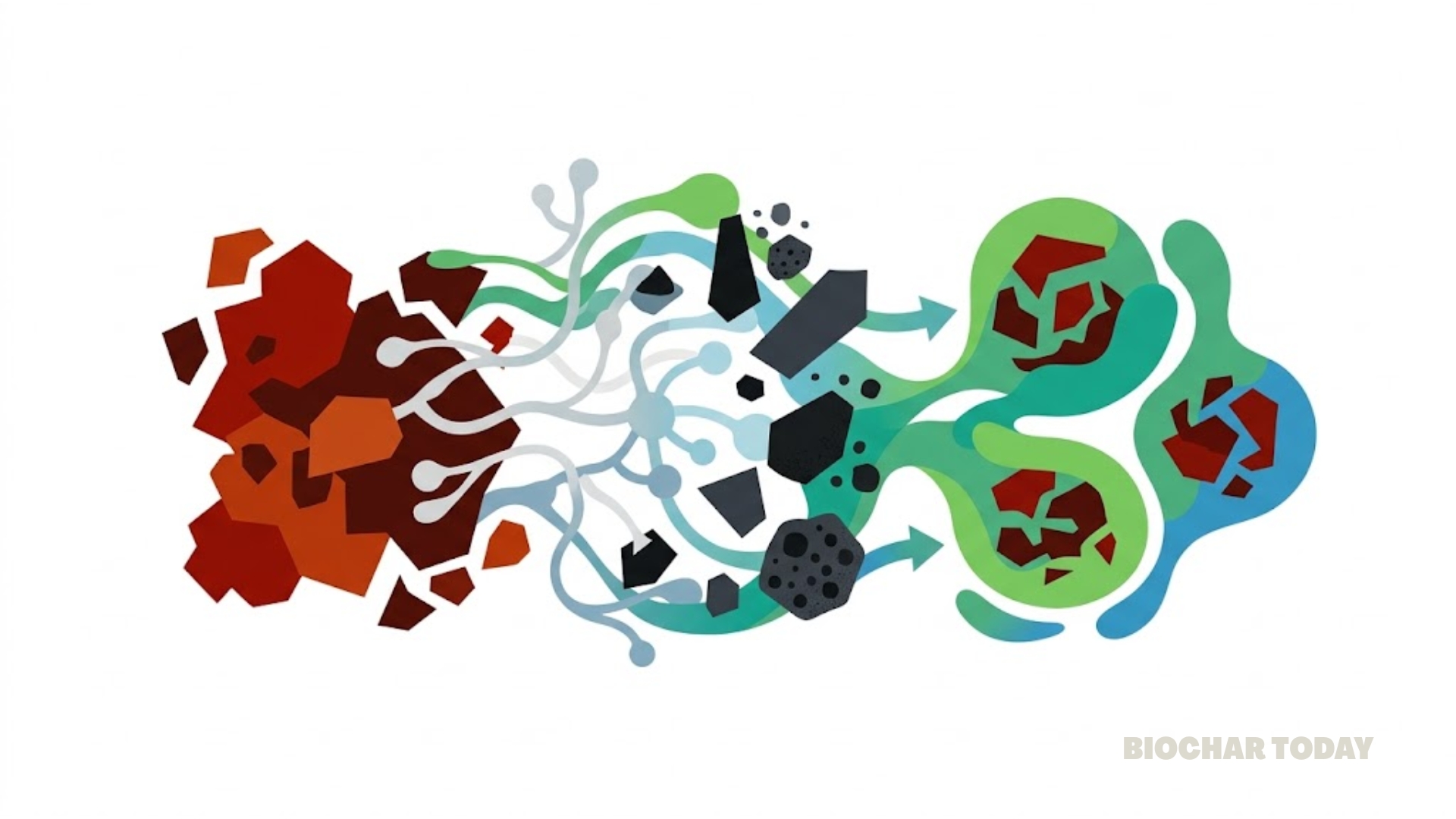
In a new study published in the journal BiocharBiochar is a carbon-rich material created from biomass decomposition in low-oxygen conditions. It has important applications in environmental remediation, soil improvement, agriculture, carbon sequestration, energy storage, and sustainable materials, promoting efficiency and reducing waste in various contexts while addressing climate change challenges. More, lead author Xiaohui Wang and a team of researchers explored how loading biochar with specific arbuscular mycorrhizal fungiThese are friendly fungi that form a partnership with plant roots. They act like an extension of the root system, helping plants access water and nutrients more effectively. Biochar can create a cozy habitat for these helpful fungi, boosting their growth and improving plant health. More can turn a hostile industrial byproduct into a functional ecosystem. The research focuses on red mud, a highly alkaline and saline waste material produced during aluminum manufacturing that is often contaminated with various heavy metals. By pairing the giant reed, a hardy energy plant, with biochar that has been “charged” with different fungal strains, the scientists identified a powerful new method for environmental cleanup. This work introduces a strategy that allows for precise, zonal remediation based on the specific pollutants present in a given area.
The primary finding of the research is the discovery of a matching principle between fungal species and the chemical charge of heavy metals. One specific fungal strain, Rhizophagus intraradices, proved to be highly effective at targeting lead, which carries a positive chemical charge. When this fungus was used alongside biochar, it significantly reduced the total amount of lead in the soil and helped the giant reed plants grow much more biomassBiomass is a complex biological organic or non-organic solid product derived from living or recently living organism and available naturally. Various types of wastes such as animal manure, waste paper, sludge and many industrial wastes are also treated as biomass because like natural biomass these More. On the other hand, the fungal strain Funneliformis mosseae was found to be the superior choice for managing arsenic, which typically exists in soil as a negatively charged molecule. This targeted approach ensures that the remediation efforts are not just a general improvement but a specific chemical intervention tailored to the unique risks of the site.
Beyond just handling heavy metals, these biochar-fungi combinations effectively repaired the underlying health of the soil. Red mud is notoriously difficult for plants because it is extremely salty and has a very high pHpH is a measure of how acidic or alkaline a substance is. A pH of 7 is neutral, while lower pH values indicate acidity and higher values indicate alkalinity. Biochars are normally alkaline and can influence soil pH, often increasing it, which can be beneficial More level, similar to bleach. The study showed that applying these treatments helped neutralize the harsh alkalinity. In fact, the treatments involving Funneliformis mosseae lowered the soil pH significantly, creating a more hospitable environment for plant roots. This is a notable shift from the effects of using biochar alone, which can sometimes make soil more alkaline. By using the fungi as biological regulators, the system was able to naturally acidify the root zone to a level that supports life.
The researchers also observed a major boost in how the plants processed energy and handled stress. Plants treated with the specialized biochar showed a much higher capacity for photosynthesis and a stronger internal defense system against chemical damage. Specifically, the combination with Funneliformis mosseae helped the plants maintain their green color and energy production even as they were pushed to their limits by the toxic environment. Meanwhile, the Rhizophagus intraradices treatment led to the highest stem weights recorded in the study, more than doubling the growth seen in untreated plants. This suggests that the fungi are not just helping the plants survive; they are helping them thrive and build the physical structure needed to pull even more contaminants out of the earth.
At the microscopic level, the study revealed that these treatments completely reshaped the community of bacteria living in the soil. Healthy soils rely on a diverse group of microbes to cycle nutrients like nitrogen and phosphorus, but red mud usually lacks this biological variety. The application of biochar loaded with Rhizophagus intraradices increased the richness of these bacterial communities by over 27 percent. This microbial shift helped “unlock” essential nutrients like phosphorus that were previously trapped in the soil, making them available for the plants to use. This indicates that the remediation process is self-reinforcing, as the improved soil biology supports better plant growth, which in turn creates a more stable and healthy ground layer.
Ultimately, this research provides a practical blueprint for managing industrial waste sites around the world. Instead of a one-size-fits-all solution, the team proposes a compartmentalized strategy where different biochar-fungi recipes are used in different parts of a contaminated site. If one area is mostly polluted with lead, the biomass-boosting fungal strain would be the primary tool. If another area is higher in arsenic, the photosynthesis-protecting strain would be applied. This level of precision makes the cleanup process more efficient and effective, offering a way to reclaim land that was once considered an ecological dead zone. By harnessing the natural synergies between plants, fungi, and charcoal, industrial waste can be transformed back into a productive part of the landscape.
Source: Wang, X., Sun, Y., Zeng, D., Fu, C., Wang, K., Yang, J., Liao, J., Xian, K., Song, F., & Pu, G. (2026). Biochar-loaded AM fungi coupled with Arundo donax enable targeted red mud remediation via valency-specific metal detoxification and soil function recovery. Biochar, 8(52).


![Eucalyptus Wood Waste-Derived Biochar Achieves a Ninety-Eight Percent Removal Efficiency for Benzo[ghi]perylene in Vehicle-Wash Wastewater](https://biochartoday.com/wp-content/uploads/2026/10/SCIENCE-BLOGS-2026-2026-10-19T160523.703.jpg)

Leave a Reply