
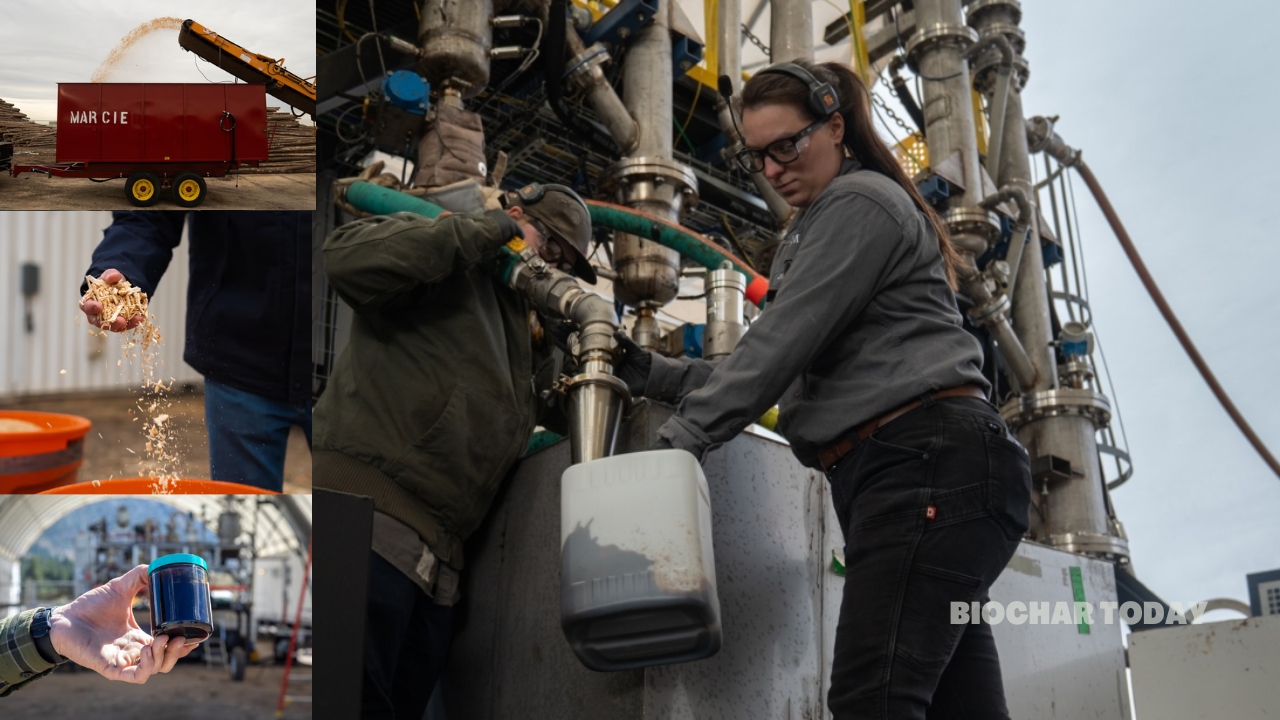
TD Bank and Charm Industrial have entered into a landmark 10-year carbon removal agreement, marking a significant strategic expansion into Canada. Under the terms of the deal announced in early 2026, the Canadian financial institution will purchase 44,000 metric tons of carbon removal credits, with deliveries scheduled to commence in 2029. This partnership facilitates Charm Industrial’s entry into the Canadian market, where the company intends to establish new operations focused on processing forest debris and agricultural residues. The agreement utilizes a diversified portfolio of carbon removal technologies, including both bio-oil sequestration and the production of biocharBiochar is a carbon-rich material created from biomass decomposition in low-oxygen conditions. It has important applications in environmental remediation, soil improvement, agriculture, carbon sequestration, energy storage, and sustainable materials, promoting efficiency and reducing waste in various contexts while addressing climate change challenges. More, to support TD Bank’s voluntary carbon compensation goals.
The primary challenge addressed by this partnership is the increasing frequency and severity of wildfires in Canada, which have caused massive ecological and economic damage. In 2023 alone, record-breaking fires burned over 18.5 million hectares, leading to mass evacuations and hazardous air quality across North America. Traditional methods of managing forest “fuel”—such as pile burning—often release significant quantities of particulate matter (PM2.5) and greenhouse gases back into the atmosphere. For the biochar and carbon removal industry, the challenge lies in scaling mobile technology that can operate in remote, high-risk forest areas while providing a commercially viable alternative to these traditional disposal methods.
Charm Industrial’s solution involves the deployment of mobile pyrolyzers designed to process biomassBiomass is a complex biological organic or non-organic solid product derived from living or recently living organism and available naturally. Various types of wastes such as animal manure, waste paper, sludge and many industrial wastes are also treated as biomass because like natural biomass these More directly at the source, such as forest sites or farm fields. These machines utilize fast pyrolysisPyrolysis is a thermochemical process that converts waste biomass into bio-char, bio-oil, and pyro-gas. It offers significant advantages in waste valorization, turning low-value materials into economically valuable resources. Its versatility allows for tailored products based on operational conditions, presenting itself as a cost-effective and efficient More to convert waste biomass into stable bio-oil and nutrient-dense biochar in an oxygen-deprived environment. By intercepting materials that would otherwise fuel wildfires or be burned in piles, the technology prevents the immediate release of carbon and harmful pollutants. The resulting bio-oil is injected into regulated underground wells for permanent sequestration, while the biochar provides a secondary pathway for durable carbon storage and soil enhancement for Canadian agricultural producers.
The outcomes of this collaboration include a measurable reduction in wildfire fuel loads and the establishment of a robust carbon removal supply chain in Canada. By securing a long-term offtake agreement, Charm Industrial can anchor its Canadian operations and provide local economies with new revenue streams from biomass waste. Furthermore, the deployment of this technology is estimated to significantly reduce PM2.5 emissions, potentially generating millions of dollars in public health benefits by improving regional air quality. This partnership demonstrates a scalable model for how financial institutions can provide the necessary capital to deploy industrial-scale carbon removal solutions that offer both climate mitigation and community resilience.


![Eucalyptus Wood Waste-Derived Biochar Achieves a Ninety-Eight Percent Removal Efficiency for Benzo[ghi]perylene in Vehicle-Wash Wastewater](https://biochartoday.com/wp-content/uploads/2026/10/SCIENCE-BLOGS-2026-2026-10-19T160523.703.jpg)

Leave a Reply