
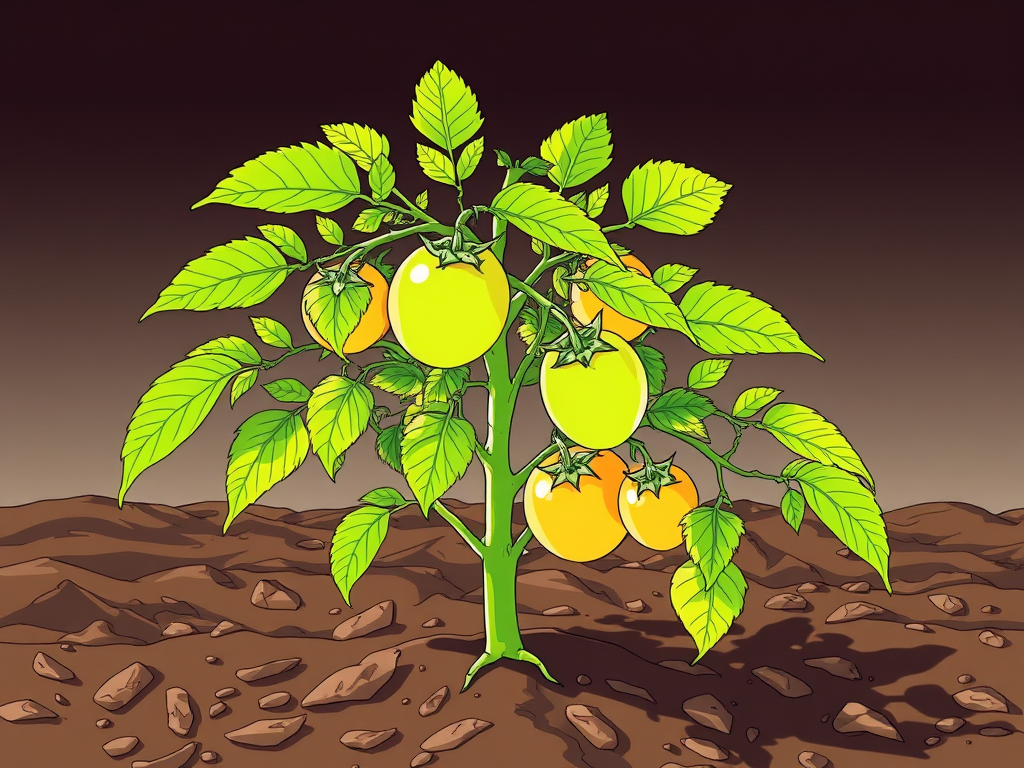
Drought stress is a major threat to global food security, projected to affect 40% of arable land and cut crop yields by as much as 50%. In a 2025 study published in BMC Plant Biology, researchers Asif Kamal et al. investigated a new, synergistic approach to combating drought’s devastating effects on tomato plants. The study’s key finding is that a combination of Penicillium citrinum-loaded biocharBiochar is a carbon-rich material created from biomass decomposition in low-oxygen conditions. It has important applications in environmental remediation, soil improvement, agriculture, carbon sequestration, energy storage, and sustainable materials, promoting efficiency and reducing waste in various contexts while addressing climate change challenges. More (PBC) and the growth hormone auxin (IAA) dramatically improved the physiological, biochemical, and antioxidant properties of tomato plants, leading to a significant increase in growth and resilience. The results are particularly promising for arid and semi-arid agricultural regions like those in Pakistan, where the study was conducted.
Biochar, a porous and carbon-rich material produced from organic waste like grass, is well-known for its ability to enhance soil properties. It boosts soil water retention, aeration, and nutrient availability, creating a more favorable environment for plant roots to grow, especially under limited moisture. The study found that even on its own, biochar significantly improved plant height in drought-stressed tomato plants, increasing it from 19.33 cm in the control group to 34.11 cm.
Building on the benefits of biochar, the researchers introduced Penicillium citrinum, a beneficial endophytic fungus, and auxin (IAA), a naturally occurring plant growth hormone. The fungus-infused biochar provides essential nutrients and signaling molecules that help the host plant fight extreme environments. Auxin, meanwhile, is a key regulator of plant development, influencing cell elongation, root growth, and overall plant height. The study’s innovation was to combine these two powerful amendments to create a synergistic effect.
The results of this combined approach were compelling and quantifiable. The highest dose of the combined treatment (3% PBC and 40 ppm IAA) led to a staggering 98% increase in plant height compared to the untreated control group under drought conditions, reaching 38.12 cm. This same treatment also boosted root length by 56% (from 7.11 cm to 11.11 cm) and increased leaf area to 40.77 cm², a 30% improvement over the control’s 31.33 cm². The synergistic effect was also evident in overall biomassBiomass is a complex biological organic or non-organic solid product derived from living or recently living organism and available naturally. Various types of wastes such as animal manure, waste paper, sludge and many industrial wastes are also treated as biomass because like natural biomass these More: the highest dose increased root fresh weight by 30% (from 7.31 cm to 9.5 cm) and plant fresh weight by 45% (from 17.55 cm to 25.44 cm).
Beyond physical growth, the combined treatment significantly improved the plants’ internal defense systems against drought. It increased osmo-protectants like proline by 46% and total soluble sugars by 82%. These compounds are vital for protecting cellular functions and maintaining metabolic activity under stress. The treatment also boosted the activity of crucial antioxidant enzymes (SOD, POD, and CAT) by 94%, 50%, and 85% respectively, compared to the control group, while reducing oxidative stress markers like hydrogen peroxide and malondialdehyde.
In conclusion, the study demonstrates that the synergistic application of fungus-loaded biochar and auxin is a viable and eco-friendly strategy to not only improve plant growth but also to enhance a plant’s natural ability to withstand drought. This multi-pronged approach offers a promising, sustainable solution for improving crop performance and ensuring food security in the face of climate change, particularly in water-scarce regions.
Source: Kamal, A., Rehman, M., Naeem, Z., Sajid, M., Zubair, M., Bibi, F., … & Ozdemir, F. A. (2025). Penicillium citrinum-infused Biochar and externally applied auxin enhances drought tolerance and growth of Solanum lycopersicum L. by modulating physiological, biochemical and antioxidant properties. BMC Plant Biology, 25(1), 1-20.


![Eucalyptus Wood Waste-Derived Biochar Achieves a Ninety-Eight Percent Removal Efficiency for Benzo[ghi]perylene in Vehicle-Wash Wastewater](https://biochartoday.com/wp-content/uploads/2026/10/SCIENCE-BLOGS-2026-2026-10-19T160523.703.jpg)

Leave a Reply