
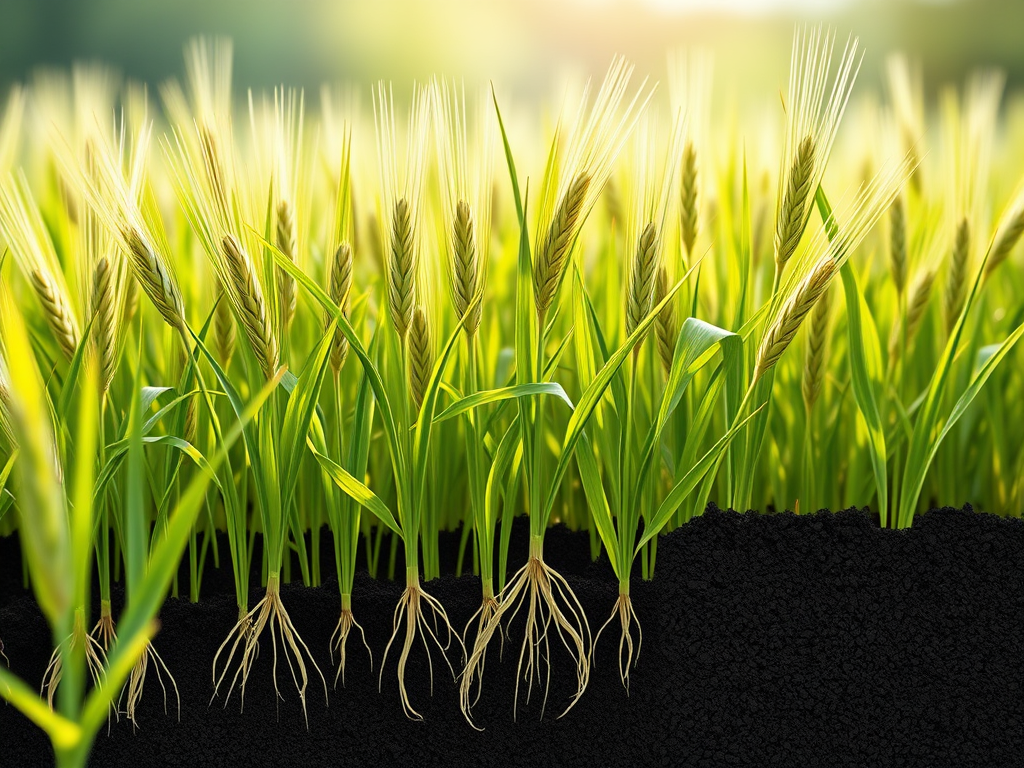
Murtaza et al., published their study in Ecotoxicology and Environmental Safety on the effects of biocharBiochar is a carbon-rich material created from biomass decomposition in low-oxygen conditions. It has important applications in environmental remediation, soil improvement, agriculture, carbon sequestration, energy storage, and sustainable materials, promoting efficiency and reducing waste in various contexts while addressing climate change challenges. More derived from the weed Achyranthes japonica and allantoin, a nitrogen-rich compound, on barley growth in lead (Pb) contaminated soil. The study involved seven treatments: control, Pb alone, biochar alone, allantoin alone, biochar with Pb, allantoin with Pb, and a combination of biochar and allantoin with Pb.
Lead toxicity significantly reduced plant growth, including root and shoot length, biomassBiomass is a complex biological organic or non-organic solid product derived from living or recently living organism and available naturally. Various types of wastes such as animal manure, waste paper, sludge and many industrial wastes are also treated as biomass because like natural biomass these More, chlorophyll concentration, and grain production. However, the application of biochar, allantoin, or their combination significantly enhanced shoot and root length and biomass. This enhancement was attributed to improved soil characteristics and nutrient absorption.
The treatments also improved tolerance against Pb toxicity by increasing total chlorophyll levels and antioxidant enzyme activities. Moreover, the combination of biochar and allantoin resulted in lower Pb concentrations in shoots, roots, and grains compared to Pb stress alone.
The study concluded that converting Achyranthes japonica into biochar and integrating it with allantoin provides an eco-friendly approach to control its proliferation while effectively alleviating Pb-induced toxicity in barley. This approach offers a sustainable solution for managing invasive weeds and remediating heavy metal-contaminated soils.
SOURCE: Murtaza, G., Hassan, N. E., Usman, M., Deng, G., Ahmed, Z., Iqbal, J., Elshikh, M. S., Rizwana, H., Ali, B., Iqbal, R., & Lackner, M. (2025). Synergistic effects of allantoin and Achyranthes japonica-biochar profoundly alleviate lead toxicity during barley growth. Ecotoxicology and Environmental Safety, 290, 117784. https://doi.org/10.1016/j.ecoenv.2025.117784




Leave a Reply