
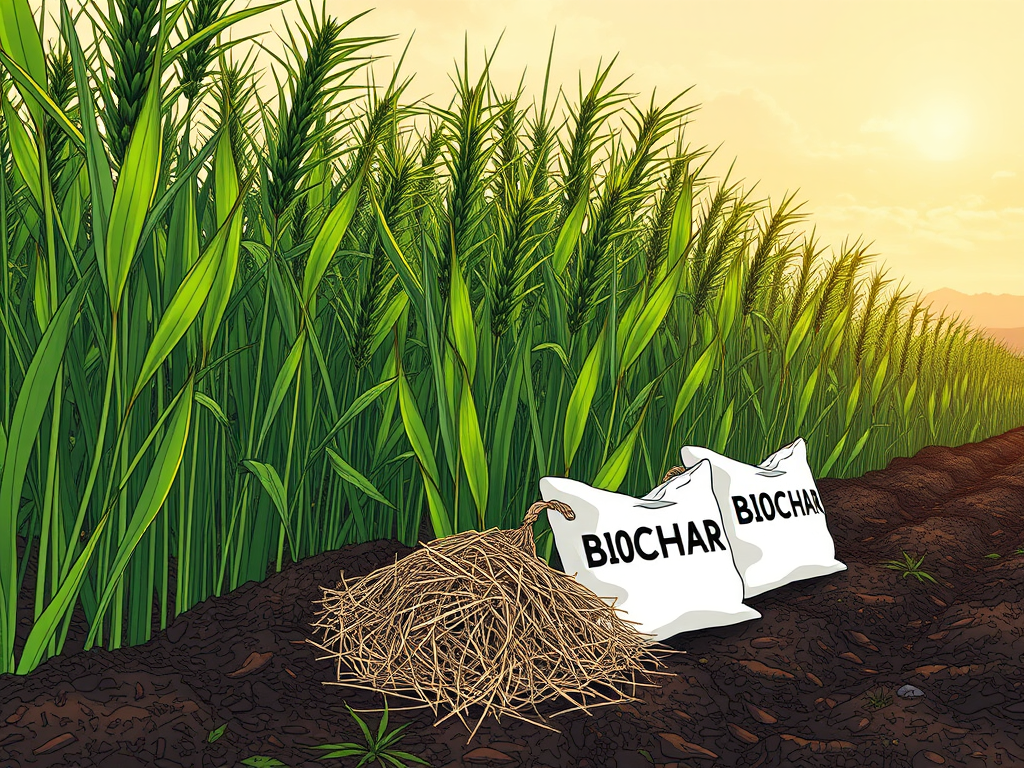
In the quest for more sustainable agricultural practices, a new study offers a promising way to turn a common agricultural byproduct into a powerful soil amendmentA soil amendment is any material added to the soil to enhance its physical or chemical properties, improving its suitability for plant growth. Biochar is considered a soil amendment as it can improve soil structure, water retention, nutrient availability, and microbial activity. More. The research, conducted by Alberto Assirelli, Elisa Fischetti, Antonio Scarfone, and others, and published in the journal Agronomy, explores the potential of using biocharBiochar is a carbon-rich material created from biomass decomposition in low-oxygen conditions. It has important applications in environmental remediation, soil improvement, agriculture, carbon sequestration, energy storage, and sustainable materials, promoting efficiency and reducing waste in various contexts while addressing climate change challenges. More derived from industrial hemp hurds. Hemp, known for its rapid growth and high biomassBiomass is a complex biological organic or non-organic solid product derived from living or recently living organism and available naturally. Various types of wastes such as animal manure, waste paper, sludge and many industrial wastes are also treated as biomass because like natural biomass these More yield, produces a significant amount of woody residue, or hurds, after its fibers are processed. Instead of treating this residue as waste, the study suggests that converting it into biochar through a simple, low-energy process can create a valuable resource for enhancing soil quality and crop growth.
While the concept of biochar isn’t new, this study focuses on a particularly practical and sustainable approach: creating biochar directly from unprocessed hemp hurds. The researchers avoided energy-intensive steps like grinding and pelletizing that can alter the material’s properties and increase the environmental footprint of production. This streamlined process makes hemp hurd biochar a more economically and ecologically attractive option for farmers. The resulting biochar was then put to the test through a series of chemical analyses and, most importantly, a germination trial with corn seeds.
The results of the analysis were highly encouraging. The hemp hurd biochar was found to have a high carbon content of over 75%, which is a key indicator of its ability to sequester carbon in the soil. Its chemical composition also included essential macro- and micronutrientsThese are essential nutrients that plants need in small amounts, kind of like vitamins for humans. They include things like iron, zinc, and copper. Biochar can help hold onto these micronutrients in the soil, making them more available to plants. More like calcium, magnesium, and potassium, which can be beneficial for plant growth. The biochar exhibited a highly alkaline pHpH is a measure of how acidic or alkaline a substance is. A pH of 7 is neutral, while lower pH values indicate acidity and higher values indicate alkalinity. Biochars are normally alkaline and can influence soil pH, often increasing it, which can be beneficial More of 9.63, a characteristic that makes it particularly effective for correcting acidic soils and improving nutrient mobility. The low hydrogen-to-carbon (H:C) ratio of 0.37 further indicated the material’s environmental stability and its resistance to microbial degradation, meaning it can remain in the soil for a long time.
In the germination tests, corn seeds were grown in substrates with different concentrations of the hemp biochar. The findings were a strong testament to the biochar’s potential. Substrates with a low concentration of biochar (0.5% and 1%) showed a germination index of over 90%, a value that indicates the substance has no phytotoxic effect on plant growth. The study found that a 5% concentration did cause a drop in the germination index to 59%, suggesting that while biochar is an excellent soil amendment, the application rate is critical. This result is in line with other studies and points to the importance of using appropriate application rates to ensure the best possible outcomes for crops. Overall, the study provides a solid foundation for the use of hemp hurd biochar as an effective, sustainable, and high-performance material to enhance soil health and crop yields.
SOURCE: Assirelli, A., Fischetti, E., Scarfone, A., Santangelo, E., Carnevale, M., Paris, E., Palma, A., & Gallucci, F. (2025). Characterization of Hemp Hurd-Derived Biochar for Potential Agricultural Applications. Agronomy, 15(9), 2136.



Leave a Reply