
Key Takeaways
- Converting farm waste into hydrochar provides a more powerful way to improve soil health than using raw straw or traditional charcoalCharcoal is a black, brittle, and porous material produced by heating wood or other organic substances in a low-oxygen environment. It is primarily used as a fuel source for cooking and heating. More.
- This special material helps soil particles stick together more effectively, creating a better structure for plant roots to grow.
- Using hydrochar allows the ground to hold onto significantly more carbon, which helps keep the soil fertile for longer periods.
- The type of waste used to make the material, such as woody stalks versus animal manure, changes how well it works in the field.
- Adding these materials to farmland can help stabilize the environment by locking away nutrients and carbon that might otherwise be lost.
The pursuit of agricultural sustainability relies heavily on the health of our soil, specifically its ability to store carbon and maintain a stable physical structure. In a recent study published in the journal BiocharBiochar is a carbon-rich material created from biomass decomposition in low-oxygen conditions. It has important applications in environmental remediation, soil improvement, agriculture, carbon sequestration, energy storage, and sustainable materials, promoting efficiency and reducing waste in various contexts while addressing climate change challenges. More, lead author Liyang Sun and a team of researchers explored how hydrochar, a material produced through a pressurized water-heating process called hydrothermal carbonization, compares to traditional soil additives like raw straw and high-heat biochar. Their findings suggest that hydrochar offers a unique dual advantage that common organic amendments often lack. By testing different source materials, including maize straw, pig manure, and woody stalks from the fagara plant, the scientists discovered that these engineered materials can significantly transform the quality of nutrient-poor soils.
The researchers focused their investigation on purple soil, a type of ground common in certain agricultural regions that is often prone to erosion and low in organic matter. While farmers have long used crop residues or manure to boost fertility, these natural materials often break down too quickly to provide long-term benefits. Conversely, traditional biochar is very stable but often fails to help soil particles clump together into the healthy clusters known as aggregates. Hydrochar bridges this gap by providing both easily accessible carbon that feeds soil microbes and a sturdy carbon skeleton that stays in the ground for a longer duration. This combination proved exceptionally effective during the study, showing that hydrochar is not just a carbon storage tool but a structural architect for the soil.
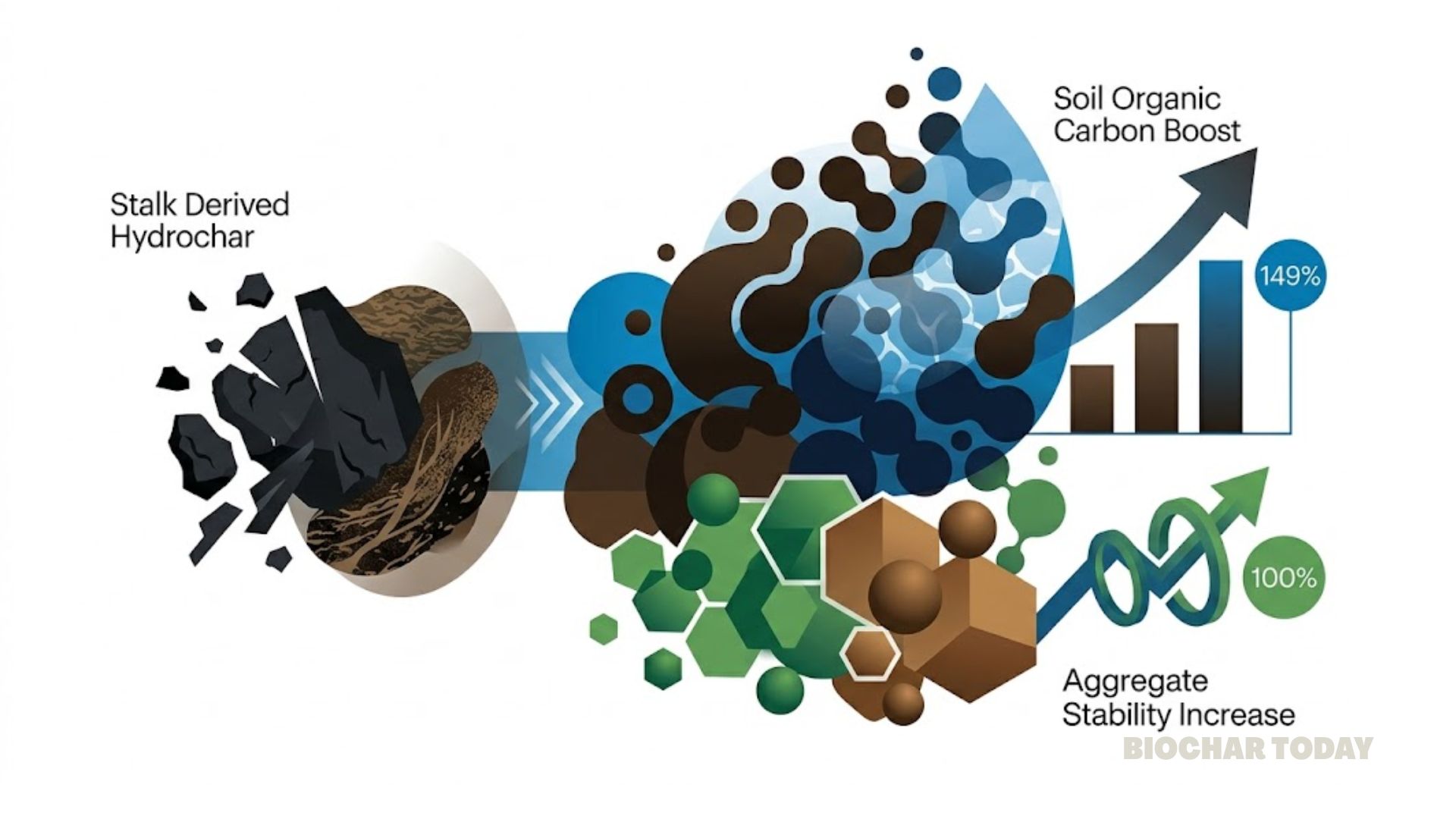
Among the various materials tested, the hydrochar made from fagara stalks emerged as the clear winner for improving soil integrity. This specific version increased the soil organic carbon content by 143 to 149 percent, a result that far exceeded the performance of untreated straw or traditional biochar. Furthermore, it doubled the stability of soil aggregates, as measured by the mean weight diameter. This improvement is critical because stable soil clusters prevent erosion and improve how water and air move through the ground. The woody nature of the stalks provided a more resilient carbon frame, while the heating process released specific organic compounds that acted as a glue, binding soil minerals together into larger, more beneficial macro-aggregates.
The study also highlighted how the choice of starting material dictates the final benefits for the farmer. For instance, while the stalk-based hydrochar was best for locking away carbon and building structure, the manure-based version was superior for boosting microbial activity. The manure-derived material significantly increased the amount of carbon held within living soil microbes, which is a key indicator of a biologically active and fertile environment. This suggests that the production of these soil amendments can be tailored to meet specific needs, whether a field requires a quick nutrient boost or a long-term structural overhaul. By selecting the right waste product and processing it into hydrochar, agricultural managers can optimize their land for both productivity and environmental protection.
Beyond the immediate chemical changes, the research observed a shift in the tiny organisms living beneath the surface. The application of hydrochar encouraged the growth of specific fungi and bacteria that are known for their ability to weave soil particles together. These microbes utilize the energy provided by the hydrochar to produce natural cements that further stabilize the ground. This biological synergy, combined with the physical presence of the carbon material, ensures that the added carbon is protected within the soil structure rather than being lost to the atmosphere as greenhouse gases. The results showed that stalk-derived hydrochar lost significantly less carbon during the process compared to other amendments, making it a highly efficient tool for carbon sequestration.
In conclusion, this research provides a compelling case for the widespread adoption of hydrochar in modern farming. By converting agricultural waste into a high-performance soil amendmentA soil amendment is any material added to the soil to enhance its physical or chemical properties, improving its suitability for plant growth. Biochar is considered a soil amendment as it can improve soil structure, water retention, nutrient availability, and microbial activity. More, we can solve two problems at once: managing waste and restoring degraded lands. The ability of hydrochar to simultaneously increase carbon storage and improve the physical resilience of the soil marks a significant step forward in our understanding of soil management. As we look toward a future where food security and climate stability are increasingly linked, these engineered materials offer a practical and effective way to ensure our soils remain productive and healthy for generations to come.
Source: Sun, L., Wang, J. J., Wei, S., Ye, P., Deng, Y., Meng, X., Li, R., Zhang, Z., Su, X., & Xiao, R. (2026). Hydrochar as an effective amendment for enhancing soil aggregation and carbon sequestration: evidence from comparative microcosm experiments. Biochar, 8(69).




Leave a Reply