
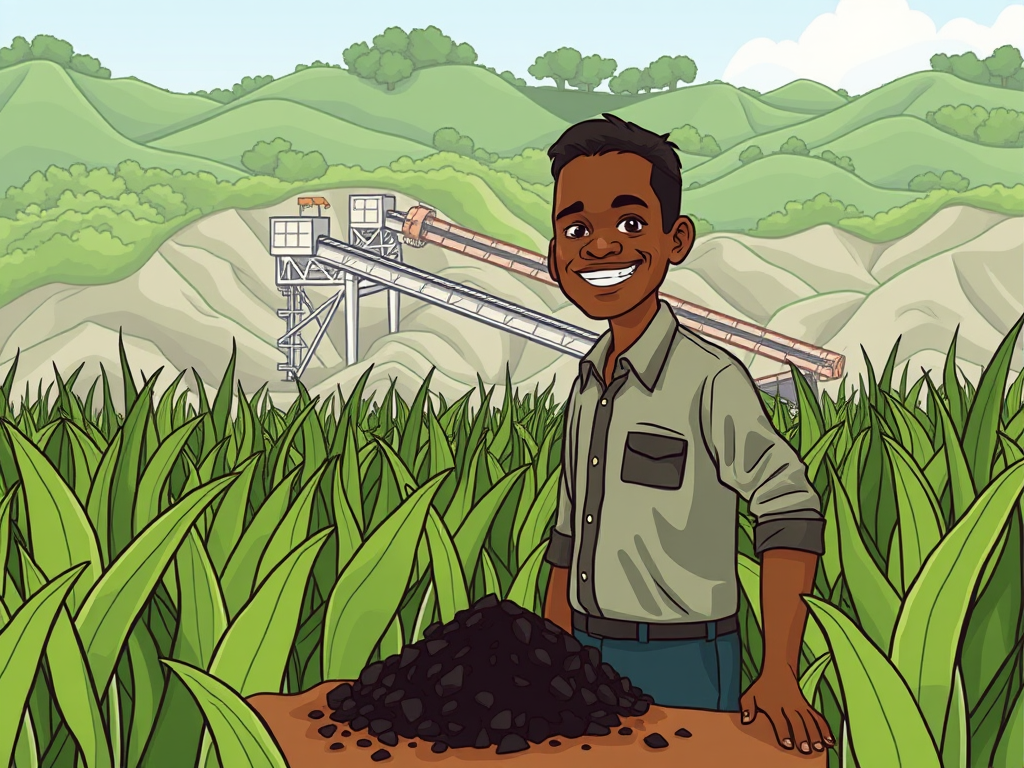
Sovereign Metals has announced a key development at its Kasiya Rutile-Graphite Project in Malawi, releasing the first-year results of its land rehabilitation trials. The company’s findings indicate that land can be successfully rehabilitated post-mining for agricultural use, with trial plots showing significant increases in crop yields. The trials are a component of the ongoing Definitive Feasibility Study for the project and are designed to inform a progressive rehabilitation strategy.
The rehabilitation method used in the trials integrates several techniques, including the application of biocharBiochar is a carbon-rich material created from biomass decomposition in low-oxygen conditions. It has important applications in environmental remediation, soil improvement, agriculture, carbon sequestration, energy storage, and sustainable materials, promoting efficiency and reducing waste in various contexts while addressing climate change challenges. More, precision nutrient management, and intercropping with giant bamboo. The company collaborated with local farmers to develop an agronomic model for soil restoration, aiming to create a system that is effective and relevant to the local environment. Biochar, a stable, porous carbon material, contributes to improved soil structure, water retention, and nutrient availability, which are crucial for supporting plant growth.
The tangible outcome of this approach is a maize yield of 5.2 tonnes per hectare from the trial plots. This result stands in contrast to the regional average yield of approximately 1 tonne per hectare, demonstrating a substantial improvement in land productivity. According to Sovereign Metals’ CEO, Frank Eagar, the results are a key step in developing Kasiya as a low-carbon, sustainable operation and highlight the project’s strong environmental, social, and governance (ESG) credentials. The success of the trial plots suggests a viable pathway for integrating resource extraction with beneficial agricultural outcomes, providing a model where mining can contribute positively to local land use and food security.
The success of trials like this bolster biochar’s position as a degraded land remediation option. It has been discussed at considerable length within the literature, so it is reassuring and validating to see its success in a physical trial.
SOURCE: Sovereign marks milestone in Kasiya’s development


Leave a Reply