
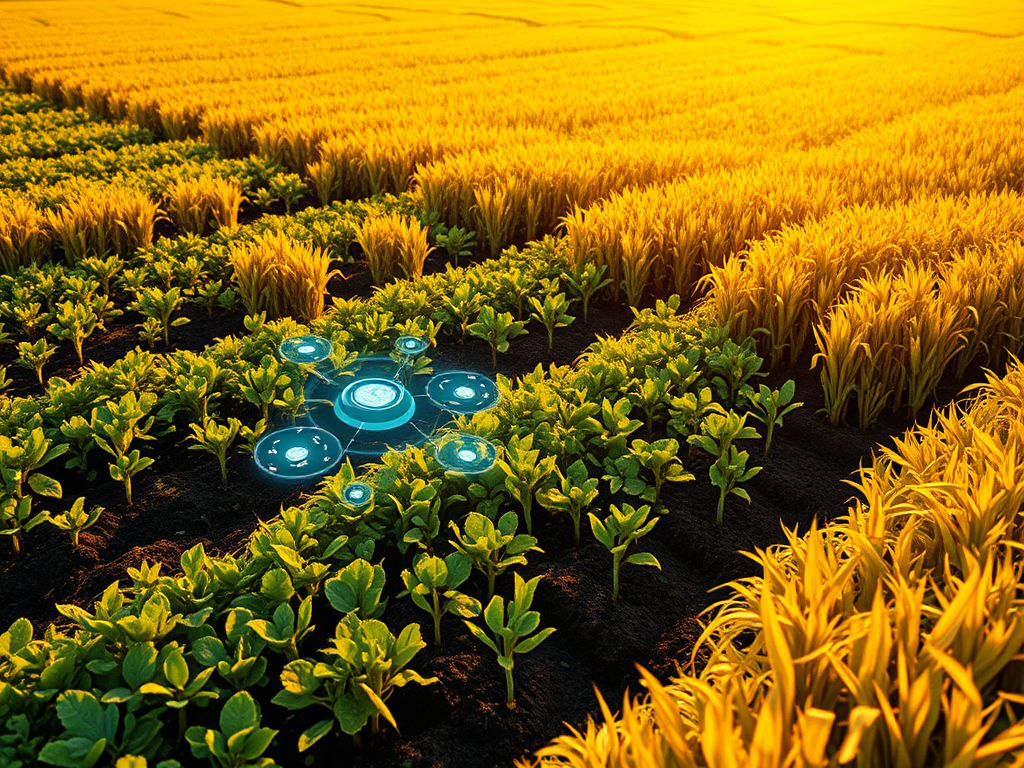
In a recent chapter titled “BiocharBiochar is a carbon-rich material created from biomass decomposition in low-oxygen conditions. It has important applications in environmental remediation, soil improvement, agriculture, carbon sequestration, energy storage, and sustainable materials, promoting efficiency and reducing waste in various contexts while addressing climate change challenges. More Synergy with Smart Agriculture and Environment: From Soil AmendmentA soil amendment is any material added to the soil to enhance its physical or chemical properties, improving its suitability for plant growth. Biochar is considered a soil amendment as it can improve soil structure, water retention, nutrient availability, and microbial activity. More to Precision Regulation Systems,” published in the journal IntechOpen, researchers Mengmeng Kong, Xiaoyong Liu, and their colleagues explore the evolution of biochar from a traditional soil additive to a powerful tool in smart agriculture. This transition is driven by its synergy with intelligent technologies, such as nanotechnology, sensors, and artificial intelligence (AI), to precisely manage carbon, water, and nutrient cycles. This review synthesizes scientific evidence and case studies to highlight biochar’s potential to address global agricultural challenges.
Biochar has a long history, dating back to the ancient Amazonian Terra PretaTerra preta, meaning “black earth” in Portuguese, is a type of highly fertile soil found in the Amazon Basin. It is characterized by its high biochar content, which contributes to its long-term fertility and ability to support productive agriculture More de Índio, where it was used to create enduringly fertile soils. Modern science confirms its value, noting its porous structure with a large surface area ( 300−2000 m2/g), which can improve water retention by up to 39% and soil porosityPorosity of biochar is a key factor in its effectiveness as a soil amendment and its ability to retain water and nutrients. Biochar’s porosity is influenced by feedstock type and pyrolysis temperature, and it plays a crucial role in microbial activity and overall soil health. Biochar More by 15-35%. Its oxygen-rich surface groups, such as carboxyl and hydroxyl, enhance the soil’s capacity to retain nutrients like NH4+ and K. Biochar also helps to counter soil acidity and can sequester carbon for centuries.
Despite its traditional benefits, biochar’s “input-only” role is being transformed by intelligent technologies. This evolution involves three key advances: functional innovation, system integration, and AI-driven decision-making. Functional innovation turns biochar into an “intelligent carrier” embedded with nanosensors or stimuli-responsive nanomaterials. These engineered composites allow for real-time monitoring of soil conditions, such as moisture, nutrients, and pollutants, creating an active “sense-and-respond” system. This is a departure from the static applications of the past.
System integration repositions biochar as a central component for closed-loop resource management. It connects carbon cycles, reducing CO2-equivalent emissions by 12-50%. It also enhances water retention for precision irrigation and supports nutrient recycling. In line with Climate-Smart Agriculture (CSA) goals, biochar’s ability to sequester carbon for centuries helps mitigate climate change. For example, global models suggest that sustainable biochar application could sequester up to 1 billion tons of CO2 equivalent annually.
AI-driven decision-making completes this transformation by using biochar-based sensors to feed data into IoT networks. Machine learning algorithms then optimize the application of resources, such as fertilizers, leading to a 30% reduction in fertilizer use while maintaining crop yields. A real-world example of this synergy is an AI-biochar project in Jiangsu Province, China, for rice-wheat rotations. This project integrated real-time soil and weather monitoring with AI-prescribed nitrogen management and biochar’s nutrient-retention capabilities. The results were significant: fertilizer inputs were reduced by 20%, yields increased by 8.7%, and N2O emissions were curtailed.
Biochar’s multifaceted contributions extend to the three pillars of CSA: sustainably increasing productivity, enhancing resilience, and minimizing greenhouse gas emissions. Beyond carbon sequestration, biochar helps reduce N2O emissions by an average of 54%, according to a meta-analysis of 112 studies. In China’s winter wheat-summer maize rotation system, the application of 20−40 t/ha of biochar led to a 38-45% reduction in annual N2O emissions over a 3-4 year period. Biochar also improves water use efficiency (WUE). Its porous structure can increase soil water-holding capacity, and in arid and semi-arid regions, applying 20 t/ha of biochar increased maize WUE by 25% and wheat WUE by 18-30%. A meta-analysis indicates biochar can also increase nutrient use efficiencyNutrient use efficiency refers to how effectively plants can take up and utilize nutrients from the soil. Biochar can improve nutrient use efficiency by enhancing nutrient availability and retention in the soil. More by 15-20% and phosphorus use efficiency by 10-25%.
The integration of biochar with modern information technologies is a significant step forward. Biochar-based sensors, IoT, and AI enable dynamic sensing and precision regulation of agricultural systems. Data from these sensors is analyzed by AI models to generate variable irrigation and fertilization prescriptions. This closed-loop feedback regulation, where AI-driven systems implement precise water and fertilizer supply, with biochar enhancing soil buffering capacity, ensures stable and effective management. The technology’s potential is further underscored by the fact that global case studies show it can lead to over 25% water savings, over 20% fertilizer savings, 30-70% emissions reduction, and a 10-25% yield increase.
Source: Kong, M., Liu, X., Chen, D., Xu, Y., Zhang, J., Chen, X., Liang, J., & Xu, H. (2025). Biochar Synergy with Smart Agriculture and Environment: From Soil Amendment to Precision Regulation Systems. IntechOpen. DOI: 10.5772/intechopen.1011847 Sources




Leave a Reply