
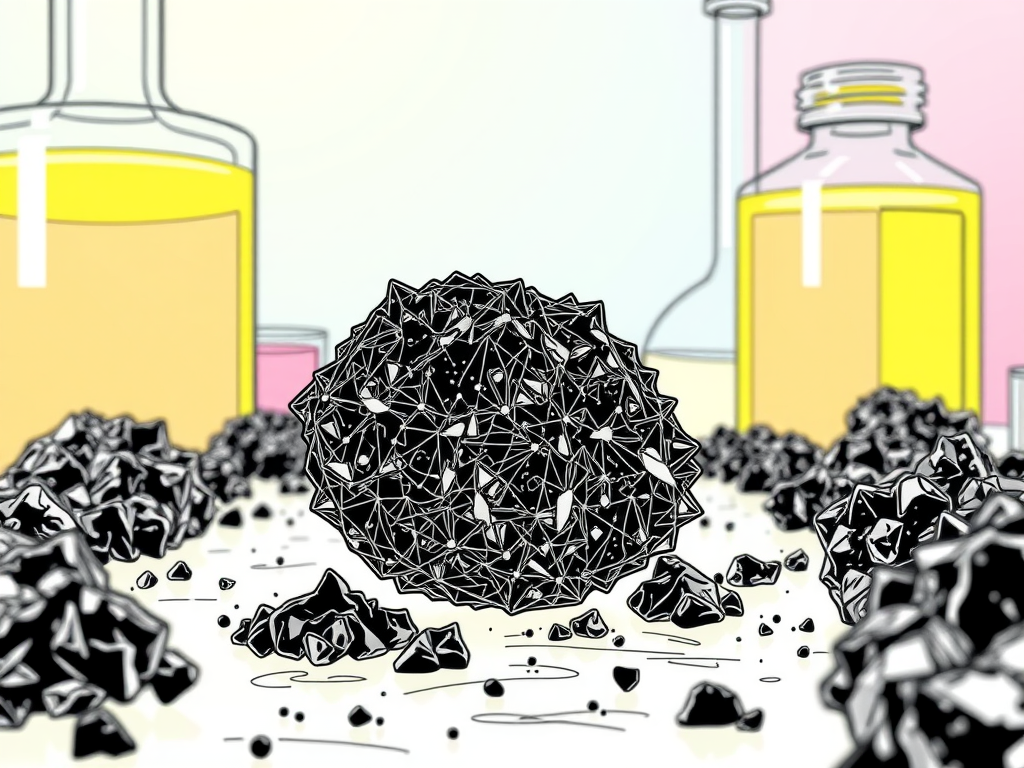
Industrial wastewater contaminated with hexavalent chromium, or Cr(VI), poses a severe global threat due to its high toxicity and persistence. Current treatment methods often fall short in terms of cost-effectiveness, efficiency, and sustainability, especially in areas with limited access to advanced water treatment infrastructure. However, recent research published in Water Air Soil Pollution by Thangagiri Baskaran introduces a groundbreaking solution: silver-doped biocharBiochar is a carbon-rich material created from biomass decomposition in low-oxygen conditions. It has important applications in environmental remediation, soil improvement, agriculture, carbon sequestration, energy storage, and sustainable materials, promoting efficiency and reducing waste in various contexts while addressing climate change challenges. More derived from Azadirachta indica (Neem) stems, referred to as Ag@NSBC. This innovative material offers a highly efficient and sustainable approach to mitigating chromium pollution.
The study details the preparation of Ag@NSBC through the pyrolysisPyrolysis is a thermochemical process that converts waste biomass into bio-char, bio-oil, and pyro-gas. It offers significant advantages in waste valorization, turning low-value materials into economically valuable resources. Its versatility allows for tailored products based on operational conditions, presenting itself as a cost-effective and efficient More of Neem tree stems. This process enhances the material’s surface morphology, structure, and catalytic activity, crucial for effective pollutant removal. The effectiveness of Ag@NSBC was thoroughly evaluated based on several parameters, including the amount of biochar used, initial pHpH is a measure of how acidic or alkaline a substance is. A pH of 7 is neutral, while lower pH values indicate acidity and higher values indicate alkalinity. Biochars are normally alkaline and can influence soil pH, often increasing it, which can be beneficial More, and contact time. The key finding highlighted the material’s remarkable removal efficacy of 62.23 mg/g at a low pH of 2. This reductive removal process is primarily influenced by the functional groups present on the surface of the Ag@NSBC.
The adsorption process of Cr(VI) onto Ag@NSBC aligns with the Langmuir adsorption isotherm and the pseudo-second-order kinetic model, indicating a monolayer chemisorption process. This means that the chromium ions form a single layer on the surface of the biochar through chemical bonding, which is a highly efficient form of adsorption.
One of the most significant advantages of Ag@NSBC is its exceptional catalytic activity and reusability. The study demonstrated that the silver-doped biochar exhibited greater catalytic performance compared to other materials reported in the literature. Furthermore, it maintained extraordinary stability and reusability over five repeated catalytic cycles. This is a critical factor for practical applications, as it reduces the need for frequent replacement and lowers overall treatment costs. The regeneration process involves treating the spent biochar with a dilute HCl solution, which effectively restores its adsorption capacity.
The visual evidence of Cr(VI) reduction was striking; the solution changed color from yellow to light green as Cr(VI) was converted into the less toxic Cr(III). Advanced characterization techniques, such as FESEM, EDX, and XPS, confirmed the successful reduction of Cr(VI) to Cr(III) on the biochar’s surface and elucidated the elemental composition changes before and after treatment. The presence of silver nanoparticles significantly improved the surface functionality and active sites, contributing to the enhanced chromium adsorption.
This research highlights the practical applicability of transforming abundant Neem stem waste into a valuable adsorbent for industrial wastewater treatment. The results confirm that Ag@NSBC is an effective and sustainable alternative for Cr(VI) reduction in water, achieving high efficiency at low dosages and short contact times. Its ease of synthesis, robust performance, and excellent reusability underscore its potential for real-world deployment in decentralized or small-scale treatment systems, particularly in chromium-affected water bodies. This study not only provides a viable pathway for turning agricultural waste into a value-added material for water purification but also aligns with the principles of a circular economy and green chemistry.
Source: Baskaran, T. (2025). Reductive Removal of Hexavalent Chromium from Aqueous Solutions by Silver-Doped Biochar Derived from Azadirachta indica Stem. Water Air Soil Pollut, 236(603).



Leave a Reply