
Key Takeaways
- Converting agricultural leftovers into biocharBiochar is a carbon-rich material created from biomass decomposition in low-oxygen conditions. It has important applications in environmental remediation, soil improvement, agriculture, carbon sequestration, energy storage, and sustainable materials, promoting efficiency and reducing waste in various contexts while addressing climate change challenges. More provides a practical way to manage large amounts of waste while helping the environment.
- Adding biochar to soil significantly improves how well plants grow, specifically increasing the length of their roots and shoots.
- Both wood and non-wood materials can be turned into high-quality biochar that is safe to use in home gardens or large farms.
- Biochar helps soil hold onto nutrients and water more effectively, which leads to healthier and more productive crops like coriander.
- Using waste-derived biochar reduces the need for traditional disposal methods that can cause pollution and harm natural resources.
In a report published in the Pakistan Journal of Science, researcher S. Ashraf explores how transforming agricultural waste into biochar serves as a powerful strategy for sustainable solid waste management. The study addresses the growing environmental threats posed by rising populations and urbanization, which have led to a massive increase in agro-waste. By adopting a circular economy model, the research demonstrates how materials like bamboo leaves, corncobs, rice husks, and java plum wood can be converted into valuable soil amendments. This approach not only provides a solution for waste disposal but also contributes to food security and the reduction of greenhouse gas emissions by sequestering carbon directly into the soil.
The findings indicate that the temperature and duration of the heating process are critical in determining the quality of the final product. For non-wood materials, heating at five hundred degrees Celsius for one hour produced biochar with a very high fixed carbon content of nearly eighty-three percent. Wood-based materials treated under similar conditions also showed impressive results, maintaining high stability and low moisture levels. These physical characteristics are essential because they determine how well the biochar will perform when mixed with soil. The research used advanced imaging techniques to confirm that the biochar had a highly porous structure, which is vital for trapping nutrients and providing a home for beneficial soil microbes.
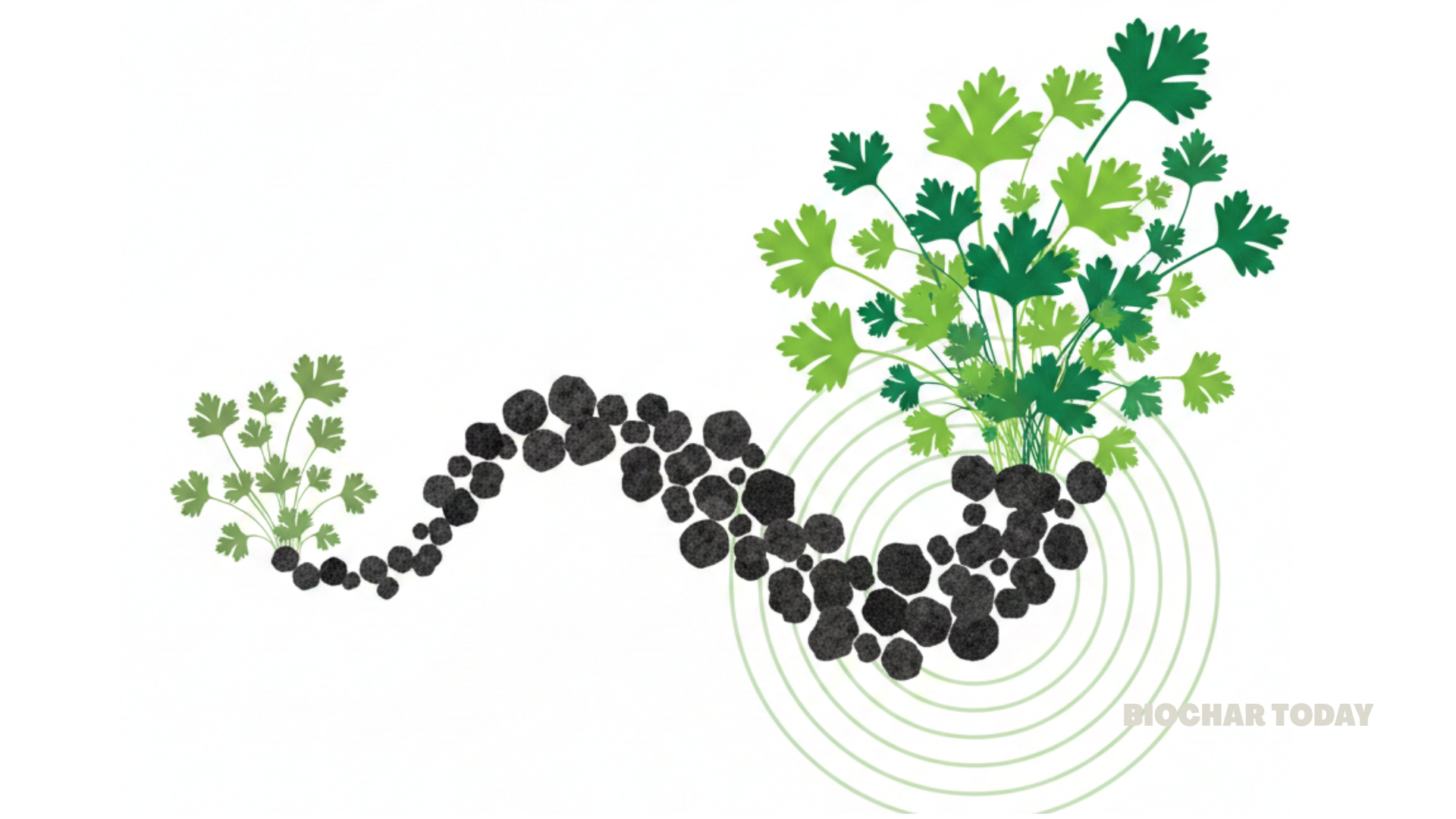
A major highlight of the study is the direct impact of biochar on plant productivity, specifically tested on coriander plants. The researcher evaluated different concentrations of biochar in the soil and found that a two percent mixture yielded the most significant growth improvements. In this specific treatment, coriander plants showed their maximum increase in both root and shoot length compared to plants grown in standard soil. For example, root lengths reached over four and a half centimeters in wood-derived biochar treatments, representing a substantial gain in plant vigor. This suggests that biochar does not just sit in the soil but actively encourages the plant to develop a more robust foundation.
Beyond just physical height, the study measured how successfully the seeds sprouted and grew. The results for seed germination were particularly positive, showing that the biochar treatments were not toxic to the plants. In fact, the germination index, which is a key measure of plant health and soil safety, was highest when the two percent concentration was applied. This proves that agricultural waste, once processed correctly, becomes a life-sustaining additive rather than a pollutant. The ability of biochar to hold onto water and minerals means that plants are better equipped to handle environmental stress, leading to a more reliable harvest.
The chemical analysis further supported these growth results by showing improvements in the soil’s ability to exchange nutrients. Biochar produced from both wood and non-wood sources showed a high capacity for holding onto essential elements that plants need to thrive. The study noted that wood-based biochar was slightly more sensitive to processing temperatures, but both types ultimately proved to be effective and eco-friendly soil conditioners. This versatility allows farmers and gardeners to use whatever waste materials are most available to them to create a high-performing product.
In conclusion, this research confirms that converting waste into biochar is an effective way to clean up the environment while boosting agricultural output. By replacing traditional waste disposal with this circular method, we can protect water and soil quality while making farming more sustainable. The study provides clear evidence that even small amounts of biochar can lead to healthier plants and a more resilient food system. As the global population continues to grow, such innovative strategies will be essential for balancing our economic needs with the health of our planet.
Source: Ashraf, S. (2025). Transforming agricultural waste into biochar: An eco-friendly solid waste management strategy. Pakistan Journal of Science, 77(3), 425-438.



Leave a Reply