
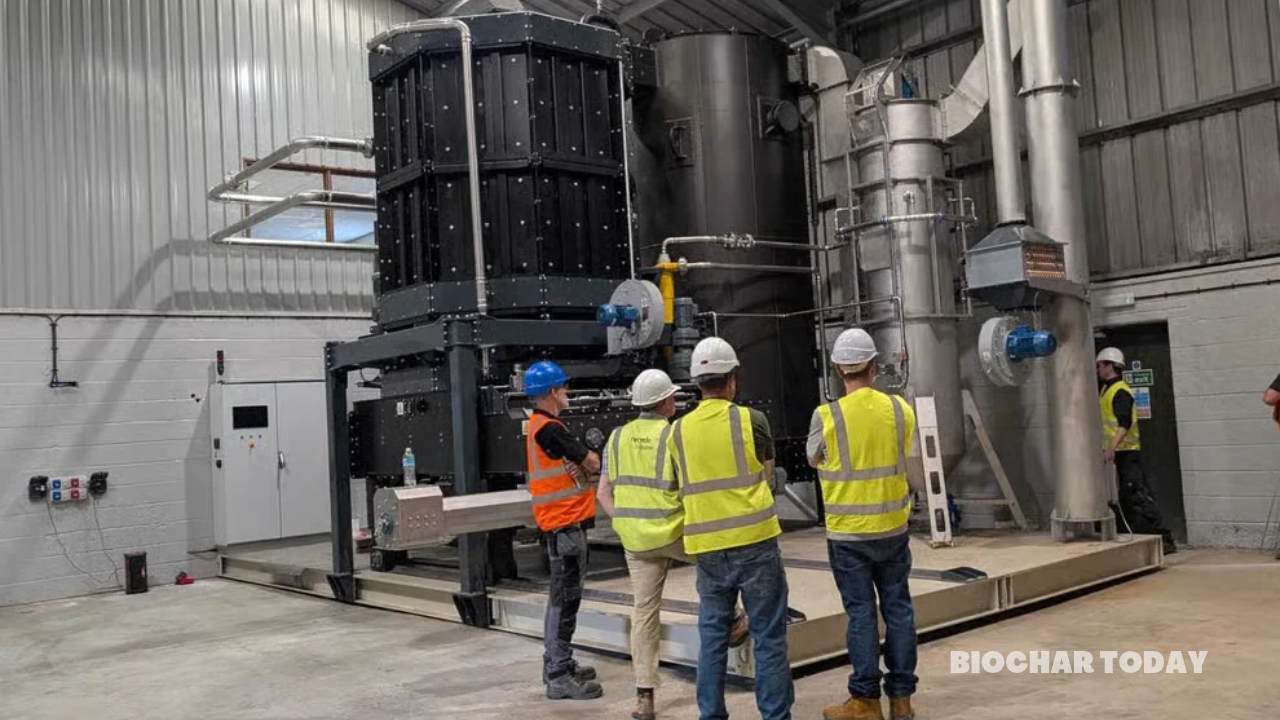
Shropshire Council in the United Kingdom is seeking to sell its wholly owned biocharBiochar is a carbon-rich material created from biomass decomposition in low-oxygen conditions. It has important applications in environmental remediation, soil improvement, agriculture, carbon sequestration, energy storage, and sustainable materials, promoting efficiency and reducing waste in various contexts while addressing climate change challenges. More production facility in Ludlow along with its 50 percent equity stake in joint venture Biodynamic Carbon Limited to partner Carbon Hill. Presented in a cabinet report ahead of a December 2, 2026 meeting, the proposal follows a £3.3 million council investment in the Coder Road Business Park site, where construction on a former anaerobic digestion facility began earlier in 2026 and planning permission was granted in March 2025. Biodynamic Carbon Limited, incorporated on May 21, 2024 as a 50:50 special purpose vehicle between Shropshire Council and Carbon Hill, was formed to convert dried and stored feedstockFeedstock refers to the raw organic material used to produce biochar. This can include a wide range of materials, such as wood chips, agricultural residues, and animal manure. More into biochar.
The move reflects acute financial pressure on the local authority amid a financial emergency, compounded by working capital constraints and company performance since incorporation. Although the council provided a £520,000 direct loan—comprising a £490,000 five-year secured facility at 8 percent annual interest and £30,000 for setup costs—the cabinet report notes the venture lacked sufficient working capital from the outset. Interim head of commercial services David Pearlman stated that no option presented to cabinet guarantees a full return on investment given the council’s financial position and project history.
Under the preferred first option among four choices going to cabinet, Shropshire Council would negotiate to sell the Ludlow plant, buildings, and land to Carbon Hill and any partners, while offering Carbon Hill the chance to buy the council’s 50 percent shareholding in Biodynamic Carbon Limited. If completed, Carbon Hill would assume responsibility for outstanding testing and proving of the facility. The council cites Carbon Hill’s three-year working relationship with the authority and pyrolysisPyrolysis is a thermochemical process that converts waste biomass into bio-char, bio-oil, and pyro-gas. It offers significant advantages in waste valorization, turning low-value materials into economically valuable resources. Its versatility allows for tailored products based on operational conditions, presenting itself as a cost-effective and efficient More expertise through its Woodtek operation in Welshpool as offering the fastest path to exit.
Exiting the asset would transfer operational completion and commercial execution risks to a pyrolysis operator while removing ongoing capital exposure from a cash-strapped council, though full investment recovery is not assured. The initial business case projected £351,000 in first-year net income under a 70 percent council and 30 percent Biodynamic Carbon Limited revenue split, alongside an agreed but unsigned two-year draft contract with RAFT Energy valued at roughly £500,000 per year.

Leave a Reply