
Article Summary: Zhang, et al. (2023) LeachingLeaching is the process where nutrients are dissolved and carried away from the soil by water. This can lead to nutrient depletion and environmental pollution. Biochar can help reduce leaching by improving nutrient retention in the soil. More of biocharBiochar is a carbon-rich material created from biomass decomposition in low-oxygen conditions. It has important applications in environmental remediation, soil improvement, agriculture, carbon sequestration, energy storage, and sustainable materials, promoting efficiency and reducing waste in various contexts while addressing climate change challenges. More at different stages of anaerobic digestion: Leaching behaviors, leachate chemodiversity and effects. Journal of Cleaner Production, In Press. https://doi.org/10.1016/j.jclepro.2023.140531
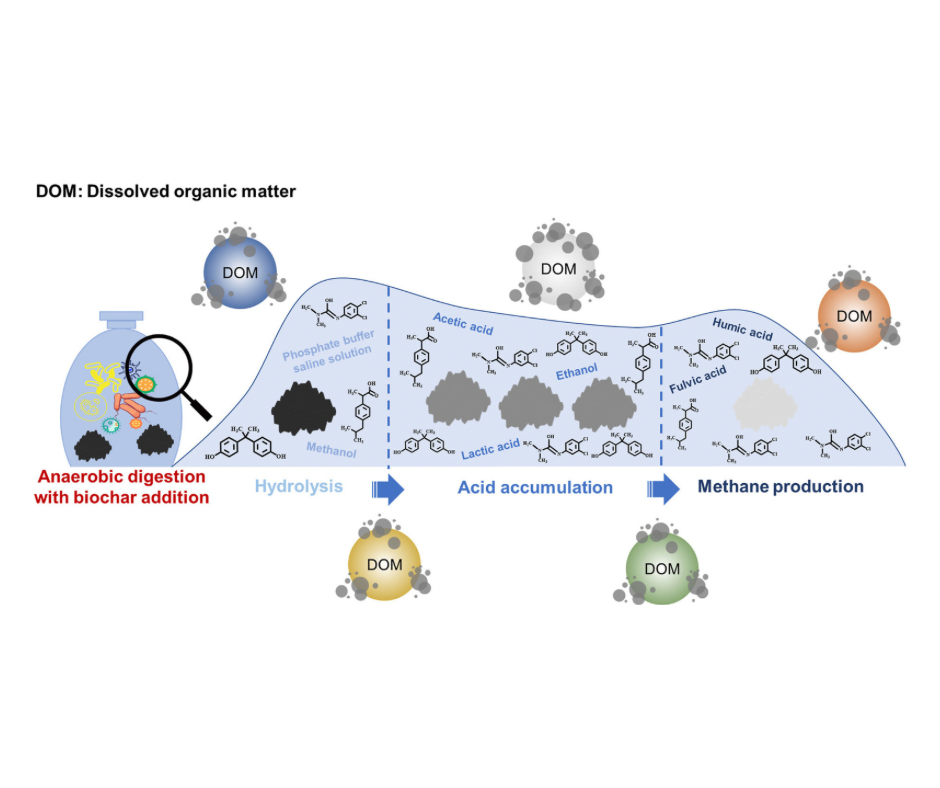
While biochar holds promise for enhancing anaerobic digestion (AD), its leaching behavior and potential negative impacts remain shrouded in mystery. This study sheds light on these hidden interactions at the molecular level, offering valuable insights for future applications.
Traditionally, biochar leaching has been studied with limited methods, potentially overlooking the complex makeup of dissolved organic matter released by biochar. But this study takes a deep dive, employing sophisticated mass spectrometry techniques and other in-depth analysis.
The findings reveal that:
- Leaching intensity varies: Different solutions extract varying amounts of organic matter from biochar, with buffered saline and methanol being particularly effective.
- Composition matters: Lipids and proteins dominate the biochar leachate, but lactic acid solutions pull out a surprising amount of low-molecular-weight organic matter (like CHO and CHON).
- Acidity’s influence: Lower pHpH is a measure of how acidic or alkaline a substance is. A pH of 7 is neutral, while lower pH values indicate acidity and higher values indicate alkalinity. Biochars are normally alkaline and can influence soil pH, often increasing it, which can be beneficial More levels trigger more leaching, suggesting potential inhibition of AD by lactic acid.
- Methane production takes a hit:Biochar leachate reduces methane production and key methanogen populations (like Methanosaeta),indicating impaired bacterial growth and acetic acid conversion.
The study unveils a nuanced picture of biochar leaching, revealing a wider range of leached substances and their potential negative effects on AD. This underscores the importance of pre-leaching biochar to remove harmful compounds before utilizing it in AD systems.




Leave a Reply