
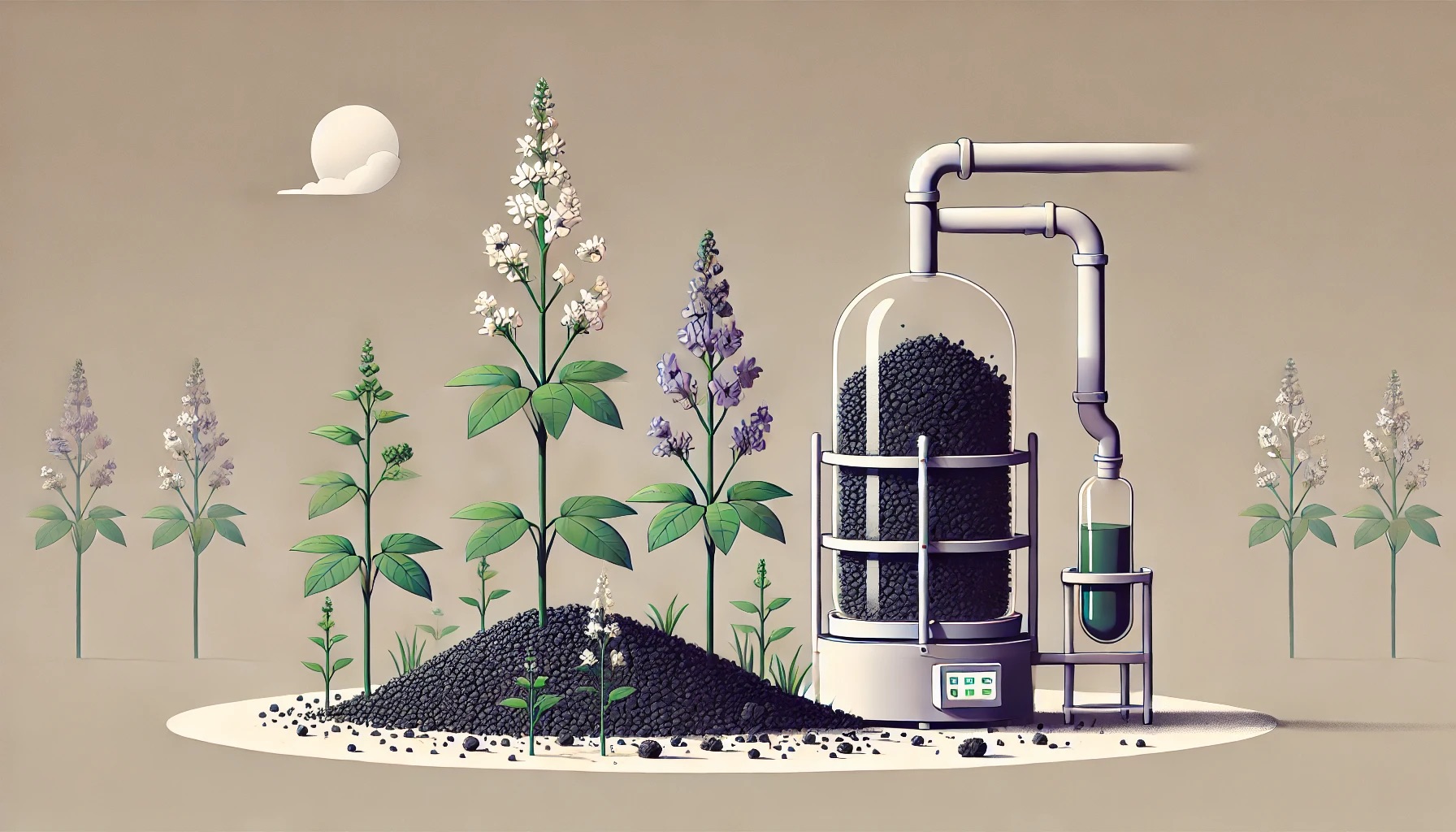
Poonam, et al (2024) Optimization and Characterization of BiocharBiochar is a carbon-rich material created from biomass decomposition in low-oxygen conditions. It has important applications in environmental remediation, soil improvement, agriculture, carbon sequestration, energy storage, and sustainable materials, promoting efficiency and reducing waste in various contexts while addressing climate change challenges. More Obtained from the Weedy BiomassBiomass is a complex biological organic or non-organic solid product derived from living or recently living organism and available naturally. Various types of wastes such as animal manure, waste paper, sludge and many industrial wastes are also treated as biomass because like natural biomass these More of Calotropis gigantea Using Vacuum PyrolysisPyrolysis is a thermochemical process that converts waste biomass into bio-char, bio-oil, and pyro-gas. It offers significant advantages in waste valorization, turning low-value materials into economically valuable resources. Its versatility allows for tailored products based on operational conditions, presenting itself as a cost-effective and efficient More. Bhopal DOI:10.12944/CWE.19.1.7
In a recent study, researchers optimized the production of biochar from the invasive weed Calotropis gigantea using vacuum pyrolysis at 450°C. The process yielded biochar with significant potential for carbon sequestration, soil enhancement, and pollutant adsorptionBiochar has a remarkable ability to attract and hold onto pollutants, like heavy metals and organic chemicals. This makes it a valuable tool for cleaning up contaminated soil and water. More.
Vacuum pyrolysis was chosen for its advantages over traditional methods, producing biochar with a high carbon content of 64.65% and favorable properties, including a large surface area (99.91 m²/g) and stable pore structure. Characterization techniques such as FTIR, SEM/EDX, and elemental analysis revealed low hydrogen-to-carbon (0.08) and oxygen-to-carbon (0.15) ratios, indicating a stable, aromatic structure suitable for long-term environmental applications. This biochar could sequester carbon for over a thousand years, offering a promising tool for climate change mitigation.
The study also highlights the practical benefits of using invasive plants like Calotropis gigantea as a sustainable biochar feedstockFeedstock refers to the raw organic material used to produce biochar. This can include a wide range of materials, such as wood chips, agricultural residues, and animal manure. More. This approach not only addresses environmental damage caused by these plants but also transforms them into a valuable resource for agriculture and environmental cleanup. The biochar’s porous structure and mineral content, including potassium and magnesium, enhance soil quality, improve crop yields, and effectively adsorb pollutants.
The study concludes that biochar derived from invasive species represents a sustainable resource with broad applications, from addressing global energy needs to mitigating environmental hazards.





Leave a Reply